
Contents
- Is Your Assisted Living Facility Prepared for an Emergency?
- Key Takeaways
- Why Disaster Planning Matters
- Evaluating a Disaster Plan
- Where to Learn More
- Protect Your Loved One’s Safety
- More Assisted Living Resources
- Tips for Selling Your Home to Pay for Assisted Living
- Signs It’s Time for Assisted Living, How to Know When Extra Support Is Needed
- Downsizing to Prepare for a Move to Assisted Living
- Discussing Assisted Living with a Reluctant Parent
- Does Assisted Living Provide Medical Care? Understanding Living Options and Care in Assisted Living Communities
- What Amenities Are Offered in Assisted Living? Services, Benefits, and Features for Residents
- What Is the Difference Between Assisted Living and Independent Living? Understanding the Options
- Assisted Living Move-In Checklist (Free PDF Download and Print)
- Assisted Living Facility Tour Checklist – Free PDF Download & Printable Guide
- Assisted Living vs. Senior Living - How Are They Different?
- What is Assisted Living and How Does it Work?
- What Are the Benefits of Assisted Living? 24-Hour Support, Socialization, Nutritious Meals and Peace of Mind
- Cost of Assisted Living in the Greater Los Angeles Area
- When’s the Best Age to Move to a Board and Care Community?
- Using Life Insurance to Pay for Assisted Living
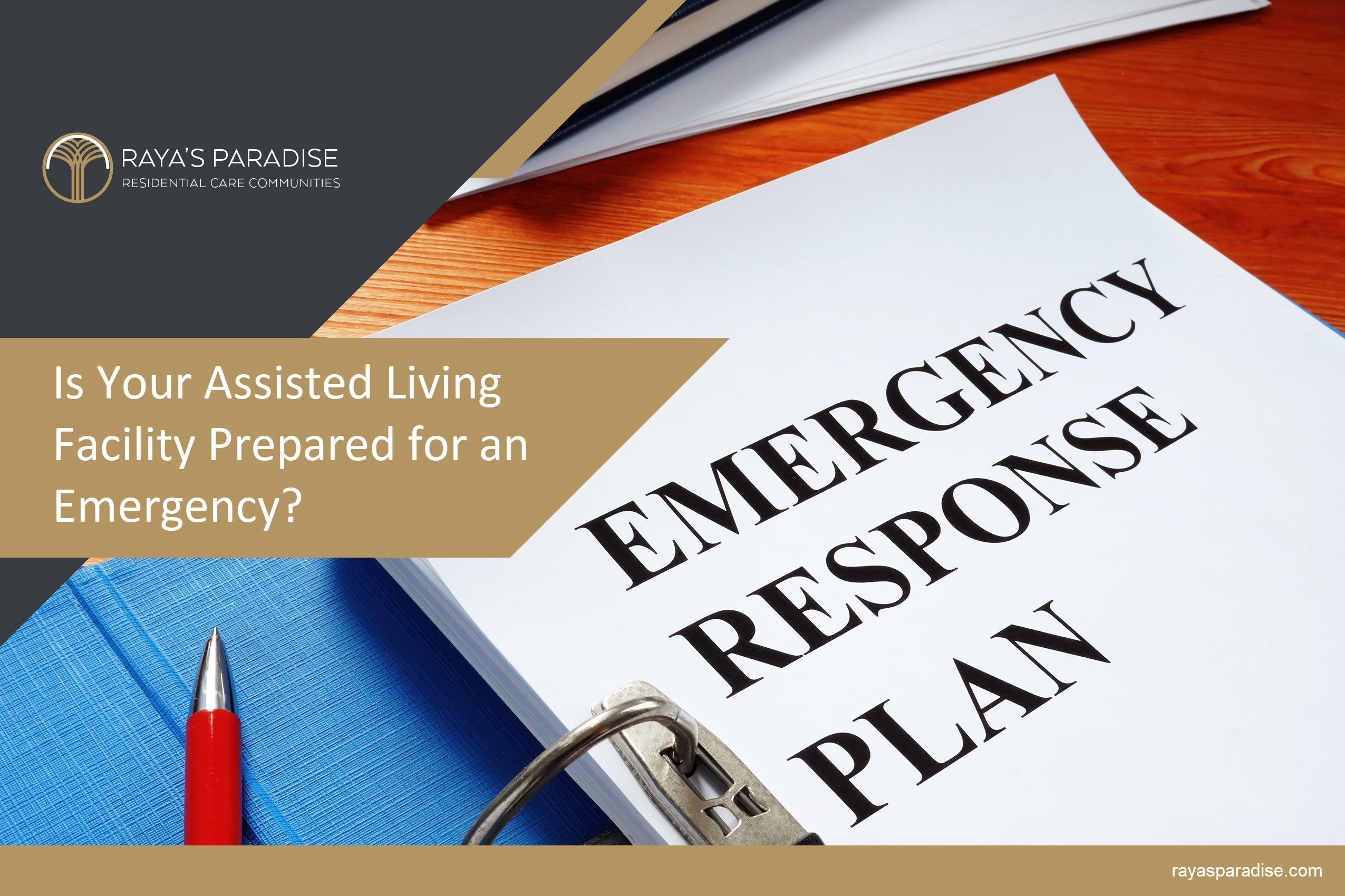
Is Your Assisted Living Facility Prepared for an Emergency?
Emergencies often strike without warning, and for older adults in assisted living, preparedness is more than a precaution. It’s a lifeline. Whether it’s an earthquake, wildfire, or extended power outage, the strength of a facility’s disaster plan can make all the difference in safety and wellbeing.
Key Takeaways
Every assisted living facility is required to maintain a written disaster plan, but the level of readiness can vary.
Reviewing the plan yourself and asking pointed questions will help you gauge whether your loved one will be protected.
A strong disaster plan includes training, supplies, communication protocols, and continuity of care.
Why Disaster Planning Matters
Federal and state regulations mandate that assisted living communities keep emergency protocols up to date. Even so, some facilities only meet the minimum requirements rather than planning thoroughly. Before you decide where your loved one will live, it helps to see firsthand whether emergency preparation is taken seriously.
If a facility hesitates to share their written disaster plan with you, that’s worth noting. Good management teams understand that transparency is part of earning families’ trust. When you have the plan in hand, imagine what would happen during a major incident. Walk yourself through each step: Are residents accounted for? Is staff trained to lead and respond? Will essential care continue?

Evaluating a Disaster Plan
When you review a plan or meet with staff, consider these points carefully:
Comprehensiveness
Does the plan address the risks most relevant to the facility’s location? For instance, in California, earthquake readiness is a must. In other areas, flooding or tornadoes may be the primary threats.
Staff Training and Leadership
Ask how often staff receive training and whether drills are conducted with residents. A plan sitting in a binder isn’t much help without hands-on practice. Find out if there’s always a trained leader on site who knows how to coordinate a response. Facilities that plan ahead typically have protocols to bring in extra staff when needed.
Disaster Kits and Supplies
An effective community keeps emergency kits stocked and accessible. Look for at least a week’s worth of water, shelf-stable food, first aid materials, flashlights, batteries, and sanitation items. Some facilities also include backup power sources and emergency medications.
Continuity of Care
Even under emergency conditions, residents’ daily health needs remain unchanged. Confirm that care plans can be followed during a disaster. Medical records and essential information should be easy for staff to access even if the power fails.
Medication Access
Ask how medications will be stored, tracked, and dispensed. During a crisis, delays in treatment can quickly become life-threatening for residents with chronic conditions.
Family Communication
Reliable updates matter when you can’t be there yourself. Find out exactly how the facility will contact family members to share information and instructions.
Regular Plan Updates
Disaster planning isn’t something to write once and forget. Ask when the plan was last revised and how frequently it’s reviewed for improvements.
Where to Learn More
To get familiar with best practices and standards for emergency preparedness, you can visit these trusted resources:
FEMA Developing and Maintaining Emergency Operations Plans (PDF)
FEMA Preparing for Disaster (PDF)
American Red Cross Disaster Preparedness Plan
American Red Cross How to Prepare for Emergencies
American Red Cross Disaster Recovery Services
American Red Cross Disaster Relief
These guides will help you ask the right questions and feel more confident in your assessment.
Protect Your Loved One’s Safety
At Raya’s Paradise, our communities are committed to providing reliable safety protocols and clear communication, no matter what comes our way. If you’d like to learn about our emergency plans and see how we prepare for unexpected events, call us to schedule a private consultation or tour.
Call us today at (310) 289-8834 to learn more about our assisted living and memory care options.
Email us at Info@RayasParadise.com to speak with a knowledgeable team member.
 https://rayasparadise.com/wp-content/uploads/2026/01/Tips-for-Selling-Your-Home-to-Pay-for-Assisted-Living.jpg
1702
2555
Moti Gamburd
https://rayasparadise.com//wp-content/uploads/2019/07/RP-LOGO-Horizontal-Name-Only-websitetrans.png
Moti Gamburd2026-01-22 04:00:552026-01-22 18:04:19Tips for Selling Your Home to Pay for Assisted Living
https://rayasparadise.com/wp-content/uploads/2026/01/Tips-for-Selling-Your-Home-to-Pay-for-Assisted-Living.jpg
1702
2555
Moti Gamburd
https://rayasparadise.com//wp-content/uploads/2019/07/RP-LOGO-Horizontal-Name-Only-websitetrans.png
Moti Gamburd2026-01-22 04:00:552026-01-22 18:04:19Tips for Selling Your Home to Pay for Assisted Living https://rayasparadise.com/wp-content/uploads/2012/10/Signs-Its-Time-for-Assisted-Living.jpg
1697
2555
Raya's Paradise
https://rayasparadise.com//wp-content/uploads/2019/07/RP-LOGO-Horizontal-Name-Only-websitetrans.png
Raya's Paradise2026-01-19 03:09:442026-01-20 17:17:15Signs It’s Time for Assisted Living, How to Know When Extra Support Is Needed
https://rayasparadise.com/wp-content/uploads/2012/10/Signs-Its-Time-for-Assisted-Living.jpg
1697
2555
Raya's Paradise
https://rayasparadise.com//wp-content/uploads/2019/07/RP-LOGO-Horizontal-Name-Only-websitetrans.png
Raya's Paradise2026-01-19 03:09:442026-01-20 17:17:15Signs It’s Time for Assisted Living, How to Know When Extra Support Is Needed https://rayasparadise.com/wp-content/uploads/2012/12/Downsizing-to-Prepare-for-Assisted-Living.jpeg
1704
2558
Moti Gamburd
https://rayasparadise.com//wp-content/uploads/2019/07/RP-LOGO-Horizontal-Name-Only-websitetrans.png
Moti Gamburd2026-01-13 04:02:202026-01-15 22:28:54Downsizing to Prepare for a Move to Assisted Living
https://rayasparadise.com/wp-content/uploads/2012/12/Downsizing-to-Prepare-for-Assisted-Living.jpeg
1704
2558
Moti Gamburd
https://rayasparadise.com//wp-content/uploads/2019/07/RP-LOGO-Horizontal-Name-Only-websitetrans.png
Moti Gamburd2026-01-13 04:02:202026-01-15 22:28:54Downsizing to Prepare for a Move to Assisted Living https://rayasparadise.com/wp-content/uploads/2012/11/How-to-Discuss-Assisted-Living-With-a-Reluctant-Parent.jpeg
1704
2553
Moti Gamburd
https://rayasparadise.com//wp-content/uploads/2019/07/RP-LOGO-Horizontal-Name-Only-websitetrans.png
Moti Gamburd2026-01-12 02:33:232026-01-15 23:41:56Discussing Assisted Living with a Reluctant Parent
https://rayasparadise.com/wp-content/uploads/2012/11/How-to-Discuss-Assisted-Living-With-a-Reluctant-Parent.jpeg
1704
2553
Moti Gamburd
https://rayasparadise.com//wp-content/uploads/2019/07/RP-LOGO-Horizontal-Name-Only-websitetrans.png
Moti Gamburd2026-01-12 02:33:232026-01-15 23:41:56Discussing Assisted Living with a Reluctant Parent https://rayasparadise.com/wp-content/uploads/2025/08/Does-Assisted-Living-Provide-Medical-Care.jpg
1704
2548
Raya's Paradise
https://rayasparadise.com//wp-content/uploads/2019/07/RP-LOGO-Horizontal-Name-Only-websitetrans.png
Raya's Paradise2025-08-27 20:32:462026-01-14 19:35:28Does Assisted Living Provide Medical Care? Understanding Living Options and Care in Assisted Living Communities
https://rayasparadise.com/wp-content/uploads/2025/08/Does-Assisted-Living-Provide-Medical-Care.jpg
1704
2548
Raya's Paradise
https://rayasparadise.com//wp-content/uploads/2019/07/RP-LOGO-Horizontal-Name-Only-websitetrans.png
Raya's Paradise2025-08-27 20:32:462026-01-14 19:35:28Does Assisted Living Provide Medical Care? Understanding Living Options and Care in Assisted Living Communities https://rayasparadise.com/wp-content/uploads/2025/08/What-Amenities-Are-Offered-In-Assisted-Living.jpg
1080
1621
Raya's Paradise
https://rayasparadise.com//wp-content/uploads/2019/07/RP-LOGO-Horizontal-Name-Only-websitetrans.png
Raya's Paradise2025-08-27 16:58:562025-10-22 19:10:12What Amenities Are Offered in Assisted Living? Services, Benefits, and Features for Residents
https://rayasparadise.com/wp-content/uploads/2025/08/What-Amenities-Are-Offered-In-Assisted-Living.jpg
1080
1621
Raya's Paradise
https://rayasparadise.com//wp-content/uploads/2019/07/RP-LOGO-Horizontal-Name-Only-websitetrans.png
Raya's Paradise2025-08-27 16:58:562025-10-22 19:10:12What Amenities Are Offered in Assisted Living? Services, Benefits, and Features for Residents https://rayasparadise.com/wp-content/uploads/2025/08/What-Is-the-Difference-Between-Assisted-Living-and-Independent-Living.jpg
1695
2551
Raya's Paradise
https://rayasparadise.com//wp-content/uploads/2019/07/RP-LOGO-Horizontal-Name-Only-websitetrans.png
Raya's Paradise2025-08-27 15:32:152026-01-14 19:36:26What Is the Difference Between Assisted Living and Independent Living? Understanding the Options
https://rayasparadise.com/wp-content/uploads/2025/08/What-Is-the-Difference-Between-Assisted-Living-and-Independent-Living.jpg
1695
2551
Raya's Paradise
https://rayasparadise.com//wp-content/uploads/2019/07/RP-LOGO-Horizontal-Name-Only-websitetrans.png
Raya's Paradise2025-08-27 15:32:152026-01-14 19:36:26What Is the Difference Between Assisted Living and Independent Living? Understanding the Options https://rayasparadise.com/wp-content/uploads/2025/07/Assisted-Living-Move-In-Checklist-PDF-Word.jpg
865
1337
Raya's Paradise
https://rayasparadise.com//wp-content/uploads/2019/07/RP-LOGO-Horizontal-Name-Only-websitetrans.png
Raya's Paradise2025-07-09 20:11:342025-12-09 02:12:30Assisted Living Move-In Checklist (Free PDF Download and Print)
https://rayasparadise.com/wp-content/uploads/2025/07/Assisted-Living-Move-In-Checklist-PDF-Word.jpg
865
1337
Raya's Paradise
https://rayasparadise.com//wp-content/uploads/2019/07/RP-LOGO-Horizontal-Name-Only-websitetrans.png
Raya's Paradise2025-07-09 20:11:342025-12-09 02:12:30Assisted Living Move-In Checklist (Free PDF Download and Print) https://rayasparadise.com/wp-content/uploads/2025/03/Assisted-Living-Facility-Tour-Checklist-–-Free-PDF-Download-Printable-Guide.jpg
619
840
Raya's Paradise
https://rayasparadise.com//wp-content/uploads/2019/07/RP-LOGO-Horizontal-Name-Only-websitetrans.png
Raya's Paradise2025-03-11 19:17:172026-01-14 19:36:54Assisted Living Facility Tour Checklist – Free PDF Download & Printable Guide
https://rayasparadise.com/wp-content/uploads/2025/03/Assisted-Living-Facility-Tour-Checklist-–-Free-PDF-Download-Printable-Guide.jpg
619
840
Raya's Paradise
https://rayasparadise.com//wp-content/uploads/2019/07/RP-LOGO-Horizontal-Name-Only-websitetrans.png
Raya's Paradise2025-03-11 19:17:172026-01-14 19:36:54Assisted Living Facility Tour Checklist – Free PDF Download & Printable Guide https://rayasparadise.com/wp-content/uploads/2025/01/Assisted-Living-vs-Senior-Living-scaled.jpg
1350
2560
Raya's Paradise
https://rayasparadise.com//wp-content/uploads/2019/07/RP-LOGO-Horizontal-Name-Only-websitetrans.png
Raya's Paradise2025-01-25 21:43:382026-01-14 19:37:10Assisted Living vs. Senior Living - How Are They Different?
https://rayasparadise.com/wp-content/uploads/2025/01/Assisted-Living-vs-Senior-Living-scaled.jpg
1350
2560
Raya's Paradise
https://rayasparadise.com//wp-content/uploads/2019/07/RP-LOGO-Horizontal-Name-Only-websitetrans.png
Raya's Paradise2025-01-25 21:43:382026-01-14 19:37:10Assisted Living vs. Senior Living - How Are They Different? https://rayasparadise.com/wp-content/uploads/2025/01/What-is-Assisted-Living-and-How-Does-it-Work.jpg
1709
2540
Raya's Paradise
https://rayasparadise.com//wp-content/uploads/2019/07/RP-LOGO-Horizontal-Name-Only-websitetrans.png
Raya's Paradise2025-01-14 23:14:422025-10-22 19:10:16What is Assisted Living and How Does it Work?
https://rayasparadise.com/wp-content/uploads/2025/01/What-is-Assisted-Living-and-How-Does-it-Work.jpg
1709
2540
Raya's Paradise
https://rayasparadise.com//wp-content/uploads/2019/07/RP-LOGO-Horizontal-Name-Only-websitetrans.png
Raya's Paradise2025-01-14 23:14:422025-10-22 19:10:16What is Assisted Living and How Does it Work? https://rayasparadise.com/wp-content/uploads/2024/12/Benefits-of-Assisted-Living-for-Seniors-1.jpg
1702
2560
Raya's Paradise
https://rayasparadise.com//wp-content/uploads/2019/07/RP-LOGO-Horizontal-Name-Only-websitetrans.png
Raya's Paradise2024-12-24 20:22:242025-10-22 19:10:16What Are the Benefits of Assisted Living? 24-Hour Support, Socialization, Nutritious Meals and Peace of Mind
https://rayasparadise.com/wp-content/uploads/2024/12/Benefits-of-Assisted-Living-for-Seniors-1.jpg
1702
2560
Raya's Paradise
https://rayasparadise.com//wp-content/uploads/2019/07/RP-LOGO-Horizontal-Name-Only-websitetrans.png
Raya's Paradise2024-12-24 20:22:242025-10-22 19:10:16What Are the Benefits of Assisted Living? 24-Hour Support, Socialization, Nutritious Meals and Peace of Mind https://rayasparadise.com/wp-content/uploads/2024/12/Assisted-Living-Cost-in-Los-Angeles.jpg
1455
2059
Raya's Paradise
https://rayasparadise.com//wp-content/uploads/2019/07/RP-LOGO-Horizontal-Name-Only-websitetrans.png
Raya's Paradise2024-12-06 19:40:182025-10-22 19:10:17Cost of Assisted Living in the Greater Los Angeles Area
https://rayasparadise.com/wp-content/uploads/2024/12/Assisted-Living-Cost-in-Los-Angeles.jpg
1455
2059
Raya's Paradise
https://rayasparadise.com//wp-content/uploads/2019/07/RP-LOGO-Horizontal-Name-Only-websitetrans.png
Raya's Paradise2024-12-06 19:40:182025-10-22 19:10:17Cost of Assisted Living in the Greater Los Angeles Area https://rayasparadise.com/wp-content/uploads/2019/09/Whens-the-Best-Age-to-Move-to-a-Board-and-Care-Community.jpg
1697
2555
Raya's Paradise
https://rayasparadise.com//wp-content/uploads/2019/07/RP-LOGO-Horizontal-Name-Only-websitetrans.png
Raya's Paradise2019-09-18 16:51:092025-10-22 19:10:34When’s the Best Age to Move to a Board and Care Community?
https://rayasparadise.com/wp-content/uploads/2019/09/Whens-the-Best-Age-to-Move-to-a-Board-and-Care-Community.jpg
1697
2555
Raya's Paradise
https://rayasparadise.com//wp-content/uploads/2019/07/RP-LOGO-Horizontal-Name-Only-websitetrans.png
Raya's Paradise2019-09-18 16:51:092025-10-22 19:10:34When’s the Best Age to Move to a Board and Care Community? https://rayasparadise.com/wp-content/uploads/2013/12/Using-Life-Insurance-to-Pay-for-Assisted-Living.jpg
1700
2549
Raya's Paradise
https://rayasparadise.com//wp-content/uploads/2019/07/RP-LOGO-Horizontal-Name-Only-websitetrans.png
Raya's Paradise2013-12-17 04:00:242026-01-14 19:40:32Using Life Insurance to Pay for Assisted Living
https://rayasparadise.com/wp-content/uploads/2013/12/Using-Life-Insurance-to-Pay-for-Assisted-Living.jpg
1700
2549
Raya's Paradise
https://rayasparadise.com//wp-content/uploads/2019/07/RP-LOGO-Horizontal-Name-Only-websitetrans.png
Raya's Paradise2013-12-17 04:00:242026-01-14 19:40:32Using Life Insurance to Pay for Assisted Living
