How much does long-term care insurance cost per year?
- A sample $165,000 policy with level benefits costs a healthy 55-year-old man about $950 a year and a woman about $1,500
- A couple both age 55 pays a combined $2,080 a year for level benefits
- Adding 3% compound inflation protection, a common inflation-growth option, more than doubles the premium to $2,200 for a man and $3,750 for a woman
- Women pay more because they live longer and are likelier to need extended care
- Age at purchase is one of the biggest factors, so buying before 60 or 65 can secure a lower starting rate and reduce the risk of being declined for health reasons
| Coverage at age 55 |
Single male |
Single female |
Couple (combined) |
| Level benefits, no inflation growth |
$950 |
$1,500 |
$2,080 |
| With 3% compound inflation |
$2,200 |
$3,750 |
$5,050 |
Figures reflect sample premiums for select-health applicants on a $165,000 initial benefit pool, calculated for Illinois; actual rates vary by state and insurer. The inflation-protected version costs more now but, when bought at age 55, grows the benefit pool to about $400,500 by age 85, a hedge against the rising care costs in our nursing home cost research.
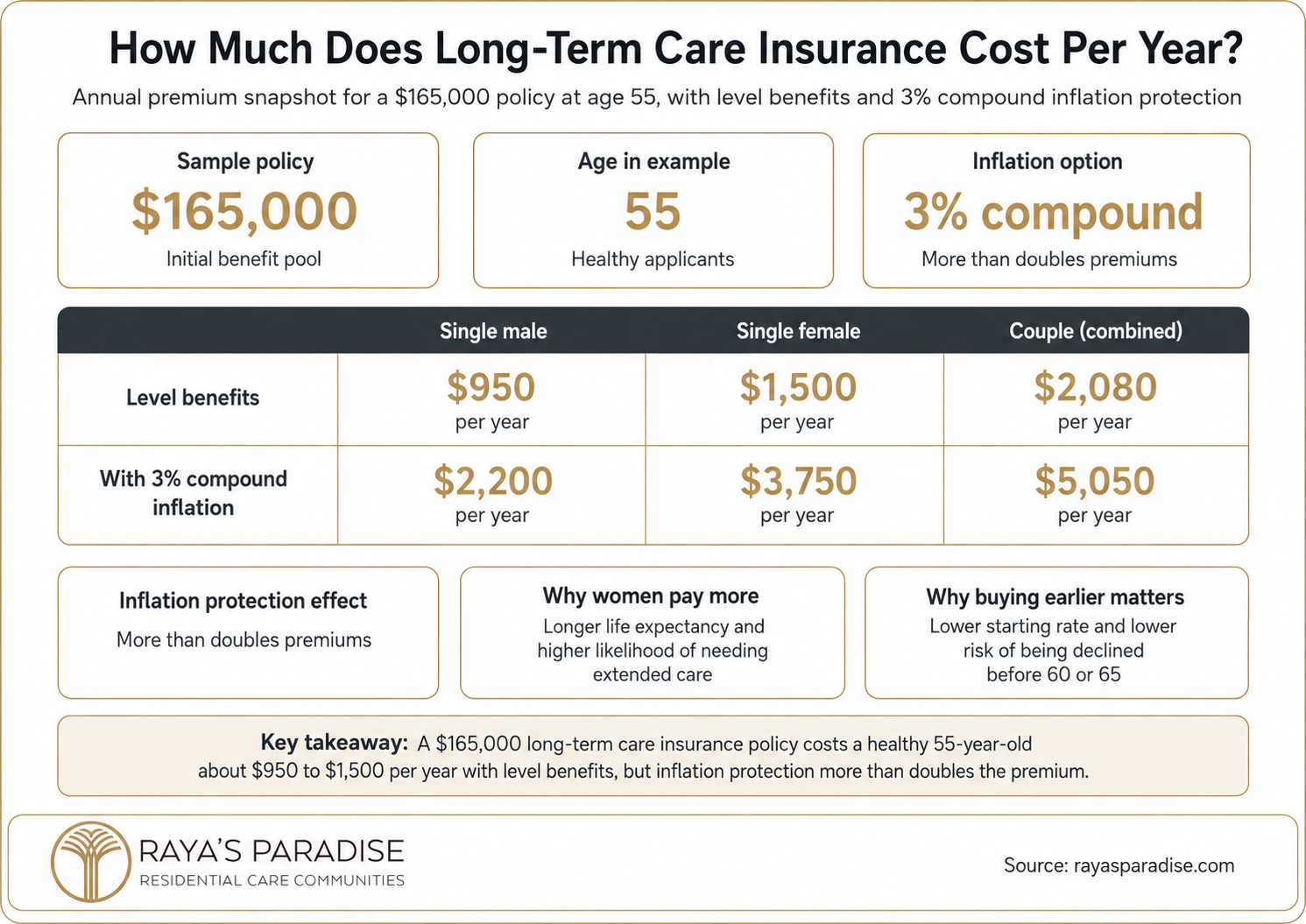
A $165,000 long-term care insurance policy costs a healthy 55-year-old about $950 to $1,500 per year with level benefits, but inflation protection more than doubles the premium.
How much does long-term care insurance cost for a 65-year-old?
- A 65-year-old man pays about $1,750 a year for level benefits, rising to about $3,280 with 3% inflation protection
- A 65-year-old woman pays about $2,700 for level benefits, or about $5,290 with inflation protection
- A couple both age 65 pays a combined $3,750 for level benefits, or about $7,150 with 3% inflation protection
- Waiting from 55 to 65 raises a man’s level premium about 84%, from $950 to $1,750, and the higher annual premium continues for every year the policy is held
- The bigger risk of waiting is insurability; conditions like dementia can disqualify an applicant entirely
| Purchase age (3% inflation) |
Single male |
Single female |
| Buy at 55 |
$2,200 |
$3,750 |
| Buy at 65 |
$3,280 |
$5,290 |
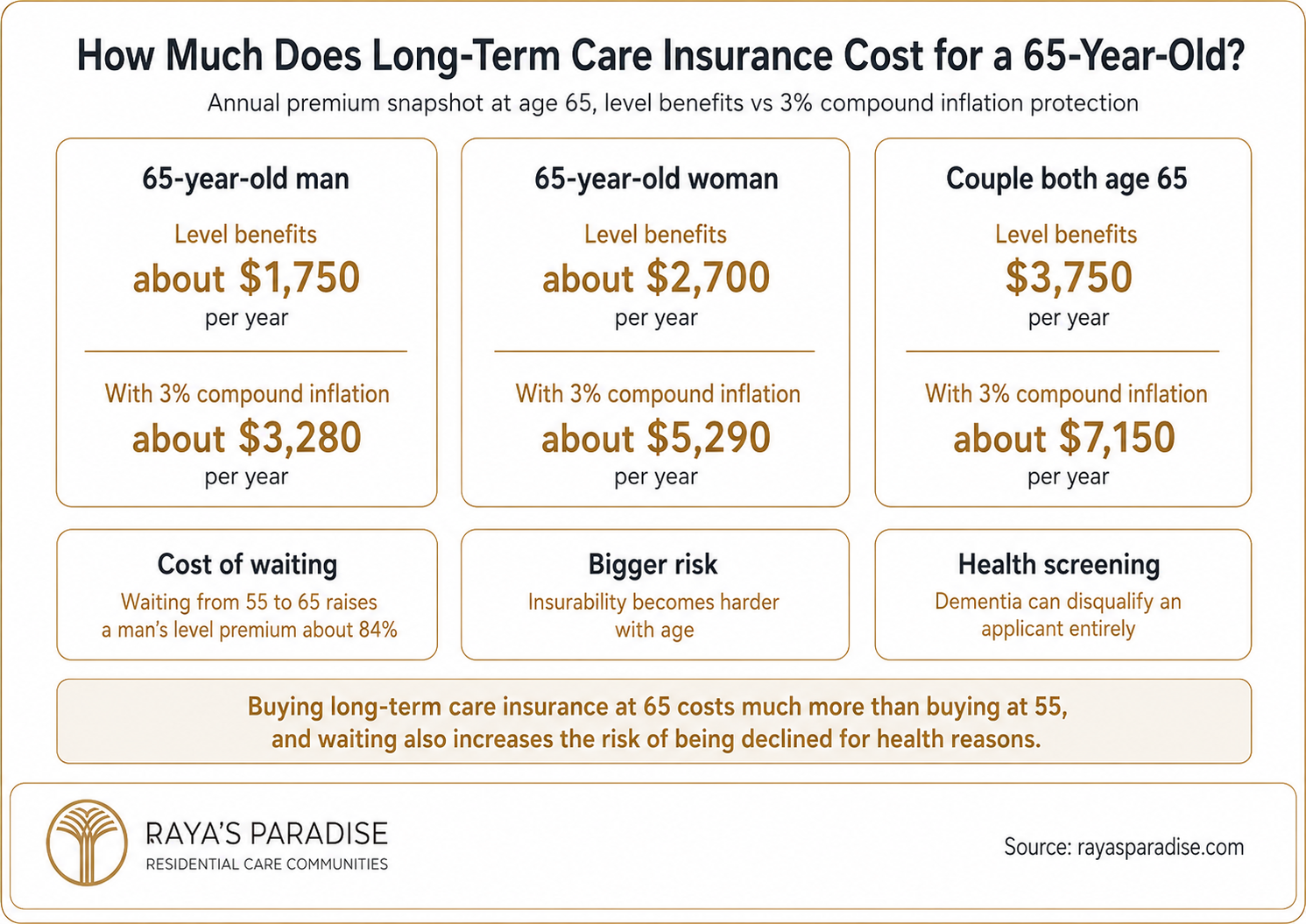
Buying long-term care insurance at 65 costs much more than buying at 55, and waiting also increases the risk of being declined for health reasons.
How much does nursing home insurance cost per month?
- There is no separate nursing home insurance; long-term care insurance is typically designed to cover eligible care across settings such as nursing homes, assisted living, memory care and home care, subject to policy terms
- Monthly premiums run roughly $79 to $441, from a 55-year-old man with level benefits to a 65-year-old woman with 3% inflation protection
- A 55-year-old man averages about $79 a month for level benefits, or about $183 with 3% inflation protection
- A 55-year-old woman averages about $125 a month for level benefits, or about $313 with inflation protection
- This protection matters because Original Medicare does not cover long-term custodial care in a nursing home or assisted living community
Monthly figures are simply the annual premiums divided across twelve months. Because one policy spans every care setting, compare its benefit against the costs in our assisted living and nursing home research.
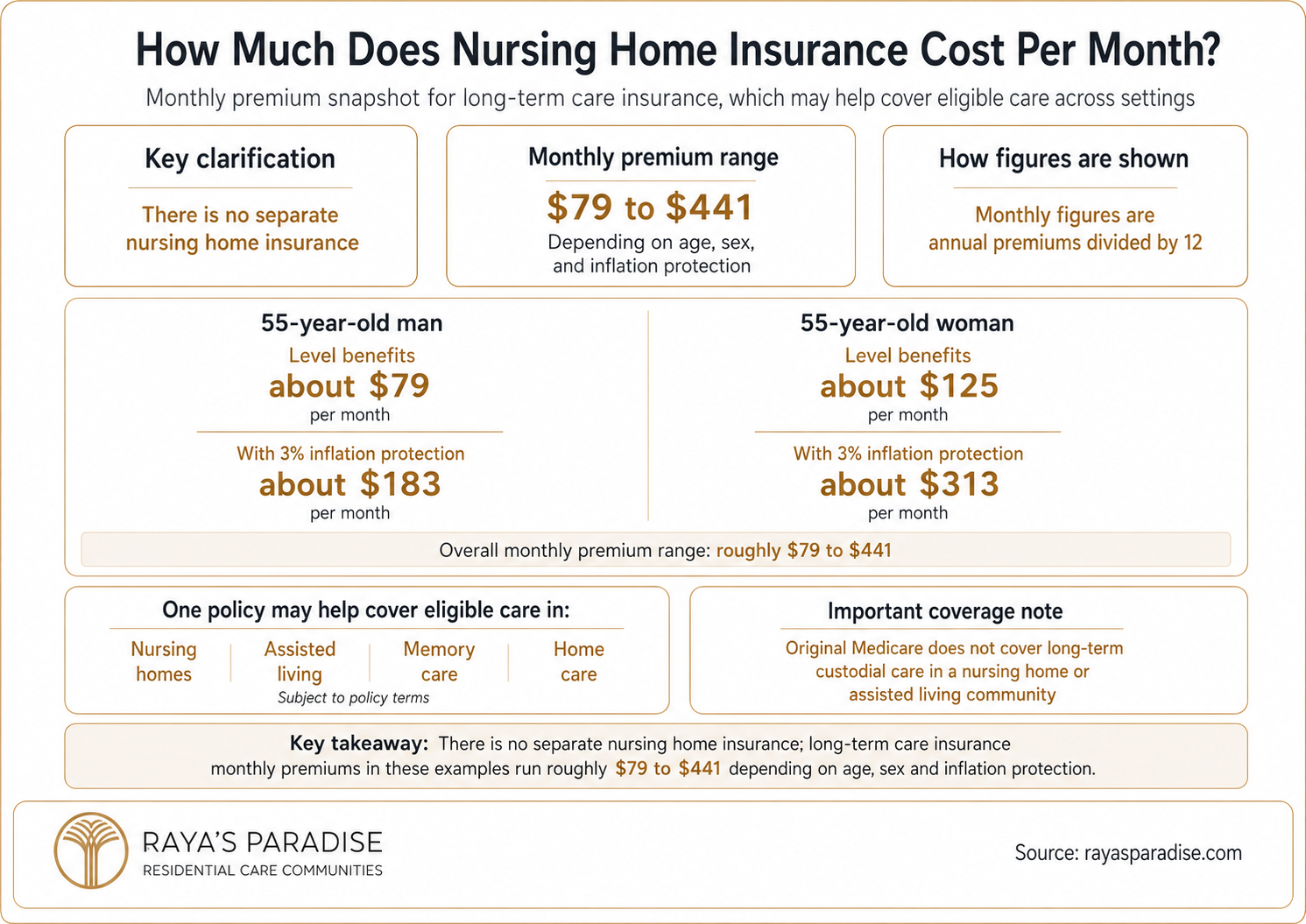
There is no separate nursing home insurance; long-term care insurance premiums in these examples run roughly $79 to $441 per month depending on age, sex and inflation protection.
How much long-term care insurance do you need?
- Most buyers select an initial maximum monthly benefit between $3,000 and $6,000, sized to cover the kind of care they expect to need
- The sample policy carries a $165,000 benefit pool, often structured as a three-year benefit period
- Match the benefit to local prices; a national median nursing home runs $9,581 to $10,798 a month, while assisted living runs about $6,200
- With 3% compound inflation protection, a $165,000 pool bought at age 55 grows to about $400,500 by age 85, helping the benefit keep pace with care costs
| Care setting |
National monthly cost |
Typical benefit needed |
| Assisted living |
$6,200 |
Mid-range monthly benefit |
| Memory care |
$6,690 |
Mid-range to high benefit |
| Nursing home, semi-private |
$9,581 |
High monthly benefit |
| Nursing home, private |
$10,798 |
Highest monthly benefit |
Sizing coverage is a balance between premium affordability and benefit adequacy. Premiums for tax-qualified policies may be partly deductible within IRS age-based limits, depending on your tax situation, so confirm the rules with a tax professional and review the full picture in our lifetime cost of long-term care research.
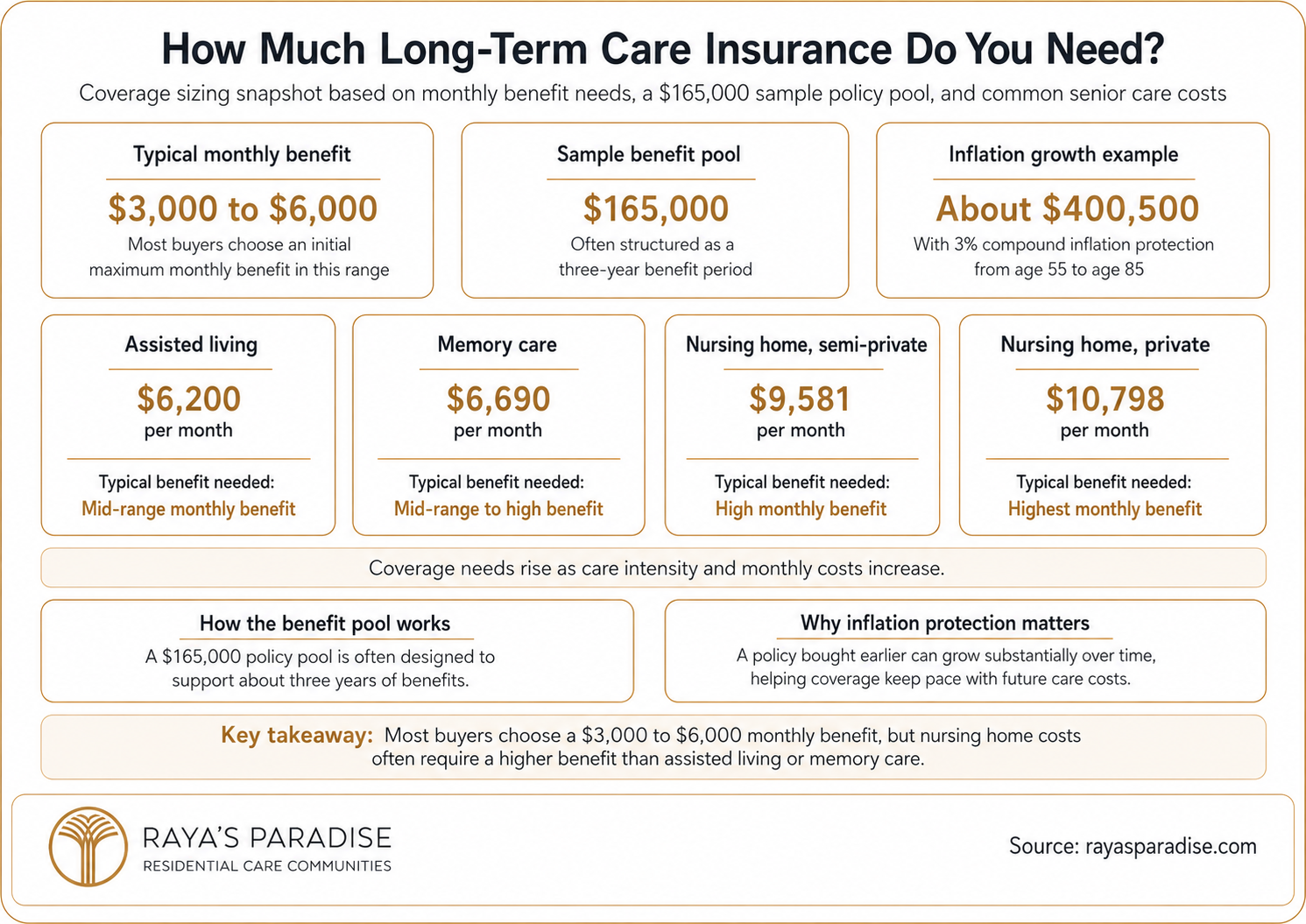
Most buyers choose a $3,000 to $6,000 monthly benefit, but nursing home costs often require a higher benefit than assisted living or memory care.
What is the average daily benefit of long-term care insurance?
- The sample $165,000 benefit pool equals roughly $150 per day across a three-year benefit period
- Most buyers choose a maximum monthly benefit of $3,000 to $6,000, the equivalent of about $100 to $200 per day
- The average claim has grown sharply, from about $110,000 in 2015 to roughly $180,000 in 2024
- Daily benefits with inflation protection rise each year, so a policy bought young pays out far more by the time care begins
The daily benefit is the lever families adjust to balance premium cost against coverage. Claims data shows why benefit size matters; the average claim now covers around a year and a half of care in a nursing home.
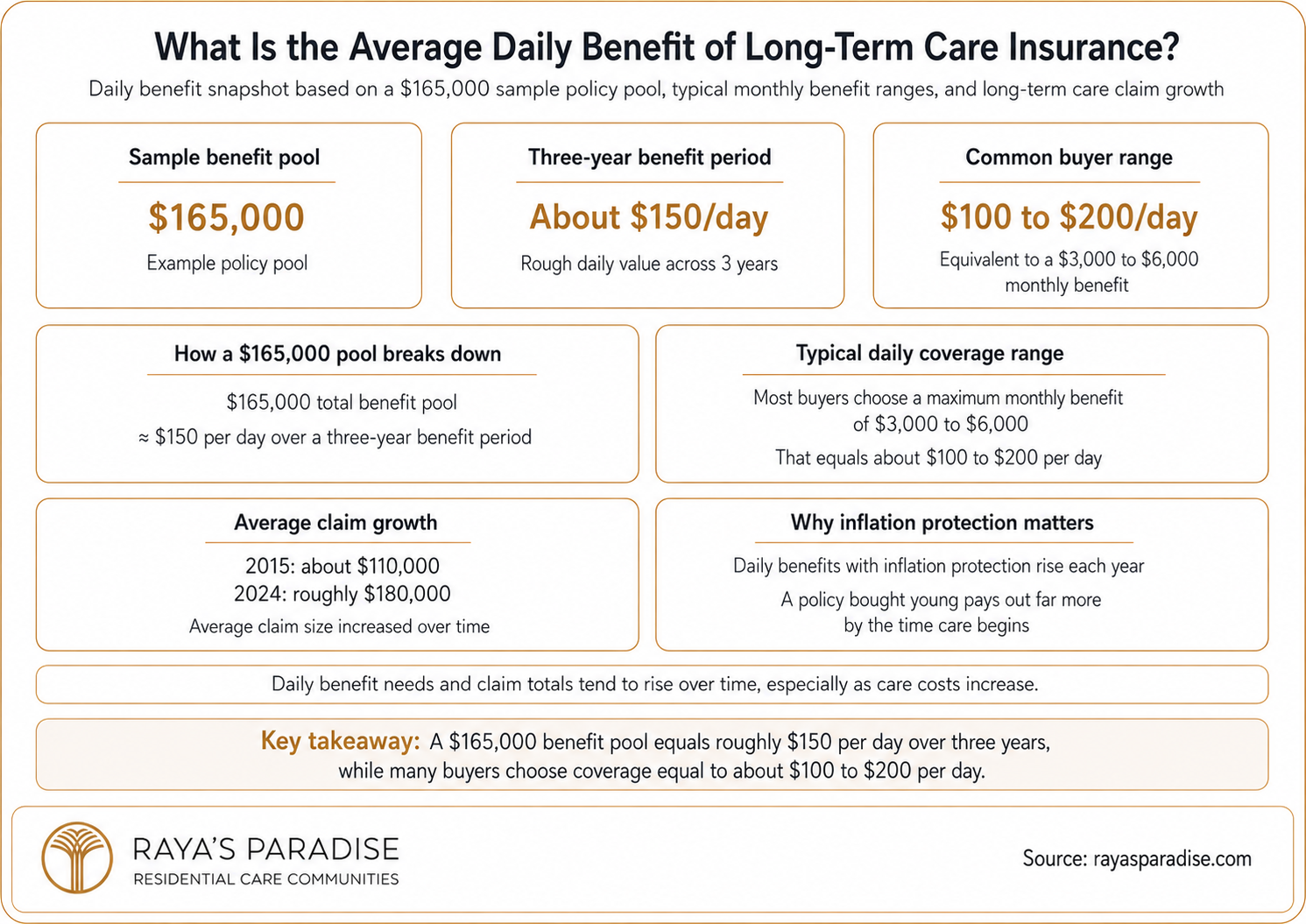
A $165,000 benefit pool equals roughly $150 per day over three years, while many buyers choose coverage equal to about $100 to $200 per day.
What percentage of Americans have long-term care insurance?
- About 5.8 million Americans hold a stand-alone long-term care insurance policy as of 2024
- That is a small share of older Americans, equal to roughly 7% of those age 60 and older, and the number of covered lives has fallen for a decade
- Policy terminations have outpaced new sales by roughly 127,000 people a year, while hybrid life-and-care policies have become more popular
- Among those who do claim, most receive home care; in a 2024 Connecticut Partnership long-term care claims report, about 60% of claimants used a home health aide or in-home skilled nursing visit
Low adoption leaves many families relying on out-of-pocket funds, Medicaid or other resources when long-term care is needed. The shift to hybrid policies is reshaping the market, a trend tracked alongside our long-term care utilization research.
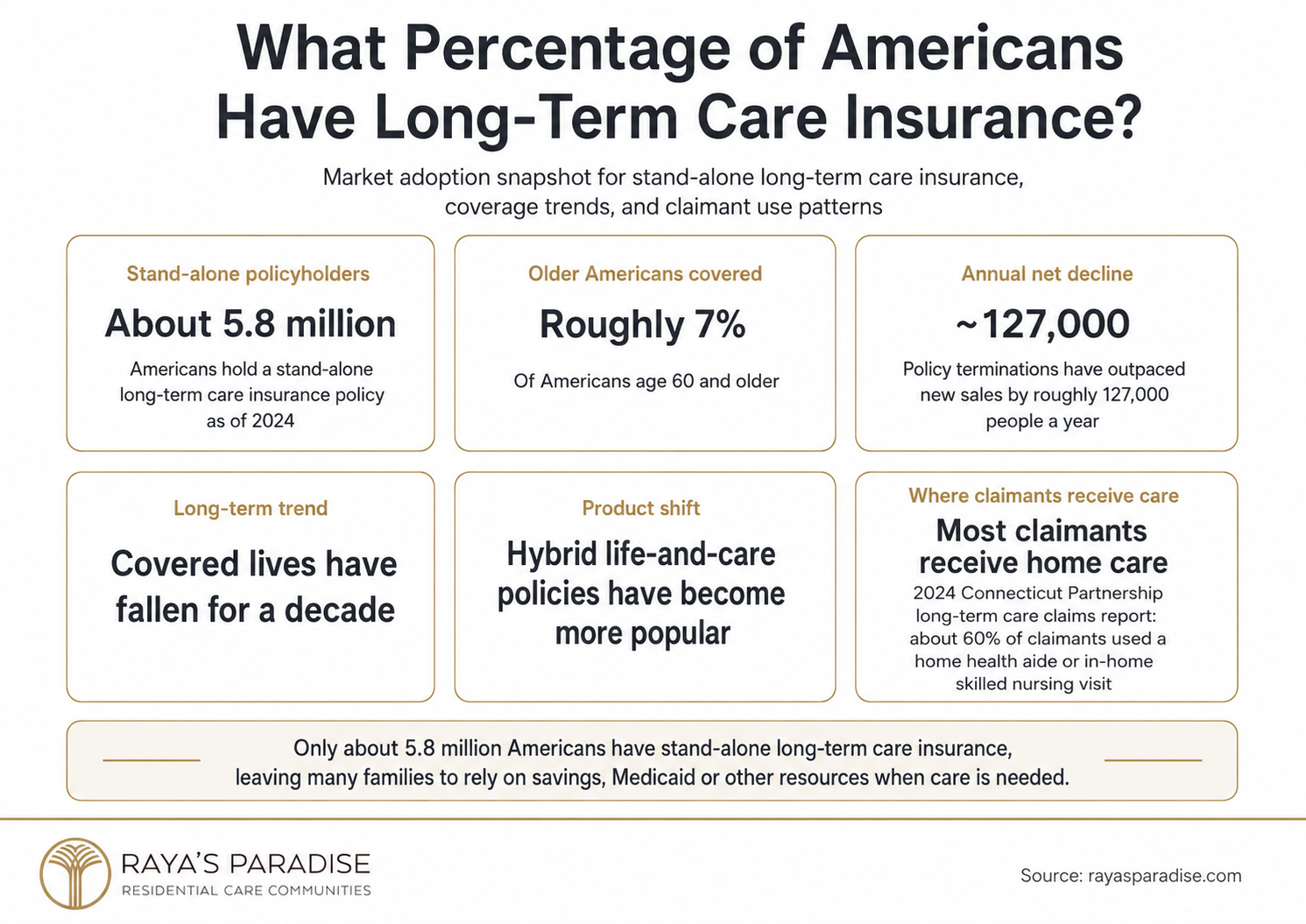
Only about 5.8 million Americans have stand-alone long-term care insurance, leaving many families to rely on savings, Medicaid or other resources when care is needed.
How much does long-term care insurance cost by age band?
- With 3% inflation protection, a single man pays about $2,200 at 55, $2,610 at 60 and $3,280 at 65
- A single woman pays about $3,750 at 55, $4,550 at 60 and $5,290 at 65
- A couple pays a combined $5,050 at 55, $5,800 at 60 and $7,150 at 65
- The application sweet spot is between ages 55 and 65, since older applicants face higher rates and tougher health screening
| Purchase age (3% inflation) |
Single male |
Single female |
Couple (combined) |
| Age 55 |
$2,200 |
$3,750 |
$5,050 |
| Age 60 |
$2,610 |
$4,550 |
$5,800 |
| Age 65 |
$3,280 |
$5,290 |
$7,150 |
Level-benefit policies without inflation growth cost roughly half these amounts but leave the benefit pool flat against rising care prices. All figures reflect select-health sample premiums for a $165,000 starting pool, calculated for Illinois; rates vary by state and insurer.
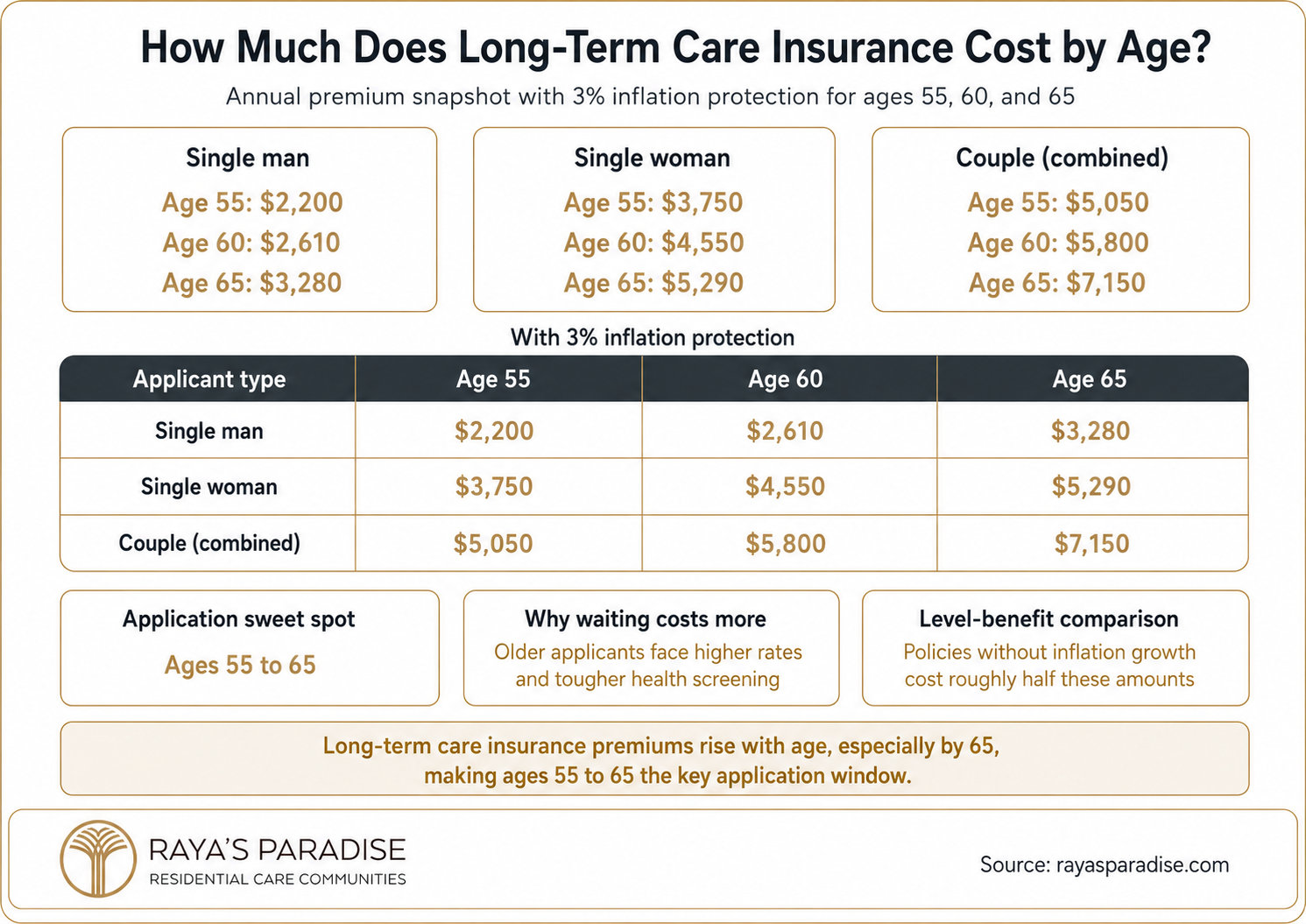
Long-term care insurance premiums rise with age, especially by 65, making ages 55 to 65 the key application window.
This research is for informational purposes only and is not financial, insurance, legal or medical advice. Premiums are sample rates that vary by insurer, state, health and benefit design. Policy pricing also changes over time. Confirm current quotes with a licensed agent and verify policy terms before purchasing.
Sources and additional resources
Source note: Premium figures and the $400,500 age-85 value come from the 2025 AALTCI price index, which reports select-health sample rates calculated for Illinois that vary by state and insurer. The $3,000 to $6,000 maximum monthly benefit comes from AALTCI’s 2024 buyer data, and the roughly 60% home-care claimant share from an AALTCI summary of 2024 Connecticut Partnership long-term care claims data.
The 5.8 million covered lives, the roughly 7% of Americans age 60 and older, the 127,000 annual termination gap and the average claim rising from $110,000 in 2015 to $180,000 in 2024 come from Milliman’s 2024 industry analysis.
Care-cost figures used for comparison come from other surveys. Assisted living ($6,200) and nursing home ($9,581 semi-private, $10,798 private) come from the 2025 CareScout and Genworth Cost of Care Survey, while memory care ($6,690) comes from A Place for Mom’s 2026 data.
Raya’s Paradise provides assisted living, memory care, hospice support, short-term respite care and in-home care across Southern California. Depending on policy terms, long-term care insurance may help pay for eligible assisted living, memory care or in-home care services. Families can tour senior assisted living in Los Angeles or assisted living for aging parents in Orange County to see a residential community firsthand.