Leadership Profile

Moti Gamburd

CEO of Raya’s Paradise Residential Care Communities

Moti Gamburd is the CEO of Raya’s Paradise Residential Care Communities, a Southern California senior living organization specializing in boutique assisted living, memory care, hospice support and respite care. His leadership continues the care legacy started by his mother, Raya Gamburd, a registered nurse who founded Raya’s Paradise in West Hollywood in 1991.

Moti Gamburd, CEO of Raya’s Paradise

About Moti Gamburd

Moti Gamburd serves as Chief Executive Officer of Raya’s Paradise Residential Care Communities. His background in senior care is closely tied to the history of Raya’s Paradise, which began with his mother, Raya Gamburd, a registered nurse and the founder of the organization.

Raya’s Paradise states that Moti has had extensive exposure and experience in the geriatric field since the company’s inception in 1991. Under his mother’s mentorship, he developed a deep understanding of the personal, emotional and practical needs families face when choosing care for an older loved one.

Moti holds a Bachelor of Science in Biochemistry from UCLA, according to the Raya’s Paradise executive team profile.

Leadership at Raya’s Paradise

At Raya’s Paradise, Moti helps lead a residential care model built around intimate, home-like senior living communities. The organization provides assisted living, memory care, hospice support and short-term respite care for older adults and families across Southern California.

His leadership reflects the founding vision of Raya’s Paradise: to create senior living environments where residents receive attentive care in settings that feel warm, personal and dignified rather than institutional.

A Boutique Approach to Senior Living

Raya’s Paradise is known for a boutique residential care model that emphasizes comfort, familiarity and individualized support. This approach is especially meaningful for families looking for an assisted living or memory care setting where their loved one can feel known, respected and cared for as a person.

Moti’s work focuses on preserving dignity through thoughtful care environments, clear family communication and daily support that reflects each resident’s needs, routines and preferences.

Memory Care and Specialized Support

Moti’s senior care perspective includes a strong focus on families navigating Alzheimer’s disease, dementia and other memory-related care needs. Through Raya’s Paradise, his work supports structured daily routines, personalized attention and residential environments designed to help residents feel safe, calm and connected.

He understands that choosing memory care is often an emotional decision for families. His leadership emphasizes reassurance, practical guidance and compassionate care during one of the most sensitive transitions in senior living.

Media and Senior Care Conversations

Moti has appeared in Raya’s Paradise podcast and video conversations covering senior living placement, the opening of the San Clemente community and the ongoing evolution of residential care for older adults and families.

These conversations reflect his broader commitment to helping families better understand assisted living, memory care, senior living transitions and the emotional realities that often come with finding the right care setting.

Topics Moti Writes About

Moti’s articles focus on practical, family-centered guidance for senior living decisions, including how to evaluate assisted living communities, when memory care may be needed, how to approach senior care transitions and how families can support older loved ones with dignity and confidence.


Articles by Moti Gamburd

Browse Moti’s latest articles on assisted living, memory care, senior living transitions, hospice support, respite care and family caregiving.

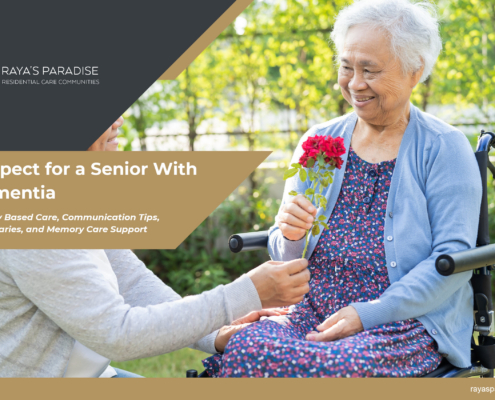
Respect for a Senior With Dementia - Dignity Based Care, Communication Tips, Boundaries, and Memory Care Support

Respect for a Senior with Dementia

“Respect your elders” sounds simple until dementia enters the room and nothing behaves the way it used to. Your mom forgets your child’s name. Your dad insists he needs to “get to work” even though he retired 20 years ago. Your spouse becomes suspicious, short-tempered, or starts wandering at night. If you have ever felt irritated, guilty, heartbroken, and exhausted in the same hour, you are not alone. Respect in dementia care is not about pretending hard moments are easy. It is about protecting dignity when memory, judgment, and communication are changing. It is how you speak, how you offer help, how you keep someone safe without shaming them, and how you protect your own patience so you do not become someone you do not recognize.
Why Dementia Patients Have Trouble With Eating - Causes, Safety Red Flags, and Mealtime Strategies

Why Dementia Patients Have Trouble with Eating
For most of us, meals are a break. For many people living with dementia, meals can feel like a test they did not study for. The room is busy, the plate is unfamiliar, utensils are confusing, the food tastes “wrong,” or they simply forget what comes next. Families often describe it as watching a loved one struggle with something that used to be automatic. This guide breaks down common reasons dementia affects eating, practical ways to make meals calmer, and warning signs that should prompt medical attention.
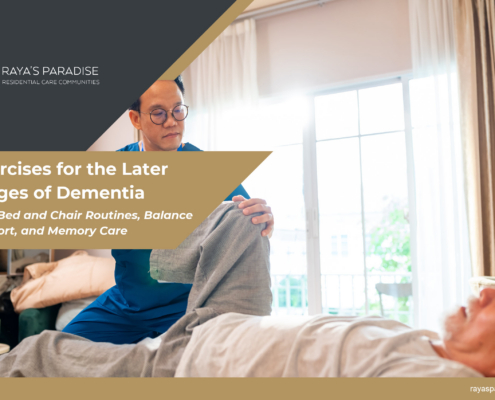
Exercises for the Later Stages of Dementia - Safe Bed and Chair Routines, Balance Support, and Memory Care in Orange County

Exercises for the Later Stages of Dementia

Late-stage dementia changes almost everything about movement. Walking may be limited or no longer safe. Standing might require hands-on help. Even sitting upright can feel tiring. That does not mean movement is over. It just means the goal shifts. In the later stages, movement is about comfort, circulation, posture, safer transfers, and protecting dignity. Families often worry about doing the wrong thing. A good rule is this: small, gentle movement is usually the right starting point, especially when it is guided by safety cues and your loved one’s energy that day. The National Institute on Aging exercise and physical activity guidance explains why older adults benefit from staying active in ways that fit their abilities. That still applies in advanced dementia, even when activity looks like supported sitting, a few seconds of standing with help, or assisted range of motion.