Leadership Profile

Moti Gamburd

CEO of Raya’s Paradise Residential Care Communities

Moti Gamburd is the CEO of Raya’s Paradise Residential Care Communities, a Southern California senior living organization specializing in boutique assisted living, memory care, hospice support and respite care. His leadership continues the care legacy started by his mother, Raya Gamburd, a registered nurse who founded Raya’s Paradise in West Hollywood in 1991.

Moti Gamburd, CEO of Raya’s Paradise

About Moti Gamburd

Moti Gamburd serves as Chief Executive Officer of Raya’s Paradise Residential Care Communities. His background in senior care is closely tied to the history of Raya’s Paradise, which began with his mother, Raya Gamburd, a registered nurse and the founder of the organization.

Raya’s Paradise states that Moti has had extensive exposure and experience in the geriatric field since the company’s inception in 1991. Under his mother’s mentorship, he developed a deep understanding of the personal, emotional and practical needs families face when choosing care for an older loved one.

Moti holds a Bachelor of Science in Biochemistry from UCLA, according to the Raya’s Paradise executive team profile.

Leadership at Raya’s Paradise

At Raya’s Paradise, Moti helps lead a residential care model built around intimate, home-like senior living communities. The organization provides assisted living, memory care, hospice support and short-term respite care for older adults and families across Southern California.

His leadership reflects the founding vision of Raya’s Paradise: to create senior living environments where residents receive attentive care in settings that feel warm, personal and dignified rather than institutional.

A Boutique Approach to Senior Living

Raya’s Paradise is known for a boutique residential care model that emphasizes comfort, familiarity and individualized support. This approach is especially meaningful for families looking for an assisted living or memory care setting where their loved one can feel known, respected and cared for as a person.

Moti’s work focuses on preserving dignity through thoughtful care environments, clear family communication and daily support that reflects each resident’s needs, routines and preferences.

Memory Care and Specialized Support

Moti’s senior care perspective includes a strong focus on families navigating Alzheimer’s disease, dementia and other memory-related care needs. Through Raya’s Paradise, his work supports structured daily routines, personalized attention and residential environments designed to help residents feel safe, calm and connected.

He understands that choosing memory care is often an emotional decision for families. His leadership emphasizes reassurance, practical guidance and compassionate care during one of the most sensitive transitions in senior living.

Media and Senior Care Conversations

Moti has appeared in Raya’s Paradise podcast and video conversations covering senior living placement, the opening of the San Clemente community and the ongoing evolution of residential care for older adults and families.

These conversations reflect his broader commitment to helping families better understand assisted living, memory care, senior living transitions and the emotional realities that often come with finding the right care setting.

Topics Moti Writes About

Moti’s articles focus on practical, family-centered guidance for senior living decisions, including how to evaluate assisted living communities, when memory care may be needed, how to approach senior care transitions and how families can support older loved ones with dignity and confidence.


Articles by Moti Gamburd

Browse Moti’s latest articles on assisted living, memory care, senior living transitions, hospice support, respite care and family caregiving.

When Your Spouse Has Dementia, Coping With Grief, Rebuilding Intimacy, Memory Care Support in Los Angeles and Orange County

When Your Spouse Has Dementia

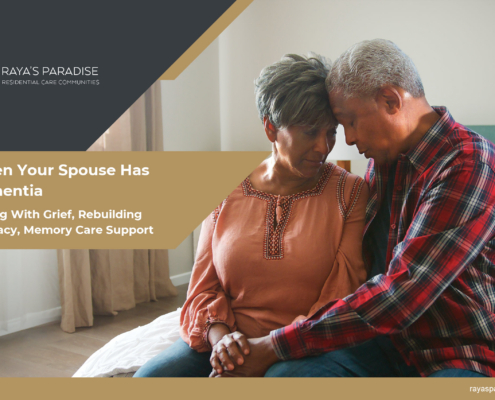
When your spouse has dementia, life can start to feel unfamiliar even while you are standing in the same kitchen, sleeping in the same bed, living in the same zip code. If a move to memory care becomes necessary, that change can hit like a wave. The home gets quieter. Your daily responsibilities shift. Your identity as a partner, caregiver, decision-maker, and protector gets rearranged all at once. This article combines the heart of two earlier posts into one practical guide. It is written for the spouse who is trying to do the right thing while carrying grief, love, exhaustion, and that strange mix of relief and sadness that can feel impossible to explain.
Choosing Assisted Living for Senior Couples, Shared Suites, Memory Care Options, Costs and Tour Questions

Choosing Assisted Living for Senior Couples
When a couple moves into assisted living together, it is rarely just a housing decision. It is a relationship decision. You are protecting routines, privacy, companionship, and the little daily rituals that make two people feel like “us” even when health is changing. The most common fear I hear from families is simple, “Will they be separated?” Sometimes the answer is yes, at least partially, especially if one spouse needs a secured memory care setting. That does not automatically mean a loss of togetherness. Many communities can support a couple with different needs using a shared apartment, nearby rooms, or a plan that keeps daily contact easy while still meeting safety needs.
History of Assisted Living, How Senior Care Evolved From Nursing Homes to Today’s Residential Communities

History of Assisted Living |How the Option of Assisted Living Developed

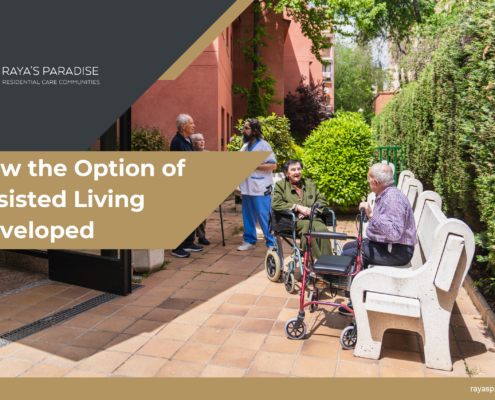
Assisted living feels “normal” now, so it is easy to forget how modern the concept really is. For much of the 20th century, when an older adult needed ongoing daily help, families often faced an uncomfortable split. You either tried to make it work at home with family caregiving (sometimes with paid help if you could afford it), or you moved into a nursing home style setting that was built around medical oversight and institutional efficiency. Assisted living developed because families wanted a third option. A place that offered help with daily life without stripping away privacy, choice, dignity, and the feeling of living in a home.