
Contents
- History of Assisted Living
- Key Takeaways
- Why assisted living was created – the gap between home care and nursing homes
- The Oregon Model and the early assisted living philosophy
- From board and care to modern assisted living – how California fits in
- What assisted living became – the modern continuum of senior care
- How to use this history to choose the right assisted living today
- Sources & Additional Resources
- More Assisted Living Resources
- Choosing Assisted Living for Senior Couples
- History of Assisted Living |How the Option of Assisted Living Developed
- Choosing Assisted Living for Those with Alzheimer's or Dementia
- Paying for Assisted Living, Costs, Insurance, VA Benefits, and Smart Ways to Plan
- Six Myths About Assisted Living - What Senior Living Really Looks Like
- The Benefits of Assisted Living Over In-Home Care
- How to Care for a Loved One in Assisted Living From Afar
- Making a Smooth Transition to Assisted Living
- The Benefits of Small Assisted Living Facilities
- Tips for Selling Your Home to Pay for Assisted Living
- Signs It’s Time for Assisted Living, How to Know When Extra Support Is Needed
- Downsizing to Prepare for a Move to Assisted Living
- Discussing Assisted Living with a Reluctant Parent
- Does Assisted Living Provide Medical Care? Understanding Living Options and Care in Assisted Living Communities
- What Amenities Are Offered in Assisted Living? Services, Benefits, and Features for Residents

History of Assisted Living
How Senior Care Evolved From Nursing Homes to Today’s Residential Communities
Key Takeaways
- Modern assisted living emerged as a response to the limitations of institutional nursing home care and a growing demand for privacy, autonomy, and a home-like setting.
- Early assisted living philosophy emphasized choice, dignity, and individualized support while still providing supervision and help with activities of daily living (ADLs).
- In California, “assisted living” is often delivered under Residential Care Facilities for the Elderly (RCFE) licensing, and families may also hear terms like “board and care” or “residential care.”
- Modern assisted living sits on a continuum that can include dementia support, memory care, respite stays, and coordination with hospice partners depending on needs.
- Knowing the history helps you tour smarter because you learn what assisted living is meant to protect, not just what it provides.
Assisted living feels “normal” now, so it is easy to forget how modern the concept really is. For much of the 20th century, when an older adult needed ongoing daily help, families often faced an uncomfortable split. You either tried to make it work at home with family caregiving (sometimes with paid help if you could afford it), or you moved into a nursing home style setting that was built around medical oversight and institutional efficiency.
Assisted living developed because families wanted a third option. A place that offered help with daily life without stripping away privacy, choice, dignity, and the feeling of living in a home.
If you are exploring options in Los Angeles or Orange County, you can start by browsing Raya’s Paradise communities. If you want to talk through care levels and fit, reach us through our contact page. Prefer to evaluate in person first, you can request a Los Angeles tour or schedule a San Clemente tour.

Why assisted living was created – the gap between home care and nursing homes
Families used to hit a painful cliff. When someone could no longer manage meals, medications, bathing, or safety at home, the next step often felt like a nursing home even if the person did not need 24/7 skilled medical care.
Historically, nursing homes were designed around medical oversight and efficiency. That model met real needs, but it was not built around autonomy or a home-like lifestyle. Over time, federal reforms strengthened nursing home residents’ rights, including protections around dignity and quality of life. If you want a plain-language view of how residents’ rights are framed today, see the Consumer Voice overview of nursing home residents’ rights and California’s Long-Term Care Ombudsman residents’ rights information.
Assisted living developed to fill the space between those extremes. It offered a setting where older adults could receive help with activities of daily living (ADLs) while keeping more normal rhythms like personal routines, choice, privacy, and social connection.
If you want a modern primer on what assisted living is today, this guide is a good starting point: what assisted living is and how it works.

The Oregon Model and the early assisted living philosophy
In the U.S., many histories of assisted living point to pioneering work in Oregon in the late 1970s and 1980s, where innovators pushed for a residential model built around privacy, choice, and dignity rather than institutional routines. Dr. Keren Brown Wilson is widely cited in policy and academic writing as an influential figure in shaping and scaling early assisted living concepts in Oregon, including through organizations associated with the “Oregon Model.” For additional context, see this policy and research discussion that cites interviews and historical development in Oregon: Aging in Place (NJ State Library PDF).
That early vision matters because it gives families a standard to measure communities against. When assisted living is done well, it does not feel like “a facility.” It feels like a home with support. When it drifts away from that purpose, it can start to feel institutional again, just with nicer furniture.
This is also why tours should focus on daily life, not only amenities. If you want an evaluation framework, use how to evaluate an assisted living facility as a structured guide.

From board and care to modern assisted living – how California fits in
In California, the conversation often includes “board and care” or “residential care.” Many of these settings are licensed as Residential Care Facilities for the Elderly (RCFEs) under the California Department of Social Services (CDSS) Senior Care Licensing Program. Families commonly use “assisted living” as an umbrella term, but the licensing language you see in official documents will typically refer to RCFE. For California’s program overview, see CDSS Senior Care Licensing.
California legislative materials also commonly describe RCFEs as being referred to as assisted living facilities or board and care homes in everyday language, and they describe these settings as providing care and supervision with assistance for daily activities. See the Assembly committee analysis for RCFE oversight context here: California Assembly RCFE oversight context (PDF).
For families, the practical takeaway is simple. Assisted living can be delivered in different formats, including smaller residential homes and larger communities. The right fit depends on care needs, personality, budget, and what environment helps someone feel calm and safe.
If you are deciding between a smaller home and a larger building, this guide helps families compare tradeoffs clearly: large assisted living vs smaller board and care homes.

What assisted living became – the modern continuum of senior care
Today, assisted living sits on a broader senior care continuum. Depending on the provider and the resident’s needs, communities may offer:
- Assistance with daily living like bathing, dressing, meals, and medication support or management (scope varies by setting and resident plan).
- Safety and supervision tailored to mobility changes and fall risk.
- Activities and social connection that reduce isolation and add structure to the day.
- Dementia support within assisted living or through dedicated memory care depending on needs and licensing.
At Raya’s Paradise, families can explore day-to-day support through assisted living services and regional options such as assisted living in Orange County. When cognitive needs are higher, dedicated support may be a better fit through memory care services and memory care in Orange County.
Families also use assisted living communities as a stabilizing bridge during life transitions. If you need temporary support while you evaluate a longer-term plan, short-term respite care can be a practical option. If advanced illness is part of the picture, we can coordinate with hospice partners through hospice care services when appropriate.
If you are weighing types of senior living broadly, you may also find it helpful to compare categories using assisted living vs senior living.
How to use this history to choose the right assisted living today
The history of assisted living is not trivia. It is a checklist for what matters most. Assisted living was meant to protect:
- Privacy: a resident should still feel like they have a personal life, not a public one.
- Choice: daily routines should flex around the person, not force the person to fit a rigid schedule.
- Dignity: care should feel respectful, not transactional.
- Individualized support: staffing should be sufficient to provide real help, not just “coverage.”
When you tour, ask questions that reveal whether a community is aligned with that purpose. Is it calm. Do staff speak respectfully. Do residents look engaged and comfortable. Can the team explain how they support changing needs over time.
If you want to explore next steps, start with our communities page, reach out through our contact page, or schedule an in-person visit in Los Angeles or San Clemente.
Assisted living exists because older adults deserve support without losing themselves. The best communities still hold that line every day.
Our Senior Assisted Living Community in Orange County
Our Assisted Living Residential Homes in Los Angeles
Sources & Additional Resources
Disclaimer:
This article is educational and general. It is not legal advice, regulatory advice, or medical advice. Assisted living terminology, licensing categories, and resident rights can vary by state, facility type, and level of care. For decisions specific to your situation, confirm current requirements and policies directly with each community and consult appropriate professionals or agencies for individualized guidance.
 https://rayasparadise.com/wp-content/uploads/2013/03/Choosing-Assisted-Living-for-Senior-Couples.jpg
1700
2555
Moti Gamburd
https://rayasparadise.com//wp-content/uploads/2019/07/RP-LOGO-Horizontal-Name-Only-websitetrans.png
Moti Gamburd2026-02-14 06:37:342026-05-31 05:46:59Choosing Assisted Living for Senior Couples
https://rayasparadise.com/wp-content/uploads/2013/03/Choosing-Assisted-Living-for-Senior-Couples.jpg
1700
2555
Moti Gamburd
https://rayasparadise.com//wp-content/uploads/2019/07/RP-LOGO-Horizontal-Name-Only-websitetrans.png
Moti Gamburd2026-02-14 06:37:342026-05-31 05:46:59Choosing Assisted Living for Senior Couples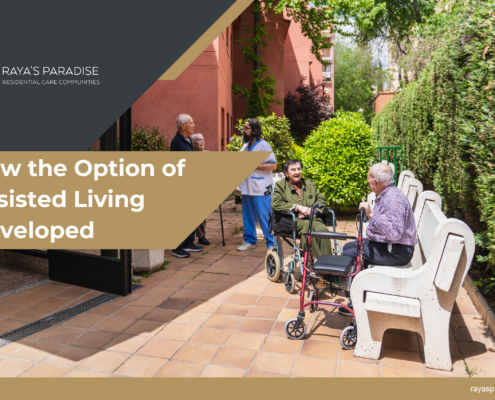 https://rayasparadise.com/wp-content/uploads/2012/12/How-the-Option-of-Assisted-Living-Developed.jpg
1702
2553
Moti Gamburd
https://rayasparadise.com//wp-content/uploads/2019/07/RP-LOGO-Horizontal-Name-Only-websitetrans.png
Moti Gamburd2026-02-12 04:33:042026-02-14 21:30:20History of Assisted Living |How the Option of Assisted Living Developed
https://rayasparadise.com/wp-content/uploads/2012/12/How-the-Option-of-Assisted-Living-Developed.jpg
1702
2553
Moti Gamburd
https://rayasparadise.com//wp-content/uploads/2019/07/RP-LOGO-Horizontal-Name-Only-websitetrans.png
Moti Gamburd2026-02-12 04:33:042026-02-14 21:30:20History of Assisted Living |How the Option of Assisted Living Developed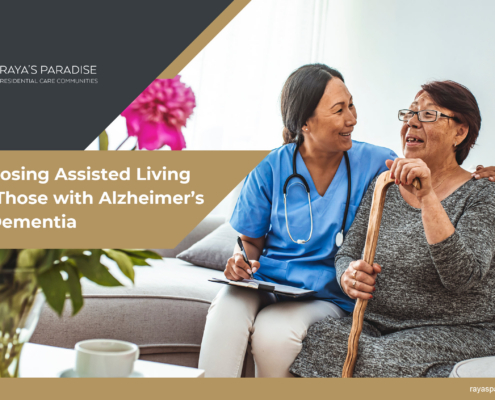 https://rayasparadise.com/wp-content/uploads/2012/10/Choosing-Assisted-Living-for-Those-with-Alzheimers-or-Dementia.jpeg
1695
2546
Moti Gamburd
https://rayasparadise.com//wp-content/uploads/2019/07/RP-LOGO-Horizontal-Name-Only-websitetrans.png
Moti Gamburd2026-02-11 08:14:422026-05-31 02:35:27Choosing Assisted Living for Those with Alzheimer's or Dementia
https://rayasparadise.com/wp-content/uploads/2012/10/Choosing-Assisted-Living-for-Those-with-Alzheimers-or-Dementia.jpeg
1695
2546
Moti Gamburd
https://rayasparadise.com//wp-content/uploads/2019/07/RP-LOGO-Horizontal-Name-Only-websitetrans.png
Moti Gamburd2026-02-11 08:14:422026-05-31 02:35:27Choosing Assisted Living for Those with Alzheimer's or Dementia https://rayasparadise.com/wp-content/uploads/2012/10/Paying-for-Assisted-Living.jpg
1700
2542
Moti Gamburd
https://rayasparadise.com//wp-content/uploads/2019/07/RP-LOGO-Horizontal-Name-Only-websitetrans.png
Moti Gamburd2026-02-10 03:30:062026-05-30 18:56:57Paying for Assisted Living, Costs, Insurance, VA Benefits, and Smart Ways to Plan
https://rayasparadise.com/wp-content/uploads/2012/10/Paying-for-Assisted-Living.jpg
1700
2542
Moti Gamburd
https://rayasparadise.com//wp-content/uploads/2019/07/RP-LOGO-Horizontal-Name-Only-websitetrans.png
Moti Gamburd2026-02-10 03:30:062026-05-30 18:56:57Paying for Assisted Living, Costs, Insurance, VA Benefits, and Smart Ways to Plan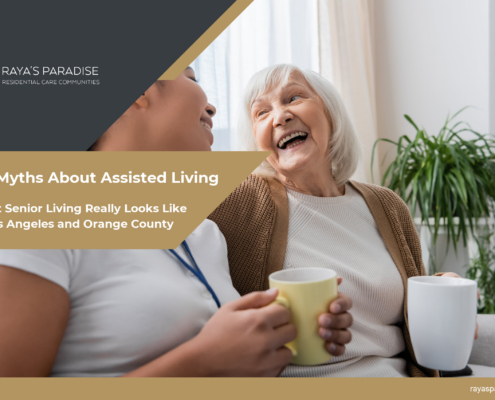 https://rayasparadise.com/wp-content/uploads/2012/10/Six-Myths-About-Assisted-Living.jpg
1702
2555
Moti Gamburd
https://rayasparadise.com//wp-content/uploads/2019/07/RP-LOGO-Horizontal-Name-Only-websitetrans.png
Moti Gamburd2026-02-09 04:02:312026-05-31 05:44:32Six Myths About Assisted Living - What Senior Living Really Looks Like
https://rayasparadise.com/wp-content/uploads/2012/10/Six-Myths-About-Assisted-Living.jpg
1702
2555
Moti Gamburd
https://rayasparadise.com//wp-content/uploads/2019/07/RP-LOGO-Horizontal-Name-Only-websitetrans.png
Moti Gamburd2026-02-09 04:02:312026-05-31 05:44:32Six Myths About Assisted Living - What Senior Living Really Looks Like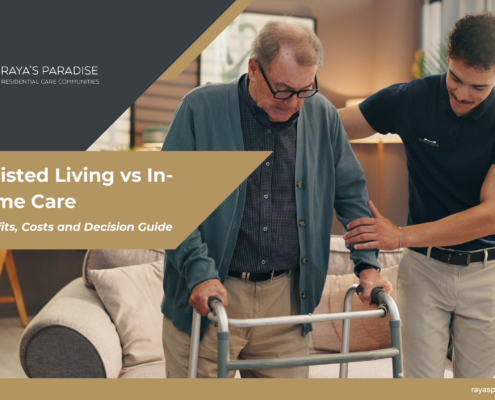 https://rayasparadise.com/wp-content/uploads/2026/02/Assisted-Living-vs-In-Home-Care.jpg
1695
2553
Moti Gamburd
https://rayasparadise.com//wp-content/uploads/2019/07/RP-LOGO-Horizontal-Name-Only-websitetrans.png
Moti Gamburd2026-02-08 06:00:482026-02-15 17:35:09The Benefits of Assisted Living Over In-Home Care
https://rayasparadise.com/wp-content/uploads/2026/02/Assisted-Living-vs-In-Home-Care.jpg
1695
2553
Moti Gamburd
https://rayasparadise.com//wp-content/uploads/2019/07/RP-LOGO-Horizontal-Name-Only-websitetrans.png
Moti Gamburd2026-02-08 06:00:482026-02-15 17:35:09The Benefits of Assisted Living Over In-Home Care https://rayasparadise.com/wp-content/uploads/2013/01/Caring-for-a-Parent-in-Assisted-Living-From-Afar.jpeg
1702
2556
Moti Gamburd
https://rayasparadise.com//wp-content/uploads/2019/07/RP-LOGO-Horizontal-Name-Only-websitetrans.png
Moti Gamburd2026-02-06 08:00:312026-05-31 05:08:40How to Care for a Loved One in Assisted Living From Afar
https://rayasparadise.com/wp-content/uploads/2013/01/Caring-for-a-Parent-in-Assisted-Living-From-Afar.jpeg
1702
2556
Moti Gamburd
https://rayasparadise.com//wp-content/uploads/2019/07/RP-LOGO-Horizontal-Name-Only-websitetrans.png
Moti Gamburd2026-02-06 08:00:312026-05-31 05:08:40How to Care for a Loved One in Assisted Living From Afar https://rayasparadise.com/wp-content/uploads/2012/10/Smooth-Transition-to-Assisted-Living.jpeg
1696
2555
Moti Gamburd
https://rayasparadise.com//wp-content/uploads/2019/07/RP-LOGO-Horizontal-Name-Only-websitetrans.png
Moti Gamburd2026-02-06 01:00:082026-05-31 05:06:46Making a Smooth Transition to Assisted Living
https://rayasparadise.com/wp-content/uploads/2012/10/Smooth-Transition-to-Assisted-Living.jpeg
1696
2555
Moti Gamburd
https://rayasparadise.com//wp-content/uploads/2019/07/RP-LOGO-Horizontal-Name-Only-websitetrans.png
Moti Gamburd2026-02-06 01:00:082026-05-31 05:06:46Making a Smooth Transition to Assisted Living https://rayasparadise.com/wp-content/uploads/2012/10/Benefits-of-Small-Assisted-Living-Facilities.jpg
1702
2551
Moti Gamburd
https://rayasparadise.com//wp-content/uploads/2019/07/RP-LOGO-Horizontal-Name-Only-websitetrans.png
Moti Gamburd2026-02-04 04:23:062026-05-31 06:25:30The Benefits of Small Assisted Living Facilities
https://rayasparadise.com/wp-content/uploads/2012/10/Benefits-of-Small-Assisted-Living-Facilities.jpg
1702
2551
Moti Gamburd
https://rayasparadise.com//wp-content/uploads/2019/07/RP-LOGO-Horizontal-Name-Only-websitetrans.png
Moti Gamburd2026-02-04 04:23:062026-05-31 06:25:30The Benefits of Small Assisted Living Facilities https://rayasparadise.com/wp-content/uploads/2026/01/Tips-for-Selling-Your-Home-to-Pay-for-Assisted-Living.jpg
1702
2555
Moti Gamburd
https://rayasparadise.com//wp-content/uploads/2019/07/RP-LOGO-Horizontal-Name-Only-websitetrans.png
Moti Gamburd2026-01-22 04:00:552026-05-30 19:07:49Tips for Selling Your Home to Pay for Assisted Living
https://rayasparadise.com/wp-content/uploads/2026/01/Tips-for-Selling-Your-Home-to-Pay-for-Assisted-Living.jpg
1702
2555
Moti Gamburd
https://rayasparadise.com//wp-content/uploads/2019/07/RP-LOGO-Horizontal-Name-Only-websitetrans.png
Moti Gamburd2026-01-22 04:00:552026-05-30 19:07:49Tips for Selling Your Home to Pay for Assisted Living https://rayasparadise.com/wp-content/uploads/2012/10/Signs-Its-Time-for-Assisted-Living.jpg
1697
2555
Raya's Paradise
https://rayasparadise.com//wp-content/uploads/2019/07/RP-LOGO-Horizontal-Name-Only-websitetrans.png
Raya's Paradise2026-01-19 03:09:442026-05-30 02:35:45Signs It’s Time for Assisted Living, How to Know When Extra Support Is Needed
https://rayasparadise.com/wp-content/uploads/2012/10/Signs-Its-Time-for-Assisted-Living.jpg
1697
2555
Raya's Paradise
https://rayasparadise.com//wp-content/uploads/2019/07/RP-LOGO-Horizontal-Name-Only-websitetrans.png
Raya's Paradise2026-01-19 03:09:442026-05-30 02:35:45Signs It’s Time for Assisted Living, How to Know When Extra Support Is Needed https://rayasparadise.com/wp-content/uploads/2012/12/Downsizing-to-Prepare-for-Assisted-Living.jpeg
1704
2558
Moti Gamburd
https://rayasparadise.com//wp-content/uploads/2019/07/RP-LOGO-Horizontal-Name-Only-websitetrans.png
Moti Gamburd2026-01-13 04:02:202026-05-30 19:17:47Downsizing to Prepare for a Move to Assisted Living
https://rayasparadise.com/wp-content/uploads/2012/12/Downsizing-to-Prepare-for-Assisted-Living.jpeg
1704
2558
Moti Gamburd
https://rayasparadise.com//wp-content/uploads/2019/07/RP-LOGO-Horizontal-Name-Only-websitetrans.png
Moti Gamburd2026-01-13 04:02:202026-05-30 19:17:47Downsizing to Prepare for a Move to Assisted Living https://rayasparadise.com/wp-content/uploads/2012/11/How-to-Discuss-Assisted-Living-With-a-Reluctant-Parent.jpeg
1704
2553
Moti Gamburd
https://rayasparadise.com//wp-content/uploads/2019/07/RP-LOGO-Horizontal-Name-Only-websitetrans.png
Moti Gamburd2026-01-12 02:33:232026-05-30 17:41:08Discussing Assisted Living with a Reluctant Parent
https://rayasparadise.com/wp-content/uploads/2012/11/How-to-Discuss-Assisted-Living-With-a-Reluctant-Parent.jpeg
1704
2553
Moti Gamburd
https://rayasparadise.com//wp-content/uploads/2019/07/RP-LOGO-Horizontal-Name-Only-websitetrans.png
Moti Gamburd2026-01-12 02:33:232026-05-30 17:41:08Discussing Assisted Living with a Reluctant Parent https://rayasparadise.com/wp-content/uploads/2025/08/Does-Assisted-Living-Provide-Medical-Care.jpg
1704
2548
Raya's Paradise
https://rayasparadise.com//wp-content/uploads/2019/07/RP-LOGO-Horizontal-Name-Only-websitetrans.png
Raya's Paradise2025-08-27 20:32:462026-01-14 19:35:28Does Assisted Living Provide Medical Care? Understanding Living Options and Care in Assisted Living Communities
https://rayasparadise.com/wp-content/uploads/2025/08/Does-Assisted-Living-Provide-Medical-Care.jpg
1704
2548
Raya's Paradise
https://rayasparadise.com//wp-content/uploads/2019/07/RP-LOGO-Horizontal-Name-Only-websitetrans.png
Raya's Paradise2025-08-27 20:32:462026-01-14 19:35:28Does Assisted Living Provide Medical Care? Understanding Living Options and Care in Assisted Living Communities https://rayasparadise.com/wp-content/uploads/2025/08/What-Amenities-Are-Offered-In-Assisted-Living.jpg
1080
1621
Raya's Paradise
https://rayasparadise.com//wp-content/uploads/2019/07/RP-LOGO-Horizontal-Name-Only-websitetrans.png
Raya's Paradise2025-08-27 16:58:562026-05-31 02:41:20What Amenities Are Offered in Assisted Living? Services, Benefits, and Features for Residents
https://rayasparadise.com/wp-content/uploads/2025/08/What-Amenities-Are-Offered-In-Assisted-Living.jpg
1080
1621
Raya's Paradise
https://rayasparadise.com//wp-content/uploads/2019/07/RP-LOGO-Horizontal-Name-Only-websitetrans.png
Raya's Paradise2025-08-27 16:58:562026-05-31 02:41:20What Amenities Are Offered in Assisted Living? Services, Benefits, and Features for Residents
