
Contents
- How Exercise Can Benefit Dementia Patients
- Key Takeaways
- Why exercise helps dementia patients in real life
- How much exercise is appropriate for seniors with dementia?
- Best dementia-friendly exercises and activities
- Safety first, how to prevent falls and overwhelm
- What to do when motivation is low or agitation shows up
- When home routines are not enough
- Next Steps
- Sources & Additional Resources
- More Memory Care Resources
- How to Tell When a Loved One with Dementia Is Sick
- Does Computer Use Help with Dementia Symptoms?
- Coping With Dementia Behavior
- Respect for a Senior with Dementia
- Why Dementia Patients Have Trouble with Eating
- Exercises for the Later Stages of Dementia
- Addressing Agitation in Someone Who Has Dementia
- All About Lewy Body Dementia
- Exercise Benefits for Dementia Patients - Safe Activities, Routines, and Memory Care Support
- Giving Dignity to Dementia Patients
- Simple diagnostic tool predicts individual risk of Alzheimer's
- Why Alzheimer's Patients Become Agitated
- Dementia vs. Ordinary Forgetfulness and Confusion
- What to Expect During Late Stage Alzheimer's
- Helping a Senior with Dementia Remember Medicine
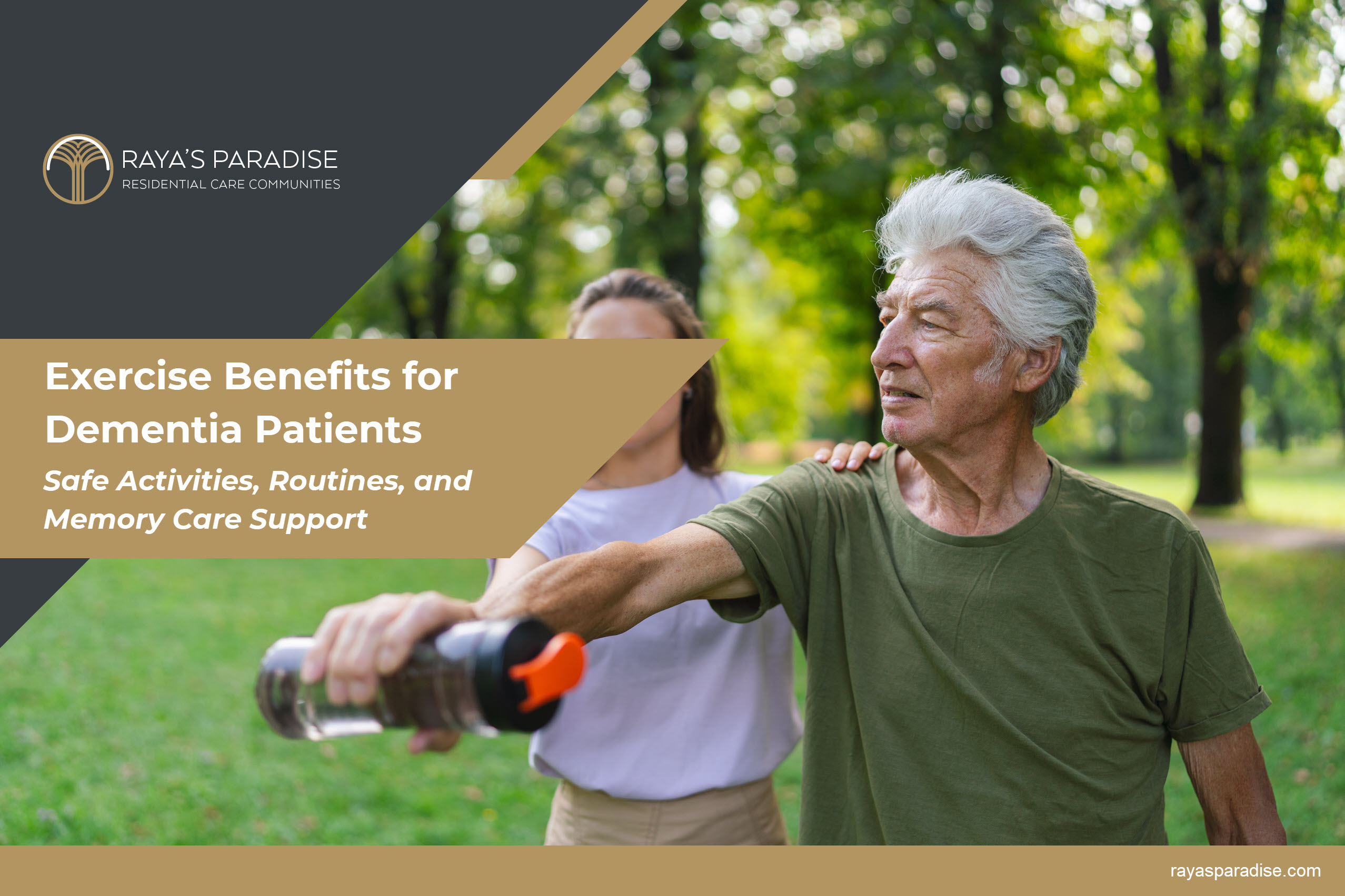
How Exercise Can Benefit Dementia Patients
Safe Activities, Routines, and Memory Care Support
Key Takeaways
- Movement can support balance, mobility, mood, sleep, and daily function for many people living with dementia.
- Consistency matters more than intensity. Short sessions spread through the day often work best.
- A well-rounded plan often includes aerobic activity, strength, balance, and flexibility, adapted to ability, preferences, and safety risk.
- Supervision and environment tweaks can reduce common risks like falls, wandering, and overstimulation.
- If caregiving is exhausting, support options like short-term respite care can give you breathing room.
When someone you love is living with dementia, it can feel like the world gets smaller. Routines tighten. Outings take more planning. Even simple tasks can turn into frustration. This is exactly why movement matters. Not “working out,” not pushing through pain, just regular, dementia-friendly activity that helps the body feel steadier and the day feel more predictable.
Exercise will not cure dementia, but it can support strength, balance, mood, sleep, and day-to-day function for many people. The National Institute on Aging’s exercise and physical activity guidance explains why older adults benefit from staying active. The Alzheimer’s Association guidance on getting moving also highlights how physical activity supports overall brain and body health. For families, the “why” is important, but the “how” is where life gets easier. That is what this guide is built for.
If you want support building a safe plan or you are exploring a more structured environment, you can learn about our memory care services, explore memory care in Orange County, or review our broader assisted living services including assisted living in Orange County. To see locations, visit our communities page, then reach out through our contact page. If you prefer an in-person visit, you can schedule a Los Angeles tour or request a San Clemente tour.

Why exercise helps dementia patients in real life
Many families notice that restlessness, pacing, and “stuck” behaviors can get worse when the day has no rhythm. Movement adds rhythm. It also supports physical abilities that matter for daily life, like standing up safely, walking with more confidence, and maintaining strength for transfers and self-care.
Here are benefits families and care teams commonly see when activity becomes routine:
- Mobility and strength: maintaining leg strength and endurance can support walking, transfers, and daily care tasks.
- Balance and fall risk reduction: balance-focused activity can help reduce fall risk for many older adults, especially when paired with safer home setup and appropriate supervision. The National Institute on Aging’s overview of aerobic, strengthening, and balance exercises explains why balance work matters with age.
- Mood and emotional regulation: the CDC summary on physical activity and brain health describes how physical activity is linked with mental well-being and brain health factors.
- Better sleep for some people: daytime activity, especially earlier in the day, may support sleep patterns for some individuals, which can help reduce late-day distress in some cases.
- More engagement: walking, dancing, and gardening can double as social connection and sensory stimulation.
If your loved one struggles with late-day agitation, pair movement with a consistent afternoon routine. You may also find practical strategies in these tips for handling sundowning syndrome.

How much exercise is appropriate for seniors with dementia?
A helpful benchmark is the general older adult recommendation of at least 150 minutes of moderate-intensity aerobic activity per week, plus muscle-strengthening activity on 2 or more days per week. Many older adults also benefit from balance training. The CDC older adult activity guidelines and the CDC tips for adding activity for older adults emphasize that activity can be broken into smaller chunks.
For dementia care, smaller chunks are often the secret weapon. Try this approach:
- Start at 5 to 10 minutes once or twice daily.
- Anchor movement to routine (after breakfast walk, before lunch stretches).
- Use the talk test for intensity. Moderate effort usually means breathing a little faster but still able to speak in short sentences.
- Keep it familiar and repeat the same pattern so it becomes easier to accept.
One note on cost claims you may have heard. Many studies find physical inactivity is associated with higher healthcare costs, but this is not a guarantee for any one person.
A 2023 systematic review reported that overall, included studies showed physical inactivity was related to higher healthcare costs. The authors also noted that long-term cost patterns can be more complex when costs in additional life-years are included in certain models. If you want to read the review, see Impact of physical activity on healthcare costs (PubMed Central).

Best dementia-friendly exercises and activities
Below are practical options that tend to work well for many people in earlier to middle stages, with built-in safety notes. Later stages can still benefit from movement, but the approach often shifts to assisted range-of-motion, supported standing, repositioning, and very short guided sessions. For that, see exercises for the later stages of dementia.
Walking
Walking is one of the most accessible and adaptable activities. It can be outdoors, in a courtyard, or simply down a hallway and back. It can also be a gentle reset when someone feels restless.
- Make it easier: pick flat, familiar routes, use supportive shoes, keep the timing consistent.
- Make it safer: stay close if balance is uncertain, use a mobility aid if recommended by a clinician, avoid busy streets and uneven sidewalks.
Tai chi or slow balance-based movement
Tai chi is slow, rhythmic, and often calming. It is commonly recommended for older adults because it supports balance and stability with low impact.
- Best fit: people who can follow simple cues and enjoy repetition.
- Modification: many moves can be done seated.
Swimming and water exercise
Water exercise can feel easier on joints and can be soothing. Dementia adds a serious safety layer, so close supervision is essential. Consider shallow-water walking or structured water aerobics with close monitoring.
- Non-negotiable: avoid unsupervised swimming if there is memory loss, confusion, impulsivity, or fall risk.
- Watch for: fatigue, cold sensitivity, and disorientation in busy pool environments.
Dancing (standing or seated)
Dancing is often underestimated because people imagine fast movement. It can be as simple as swaying, stepping side-to-side, or seated arm movements. Music adds emotional comfort and social connection.
Gardening and purposeful movement
Gardening is functional exercise. Watering plants, pulling a few weeds, and planting in a pot add gentle movement plus sensory stimulation and meaning. For many people with dementia, meaning matters as much as the movement itself.
Chair exercises and sit-to-stand practice
Chair routines are helpful when balance is limited. Try marching feet, ankle circles, gentle arm raises, and simple reaching. Sit-to-stand practice can support leg strength and transfers, but only do it if it is safe and supervised.
If you want activity ideas beyond exercise, use this as your benchmark list: activities to do with a loved one who has dementia.

Safety first, how to prevent falls and overwhelm
Dementia-friendly exercise is not only about choosing the right activity. It is also about setting up the environment so fewer things go wrong.
Quick safety checklist
- Footwear: supportive shoes with traction, avoid slippery socks.
- Hydration: dehydration can worsen confusion and increase dizziness.
- Simple cues: one-step directions, demonstrate first, then cue.
- Low stimulation: quieter spaces usually work better than busy gyms.
- Supervision: match supervision to risk. If judgment, balance, or wandering risk is a concern, stay close.
- Stop early: dizziness, chest discomfort, unusual shortness of breath, new pain, or sudden confusion should end the session and prompt clinical guidance.
If falls are already a concern, read how seniors can avoid falls and consider whether the current environment still supports safe aging.

What to do when motivation is low or agitation shows up
Some days your loved one will refuse. Some days they will be irritable. That does not mean exercise is impossible, it means you need a different entry point.
- Make it familiar: use music from their younger years, walk a route they recognize, repeat the same sequence.
- Make it short: aim for 3 minutes, then 5 minutes, then stop while it still feels successful.
- Make it meaningful: “help me water the plants” often lands better than “time to exercise.”
- Don’t argue: calm tone, gentle redirection, and trying again later often works better than logic.
If distress and agitation are frequent, movement may still help, but you will want stronger de-escalation tools and better trigger tracking. Start with addressing agitation in someone who has dementia.
When home routines are not enough
Families often try to push through for months after safety has shifted. Exercise can help, but it cannot fix a situation where supervision needs are now constant, wandering risk is high, or caregiving has become unsustainable.
If you are reaching that point, a structured setting can provide routine, supervision, and engagement that is hard to recreate at home. Use the links earlier in this article if you want to explore assisted living, memory care, or respite stay options.
Next Steps
If you want help turning these ideas into a safe weekly routine, our team can talk through what you are seeing and what level of support fits best. Start with our contact page.
If you prefer to evaluate in person, you can schedule a Los Angeles tour or request a San Clemente tour.
Our Orange County Senior Assisted Living with Specialized Memory Care Community
Our Los Angeles Assisted Living Residences with Specialized Memory Care
Sources & Additional Resources
National Institute on Aging, Exercise and Physical Activity overview
National Institute on Aging, Three Types of Exercise (aerobic, strengthening, balance)
CDC, Physical activity guidelines for older adults
CDC, Tips for adding activity for older adults
CDC, Physical activity and brain health summary
Disclaimer: This article is educational and general, not medical advice, diagnosis, or treatment guidance. Before starting or changing an exercise routine, especially if your loved one has frequent falls, chest pain, dizziness, advanced heart or lung disease, osteoporosis with fracture risk, or recent surgery, check in with a qualified clinician who knows their history. If symptoms suggest an emergency (such as chest pain, fainting, stroke-like symptoms, severe shortness of breath, or a serious fall), call emergency services immediately.
 https://rayasparadise.com/wp-content/uploads/2013/10/How-to-Tell-When-a-Loved-One-With-Dementia-Is-Sick.jpg
1697
2555
Moti Gamburd
https://rayasparadise.com//wp-content/uploads/2019/07/RP-LOGO-Horizontal-Name-Only-websitetrans.png
Moti Gamburd2026-03-10 12:43:002026-03-18 01:37:19How to Tell When a Loved One with Dementia Is Sick
https://rayasparadise.com/wp-content/uploads/2013/10/How-to-Tell-When-a-Loved-One-With-Dementia-Is-Sick.jpg
1697
2555
Moti Gamburd
https://rayasparadise.com//wp-content/uploads/2019/07/RP-LOGO-Horizontal-Name-Only-websitetrans.png
Moti Gamburd2026-03-10 12:43:002026-03-18 01:37:19How to Tell When a Loved One with Dementia Is Sick https://rayasparadise.com/wp-content/uploads/2013/08/Does-Computer-Use-Help-With-Dementia-Symptoms.jpg
1700
2557
Moti Gamburd
https://rayasparadise.com//wp-content/uploads/2019/07/RP-LOGO-Horizontal-Name-Only-websitetrans.png
Moti Gamburd2026-03-09 06:49:072026-03-18 00:31:00Does Computer Use Help with Dementia Symptoms?
https://rayasparadise.com/wp-content/uploads/2013/08/Does-Computer-Use-Help-With-Dementia-Symptoms.jpg
1700
2557
Moti Gamburd
https://rayasparadise.com//wp-content/uploads/2019/07/RP-LOGO-Horizontal-Name-Only-websitetrans.png
Moti Gamburd2026-03-09 06:49:072026-03-18 00:31:00Does Computer Use Help with Dementia Symptoms? https://rayasparadise.com/wp-content/uploads/2013/02/Coping-With-Dementia-Behavior.jpeg
1702
2555
Moti Gamburd
https://rayasparadise.com//wp-content/uploads/2019/07/RP-LOGO-Horizontal-Name-Only-websitetrans.png
Moti Gamburd2026-03-08 12:16:332026-03-16 16:35:15Coping With Dementia Behavior
https://rayasparadise.com/wp-content/uploads/2013/02/Coping-With-Dementia-Behavior.jpeg
1702
2555
Moti Gamburd
https://rayasparadise.com//wp-content/uploads/2019/07/RP-LOGO-Horizontal-Name-Only-websitetrans.png
Moti Gamburd2026-03-08 12:16:332026-03-16 16:35:15Coping With Dementia Behavior https://rayasparadise.com/wp-content/uploads/2013/09/Respect-for-a-Senior-With-Dementia.jpg
1700
2557
Moti Gamburd
https://rayasparadise.com//wp-content/uploads/2019/07/RP-LOGO-Horizontal-Name-Only-websitetrans.png
Moti Gamburd2026-03-07 03:14:072026-03-16 15:47:50Respect for a Senior with Dementia
https://rayasparadise.com/wp-content/uploads/2013/09/Respect-for-a-Senior-With-Dementia.jpg
1700
2557
Moti Gamburd
https://rayasparadise.com//wp-content/uploads/2019/07/RP-LOGO-Horizontal-Name-Only-websitetrans.png
Moti Gamburd2026-03-07 03:14:072026-03-16 15:47:50Respect for a Senior with Dementia https://rayasparadise.com/wp-content/uploads/2013/08/Why-Dementia-Patients-Have-Trouble-With-Eating.jpeg
1700
2553
Moti Gamburd
https://rayasparadise.com//wp-content/uploads/2019/07/RP-LOGO-Horizontal-Name-Only-websitetrans.png
Moti Gamburd2026-03-05 11:11:482026-03-16 02:07:05Why Dementia Patients Have Trouble with Eating
https://rayasparadise.com/wp-content/uploads/2013/08/Why-Dementia-Patients-Have-Trouble-With-Eating.jpeg
1700
2553
Moti Gamburd
https://rayasparadise.com//wp-content/uploads/2019/07/RP-LOGO-Horizontal-Name-Only-websitetrans.png
Moti Gamburd2026-03-05 11:11:482026-03-16 02:07:05Why Dementia Patients Have Trouble with Eating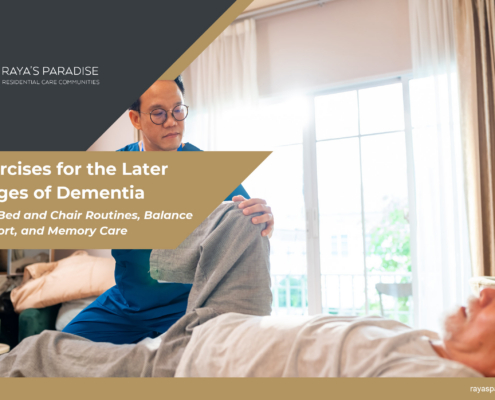 https://rayasparadise.com/wp-content/uploads/2013/05/Exercises-for-the-Later-Stages-of-Dementia.jpg
1702
2553
Moti Gamburd
https://rayasparadise.com//wp-content/uploads/2019/07/RP-LOGO-Horizontal-Name-Only-websitetrans.png
Moti Gamburd2026-03-04 11:13:202026-03-15 21:09:55Exercises for the Later Stages of Dementia
https://rayasparadise.com/wp-content/uploads/2013/05/Exercises-for-the-Later-Stages-of-Dementia.jpg
1702
2553
Moti Gamburd
https://rayasparadise.com//wp-content/uploads/2019/07/RP-LOGO-Horizontal-Name-Only-websitetrans.png
Moti Gamburd2026-03-04 11:13:202026-03-15 21:09:55Exercises for the Later Stages of Dementia https://rayasparadise.com/wp-content/uploads/2026/03/Addressing-Agitation-in-Dementia.jpg
1700
2548
Moti Gamburd
https://rayasparadise.com//wp-content/uploads/2019/07/RP-LOGO-Horizontal-Name-Only-websitetrans.png
Moti Gamburd2026-03-03 03:47:592026-03-15 19:55:59Addressing Agitation in Someone Who Has Dementia
https://rayasparadise.com/wp-content/uploads/2026/03/Addressing-Agitation-in-Dementia.jpg
1700
2548
Moti Gamburd
https://rayasparadise.com//wp-content/uploads/2019/07/RP-LOGO-Horizontal-Name-Only-websitetrans.png
Moti Gamburd2026-03-03 03:47:592026-03-15 19:55:59Addressing Agitation in Someone Who Has Dementia https://rayasparadise.com/wp-content/uploads/2026/03/All-About-Lewy-Body-Dementia.jpg
1702
2555
Moti Gamburd
https://rayasparadise.com//wp-content/uploads/2019/07/RP-LOGO-Horizontal-Name-Only-websitetrans.png
Moti Gamburd2026-03-02 04:28:062026-03-15 17:53:10All About Lewy Body Dementia
https://rayasparadise.com/wp-content/uploads/2026/03/All-About-Lewy-Body-Dementia.jpg
1702
2555
Moti Gamburd
https://rayasparadise.com//wp-content/uploads/2019/07/RP-LOGO-Horizontal-Name-Only-websitetrans.png
Moti Gamburd2026-03-02 04:28:062026-03-15 17:53:10All About Lewy Body Dementia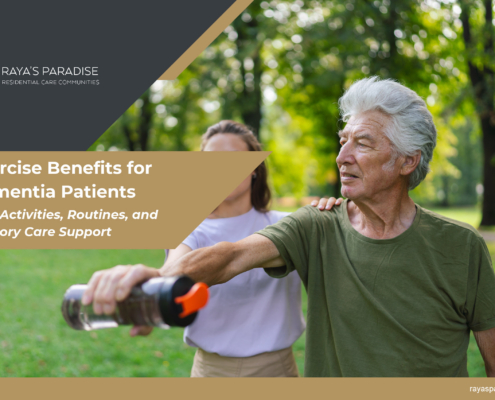 https://rayasparadise.com/wp-content/uploads/2013/05/Exercise-Benefits-for-Dementia-Patients.jpg
1703
2555
Moti Gamburd
https://rayasparadise.com//wp-content/uploads/2019/07/RP-LOGO-Horizontal-Name-Only-websitetrans.png
Moti Gamburd2026-03-01 02:39:032026-03-15 16:50:15Exercise Benefits for Dementia Patients - Safe Activities, Routines, and Memory Care Support
https://rayasparadise.com/wp-content/uploads/2013/05/Exercise-Benefits-for-Dementia-Patients.jpg
1703
2555
Moti Gamburd
https://rayasparadise.com//wp-content/uploads/2019/07/RP-LOGO-Horizontal-Name-Only-websitetrans.png
Moti Gamburd2026-03-01 02:39:032026-03-15 16:50:15Exercise Benefits for Dementia Patients - Safe Activities, Routines, and Memory Care Support https://rayasparadise.com/wp-content/uploads/2013/08/Giving-Dignity-to-Dementia-Patients.jpg
1697
2553
Moti Gamburd
https://rayasparadise.com//wp-content/uploads/2019/07/RP-LOGO-Horizontal-Name-Only-websitetrans.png
Moti Gamburd2026-01-14 04:00:032026-01-15 18:26:55Giving Dignity to Dementia Patients
https://rayasparadise.com/wp-content/uploads/2013/08/Giving-Dignity-to-Dementia-Patients.jpg
1697
2553
Moti Gamburd
https://rayasparadise.com//wp-content/uploads/2019/07/RP-LOGO-Horizontal-Name-Only-websitetrans.png
Moti Gamburd2026-01-14 04:00:032026-01-15 18:26:55Giving Dignity to Dementia Patients https://rayasparadise.com/wp-content/uploads/2021/05/PM-Image.jpeg
630
1120
Raya's Paradise
https://rayasparadise.com//wp-content/uploads/2019/07/RP-LOGO-Horizontal-Name-Only-websitetrans.png
Raya's Paradise2021-05-28 17:53:412026-01-14 19:13:04Simple diagnostic tool predicts individual risk of Alzheimer's
https://rayasparadise.com/wp-content/uploads/2021/05/PM-Image.jpeg
630
1120
Raya's Paradise
https://rayasparadise.com//wp-content/uploads/2019/07/RP-LOGO-Horizontal-Name-Only-websitetrans.png
Raya's Paradise2021-05-28 17:53:412026-01-14 19:13:04Simple diagnostic tool predicts individual risk of Alzheimer's https://rayasparadise.com/wp-content/uploads/2020/02/Why-Alzheimers-Patients-Become-Agitated.jpg
1378
2179
Raya's Paradise
https://rayasparadise.com//wp-content/uploads/2019/07/RP-LOGO-Horizontal-Name-Only-websitetrans.png
Raya's Paradise2020-02-14 04:00:142026-01-14 19:37:25Why Alzheimer's Patients Become Agitated
https://rayasparadise.com/wp-content/uploads/2020/02/Why-Alzheimers-Patients-Become-Agitated.jpg
1378
2179
Raya's Paradise
https://rayasparadise.com//wp-content/uploads/2019/07/RP-LOGO-Horizontal-Name-Only-websitetrans.png
Raya's Paradise2020-02-14 04:00:142026-01-14 19:37:25Why Alzheimer's Patients Become Agitated https://rayasparadise.com/wp-content/uploads/2020/02/Senior-with-Signs-of-Dementia-scaled.jpg
1708
2560
Raya's Paradise
https://rayasparadise.com//wp-content/uploads/2019/07/RP-LOGO-Horizontal-Name-Only-websitetrans.png
Raya's Paradise2020-02-05 08:25:102026-01-14 19:37:47Dementia vs. Ordinary Forgetfulness and Confusion
https://rayasparadise.com/wp-content/uploads/2020/02/Senior-with-Signs-of-Dementia-scaled.jpg
1708
2560
Raya's Paradise
https://rayasparadise.com//wp-content/uploads/2019/07/RP-LOGO-Horizontal-Name-Only-websitetrans.png
Raya's Paradise2020-02-05 08:25:102026-01-14 19:37:47Dementia vs. Ordinary Forgetfulness and Confusion https://rayasparadise.com/wp-content/uploads/2013/11/What-to-Expect-During-Late-Stage-Alzheimers.jpg
595
951
Raya's Paradise
https://rayasparadise.com//wp-content/uploads/2019/07/RP-LOGO-Horizontal-Name-Only-websitetrans.png
Raya's Paradise2019-11-14 09:37:262026-01-14 19:17:13What to Expect During Late Stage Alzheimer's
https://rayasparadise.com/wp-content/uploads/2013/11/What-to-Expect-During-Late-Stage-Alzheimers.jpg
595
951
Raya's Paradise
https://rayasparadise.com//wp-content/uploads/2019/07/RP-LOGO-Horizontal-Name-Only-websitetrans.png
Raya's Paradise2019-11-14 09:37:262026-01-14 19:17:13What to Expect During Late Stage Alzheimer's https://rayasparadise.com/wp-content/uploads/2019/11/Helping-a-Senior-with-Dementia-Remember-Medication.jpg
1700
2555
Raya's Paradise
https://rayasparadise.com//wp-content/uploads/2019/07/RP-LOGO-Horizontal-Name-Only-websitetrans.png
Raya's Paradise2019-11-05 07:34:402026-01-14 19:38:39Helping a Senior with Dementia Remember Medicine
https://rayasparadise.com/wp-content/uploads/2019/11/Helping-a-Senior-with-Dementia-Remember-Medication.jpg
1700
2555
Raya's Paradise
https://rayasparadise.com//wp-content/uploads/2019/07/RP-LOGO-Horizontal-Name-Only-websitetrans.png
Raya's Paradise2019-11-05 07:34:402026-01-14 19:38:39Helping a Senior with Dementia Remember Medicine
