
Contents
- How to Tell When a Loved One With Dementia Is Sick
- Key Takeaways
- Why it is harder to tell when someone with dementia is sick
- The biggest red flag – delirium vs dementia
- Quick caregiver checklist – signs your loved one may be sick
- Common illnesses that show up as behavior changes
- What to do before you call the doctor
- When home support is not enough
- Specialized Memory Care in Orange County When Health Needs Keep Changing
- Sources & Additional Resources
- More Memory Care Resources
- Three Big Questions to Consider After an Alzheimer's Diagnosis
- Five Myths About Alzheimer's Disease
- Should You Seek an Alzheimer's Diagnosis?
- How to Talk with Someone Who Has Alzheimer's
- Coconut Oil for Alzheimer's Disease?
- How to Tell When a Loved One with Dementia Is Sick
- Does Computer Use Help with Dementia Symptoms?
- Coping With Dementia Behavior
- Respect for a Senior with Dementia
- Why Dementia Patients Have Trouble with Eating
- Exercises for the Later Stages of Dementia
- Addressing Agitation in Someone Who Has Dementia
- All About Lewy Body Dementia
- Exercise Benefits for Dementia Patients - Safe Activities, Routines, and Memory Care Support
- Giving Dignity to Dementia Patients
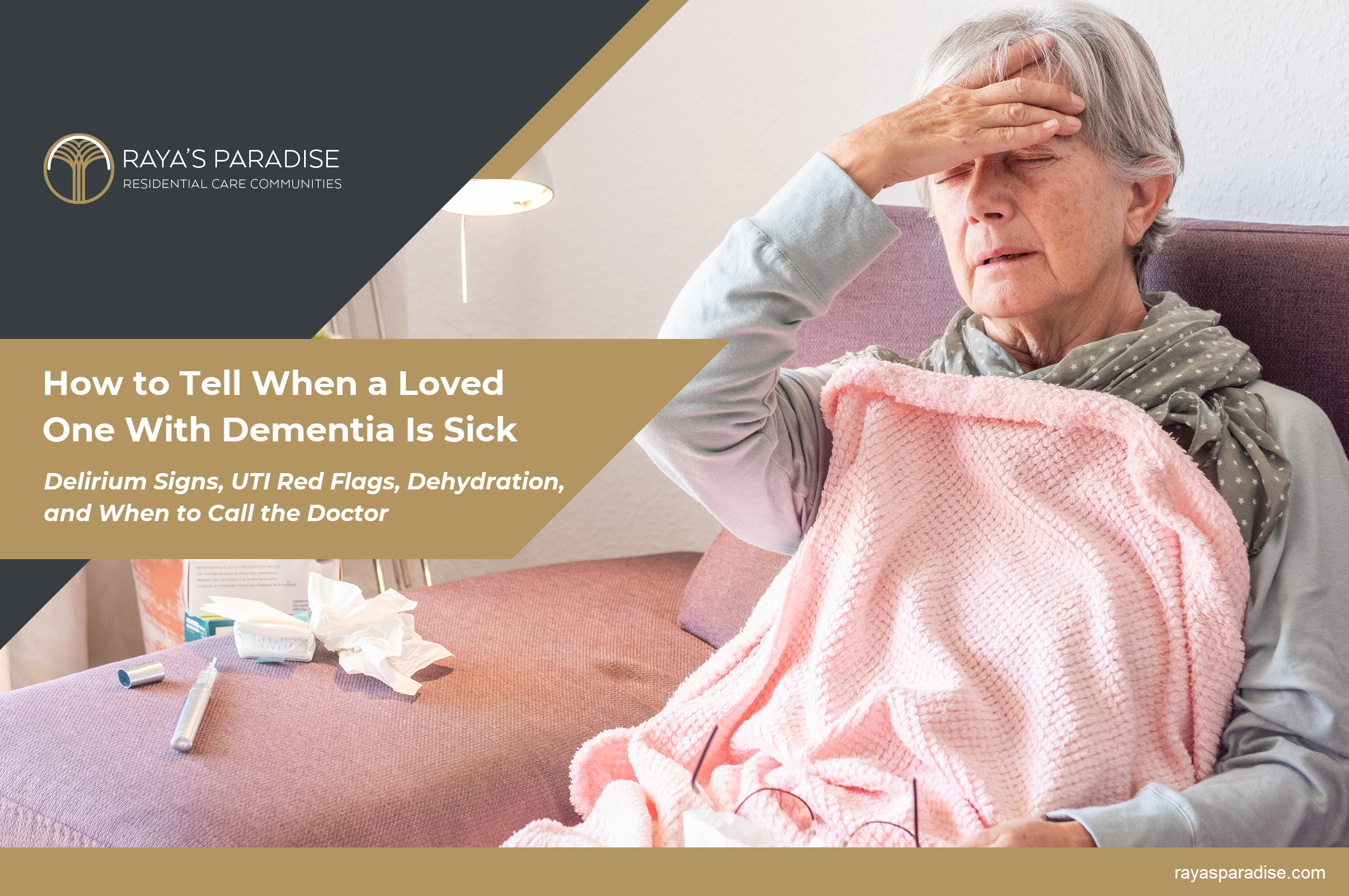
How to Tell When a Loved One With Dementia Is Sick
Delirium Signs, UTI Red Flags, Dehydration, and When to Call the Doctor
Dementia can make illness harder to spot because the usual signals get scrambled. Your loved one may not be able to explain pain. They may not remember they feel feverish. They may describe symptoms in ways that do not “make sense,” or they may say nothing at all. Instead, sickness often shows up as a behavior shift, a sudden drop in appetite, new agitation, a change in walking, or “something is off” that you cannot quite name.
This guide is built for that exact reality. You will learn what to watch for, what changes are urgent, how to recognize delirium, and how to gather the right information for the clinician so your loved one gets treated faster.
If you are navigating frequent health changes and need more structure, explore memory care in Orange County. If your loved one needs daily help but has lower dementia-related safety risk, review assisted living in Orange County. For locations, visit our communities page.
Key Takeaways
- In dementia, illness often shows up as a change from baseline, not a clear complaint of symptoms.
- Sudden confusion, new severe agitation, unusual sleepiness, or a sharp behavior shift can be delirium and needs prompt medical attention.
- In older adults, a urinary tract infection can present with confusion or mental status change, even when urinary symptoms are not the main complaint. The MedlinePlus overview of UTI symptoms in adults notes confusion can be a key sign in older people.
- Low fluid intake can worsen dizziness, weakness, and confusion. The CDC flu emergency warning signs list includes adult red flags like not urinating and persistent dizziness or confusion (in flu), which can be useful urgency clues when someone is acutely ill.
- When safety risks stack up, frequent illness episodes, falls, wandering, medication errors, or caregiver exhaustion, a structured care setting may be safer.

Why it is harder to tell when someone with dementia is sick
Dementia affects language, memory, attention, and self-awareness. That means your loved one may not be able to identify what hurts, describe where it hurts, or connect symptoms to illness. Some people underreport pain. Others become distressed but cannot explain why. Even something as simple as “I am thirsty” or “I feel feverish” may not come out clearly.
That is why the best tool you have is baseline knowledge. How do they usually walk? How do they usually eat? What is their typical sleep pattern? What does their normal mood look like? When you see a meaningful change from baseline, especially if it is sudden, you should suspect illness or injury until proven otherwise.
If your loved one’s symptoms fluctuate and you are trying to understand where they are in the journey, this overview can help you frame what you are seeing: the stages of dementia.

The biggest red flag – delirium vs dementia
Delirium is a sudden change in thinking and awareness that can develop over hours or days, often triggered by illness, dehydration, medication effects, or hospitalization. The Mayo Clinic explanation of delirium symptoms and causes describes delirium as coming on fast and often being linked to underlying medical factors.
Delirium can look like:
- Sudden new confusion or a sharp increase in confusion
- New hallucinations, severe agitation, panic, or paranoia
- Unusual sleepiness, “zoning out,” or not tracking conversation
- Inability to focus or follow simple cues that they could follow yesterday
- Rapid swings between agitation and drowsiness
If the change is sudden, treat it like a medical issue first. Families often assume behavior changes are “progression,” but sudden changes are frequently linked to treatable triggers.
If you need a practical response plan for agitation while you sort out medical causes, this guide can help you stay calm and safe: addressing agitation in someone who has dementia.

Quick caregiver checklist – signs your loved one may be sick
You do not need to diagnose. You need to notice patterns. Use this as a fast scan when something feels off.
- Eating and drinking: reduced appetite, refusing fluids, new trouble chewing or swallowing, sudden weight drop
- Energy: unusual fatigue, more sleeping, sudden weakness
- Walking and balance: new unsteadiness, slower gait, increased falls or near-falls
- Bathroom changes: new urgency, new incontinence, pain with urination, constipation, diarrhea
- Temperature: fever, chills, sweating, flushed skin
- Breathing: new cough, shortness of breath, congestion, rapid breathing
- Behavior: sudden agitation, new confusion spikes, unusual fear, withdrawal, “not themselves”
- Pain cues: guarding one area, grimacing, refusing touch, new moaning or restlessness
If eating has become a consistent struggle and you want a deeper breakdown of why dementia complicates meals, this guide is helpful: why dementia patients have trouble with eating.

Common illnesses that show up as behavior changes
Urinary tract infections (UTIs)
UTIs are common in older adults, and confusion or a mental status change can be one possible sign, even when urinary symptoms are not the main complaint. The MedlinePlus UTI overview lists classic symptoms such as pain or burning with urination and frequent urination. The MedlinePlus adult symptom guide notes confusion can be a key sign in older people.
Common clues include:
- New confusion or agitation
- Urinary urgency, frequency, burning, or discomfort
- Strong-smelling or cloudy urine
- Fever, chills, or back pain
Important note: confusion alone cannot confirm a UTI. A clinician should evaluate symptoms and testing in context, especially because bacteria in the urine can occur without a true infection, including asymptomatic bacteriuria as described in the Infectious Diseases Society of America guideline on asymptomatic bacteriuria.
Respiratory infections and flu
Respiratory illnesses can be subtle in dementia. Watch for cough, congestion, fever, increased fatigue, reduced appetite, and “not acting right.” If you are unsure when symptoms are urgent, the CDC guidance on caring for someone sick lists adult emergency warning signs such as difficulty breathing, persistent chest or abdominal pain, persistent dizziness or confusion, and not urinating.
Dehydration
Dehydration is easy to miss and can worsen dizziness and confusion. Clues include dry mouth, darker urine, fewer trips to the bathroom, weakness, and increased sleepiness. The CDC emergency warning signs list includes adult red flags like not urinating and persistent dizziness or confusion (in flu), which can be helpful urgency cues when someone is acutely ill.
Pain or injury after a fall
Some people with dementia do not verbalize pain clearly. Watch for guarding a body part, refusing to stand, grimacing, limping, or agitation that spikes during movement. Falls are a major health risk for older adults, and prevention matters. This guide is a practical reference point: how seniors can avoid falls.
Constipation or GI issues
Constipation can cause pain, agitation, appetite loss, and sleep disruption. Watch for fewer bowel movements than usual, abdominal discomfort, or straining. If there is severe pain, blood in stool, persistent vomiting, or sudden weakness, seek medical guidance promptly.
Medication side effects and interactions
New sedation, dizziness, confusion spikes, appetite changes, tremor changes, or sudden unsteadiness can be related to medication changes. If a behavior shift followed a new medication or dose change, bring that timeline to the clinician. This guide can help you prepare smarter questions: preventing problems with medication.
What to do before you call the doctor
When you call the clinician, you will get better help if you have specific, concrete information. A short checklist you can keep on your phone:
- Baseline vs today: what is different, when it started, whether it is getting worse
- Vitals if available: temperature, blood pressure, pulse, oxygen level (if you have a pulse ox)
- Fluid and food: how much they drank today, last urination, appetite changes
- Sleep: unusually sleepy or unusually awake and restless
- Bathroom symptoms: urgency, pain, incontinence, constipation
- Medication list: all prescriptions, OTC meds, supplements, plus any recent changes
- Safety events: falls, near-falls, choking episodes, wandering incidents
If your loved one resists medical appointments, this can help you plan without escalating conflict: what to do when your parent refuses to see the doctor.
When home support is not enough
Frequent illness episodes and unpredictable behavior changes can push caregiving into constant crisis mode. If you are exhausted, if nights are disrupted, if falls are increasing, or if you cannot safely manage hygiene, medications, and supervision, it may be time to consider more structure.
If you need breathing room while you evaluate next steps, short-term respite care can be a practical bridge after a hospitalization or a rough patch.
If caregiver strain is building, name it early. This is a straightforward gut-check: signs of caregiver burnout.
Specialized Memory Care in Orange County When Health Needs Keep Changing
When someone living with dementia becomes sick, the care load often jumps overnight. Hydration, toileting support, medication routines, fall prevention, and calm redirection can require more hands than a family can safely provide. A specialized memory care setting can provide consistent supervision, structured routines, and staff support that reduces crisis cycles.
If you want to talk through what level of support fits your loved one today, start with our Orange County team through the contact page.
Next Steps
If you want help sorting health red flags and building a safer plan, we are here. Call (949) 420-9898 for Orange County or (310) 289-8834 for Los Angeles, or email Info@RayasParadise.com.
If you prefer to evaluate in person, request a San Clemente tour or schedule a Los Angeles tour.
Our OC Specialized Memory Care Facility
Our Los Angeles Assisted Living Residences
Sources & Additional Resources
MedlinePlus overview of urinary tract infection symptoms in adults
MedlinePlus overview of urinary tract infections
Infectious Diseases Society of America guideline on asymptomatic bacteriuria
Mayo Clinic explanation of delirium symptoms and causes
CDC flu signs and symptoms and emergency warning signs
CDC guidance on caring for someone sick and when to seek emergency care
Disclaimer: This article is educational and general, not medical advice, diagnosis, or treatment guidance. If your loved one has severe breathing trouble, chest pain, fainting, stroke-like symptoms, a serious fall, is not urinating, or is not waking normally, call emergency services. For sudden confusion or major behavior change, contact a qualified clinician promptly.
 https://rayasparadise.com/wp-content/uploads/2013/05/Three-Big-Questions-to-Consider-After-an-Alzheimers-Diagnosis.jpg
1702
2558
Moti Gamburd
https://rayasparadise.com//wp-content/uploads/2019/07/RP-LOGO-Horizontal-Name-Only-websitetrans.png
Moti Gamburd2026-08-08 11:36:042026-08-09 20:58:17Three Big Questions to Consider After an Alzheimer's Diagnosis
https://rayasparadise.com/wp-content/uploads/2013/05/Three-Big-Questions-to-Consider-After-an-Alzheimers-Diagnosis.jpg
1702
2558
Moti Gamburd
https://rayasparadise.com//wp-content/uploads/2019/07/RP-LOGO-Horizontal-Name-Only-websitetrans.png
Moti Gamburd2026-08-08 11:36:042026-08-09 20:58:17Three Big Questions to Consider After an Alzheimer's Diagnosis https://rayasparadise.com/wp-content/uploads/2013/11/Five-Myths-About-Alzheimers-Disease-Whats-Actually-True.jpg
1697
2546
Moti Gamburd
https://rayasparadise.com//wp-content/uploads/2019/07/RP-LOGO-Horizontal-Name-Only-websitetrans.png
Moti Gamburd2026-08-07 16:45:112026-08-07 18:43:03Five Myths About Alzheimer's Disease
https://rayasparadise.com/wp-content/uploads/2013/11/Five-Myths-About-Alzheimers-Disease-Whats-Actually-True.jpg
1697
2546
Moti Gamburd
https://rayasparadise.com//wp-content/uploads/2019/07/RP-LOGO-Horizontal-Name-Only-websitetrans.png
Moti Gamburd2026-08-07 16:45:112026-08-07 18:43:03Five Myths About Alzheimer's Disease https://rayasparadise.com/wp-content/uploads/2026/08/Should-You-Seek-an-Alzheimers-Diagnosis.jpg
1702
2551
Moti Gamburd
https://rayasparadise.com//wp-content/uploads/2019/07/RP-LOGO-Horizontal-Name-Only-websitetrans.png
Moti Gamburd2026-08-06 06:39:192026-08-06 21:28:27Should You Seek an Alzheimer's Diagnosis?
https://rayasparadise.com/wp-content/uploads/2026/08/Should-You-Seek-an-Alzheimers-Diagnosis.jpg
1702
2551
Moti Gamburd
https://rayasparadise.com//wp-content/uploads/2019/07/RP-LOGO-Horizontal-Name-Only-websitetrans.png
Moti Gamburd2026-08-06 06:39:192026-08-06 21:28:27Should You Seek an Alzheimer's Diagnosis? https://rayasparadise.com/wp-content/uploads/2013/02/How-to-Talk-With-Someone-Who-Has-Alzheimers.jpg
1700
2553
Moti Gamburd
https://rayasparadise.com//wp-content/uploads/2019/07/RP-LOGO-Horizontal-Name-Only-websitetrans.png
Moti Gamburd2026-08-06 04:00:212026-08-06 15:23:18How to Talk with Someone Who Has Alzheimer's
https://rayasparadise.com/wp-content/uploads/2013/02/How-to-Talk-With-Someone-Who-Has-Alzheimers.jpg
1700
2553
Moti Gamburd
https://rayasparadise.com//wp-content/uploads/2019/07/RP-LOGO-Horizontal-Name-Only-websitetrans.png
Moti Gamburd2026-08-06 04:00:212026-08-06 15:23:18How to Talk with Someone Who Has Alzheimer's https://rayasparadise.com/wp-content/uploads/2013/09/Coconut-Oil-for-Alzheimers-Disease.jpg
1697
2551
Moti Gamburd
https://rayasparadise.com//wp-content/uploads/2019/07/RP-LOGO-Horizontal-Name-Only-websitetrans.png
Moti Gamburd2026-08-05 04:00:472026-08-05 21:50:26Coconut Oil for Alzheimer's Disease?
https://rayasparadise.com/wp-content/uploads/2013/09/Coconut-Oil-for-Alzheimers-Disease.jpg
1697
2551
Moti Gamburd
https://rayasparadise.com//wp-content/uploads/2019/07/RP-LOGO-Horizontal-Name-Only-websitetrans.png
Moti Gamburd2026-08-05 04:00:472026-08-05 21:50:26Coconut Oil for Alzheimer's Disease? https://rayasparadise.com/wp-content/uploads/2013/10/How-to-Tell-When-a-Loved-One-With-Dementia-Is-Sick.jpg
1697
2555
Moti Gamburd
https://rayasparadise.com//wp-content/uploads/2019/07/RP-LOGO-Horizontal-Name-Only-websitetrans.png
Moti Gamburd2026-03-10 12:43:002026-03-18 01:37:19How to Tell When a Loved One with Dementia Is Sick
https://rayasparadise.com/wp-content/uploads/2013/10/How-to-Tell-When-a-Loved-One-With-Dementia-Is-Sick.jpg
1697
2555
Moti Gamburd
https://rayasparadise.com//wp-content/uploads/2019/07/RP-LOGO-Horizontal-Name-Only-websitetrans.png
Moti Gamburd2026-03-10 12:43:002026-03-18 01:37:19How to Tell When a Loved One with Dementia Is Sick https://rayasparadise.com/wp-content/uploads/2013/08/Does-Computer-Use-Help-With-Dementia-Symptoms.jpg
1700
2557
Moti Gamburd
https://rayasparadise.com//wp-content/uploads/2019/07/RP-LOGO-Horizontal-Name-Only-websitetrans.png
Moti Gamburd2026-03-09 06:49:072026-03-18 00:31:00Does Computer Use Help with Dementia Symptoms?
https://rayasparadise.com/wp-content/uploads/2013/08/Does-Computer-Use-Help-With-Dementia-Symptoms.jpg
1700
2557
Moti Gamburd
https://rayasparadise.com//wp-content/uploads/2019/07/RP-LOGO-Horizontal-Name-Only-websitetrans.png
Moti Gamburd2026-03-09 06:49:072026-03-18 00:31:00Does Computer Use Help with Dementia Symptoms? https://rayasparadise.com/wp-content/uploads/2013/02/Coping-With-Dementia-Behavior.jpeg
1702
2555
Moti Gamburd
https://rayasparadise.com//wp-content/uploads/2019/07/RP-LOGO-Horizontal-Name-Only-websitetrans.png
Moti Gamburd2026-03-08 12:16:332026-03-16 16:35:15Coping With Dementia Behavior
https://rayasparadise.com/wp-content/uploads/2013/02/Coping-With-Dementia-Behavior.jpeg
1702
2555
Moti Gamburd
https://rayasparadise.com//wp-content/uploads/2019/07/RP-LOGO-Horizontal-Name-Only-websitetrans.png
Moti Gamburd2026-03-08 12:16:332026-03-16 16:35:15Coping With Dementia Behavior https://rayasparadise.com/wp-content/uploads/2013/09/Respect-for-a-Senior-With-Dementia.jpg
1700
2557
Moti Gamburd
https://rayasparadise.com//wp-content/uploads/2019/07/RP-LOGO-Horizontal-Name-Only-websitetrans.png
Moti Gamburd2026-03-07 03:14:072026-03-16 15:47:50Respect for a Senior with Dementia
https://rayasparadise.com/wp-content/uploads/2013/09/Respect-for-a-Senior-With-Dementia.jpg
1700
2557
Moti Gamburd
https://rayasparadise.com//wp-content/uploads/2019/07/RP-LOGO-Horizontal-Name-Only-websitetrans.png
Moti Gamburd2026-03-07 03:14:072026-03-16 15:47:50Respect for a Senior with Dementia https://rayasparadise.com/wp-content/uploads/2013/08/Why-Dementia-Patients-Have-Trouble-With-Eating.jpeg
1700
2553
Moti Gamburd
https://rayasparadise.com//wp-content/uploads/2019/07/RP-LOGO-Horizontal-Name-Only-websitetrans.png
Moti Gamburd2026-03-05 11:11:482026-03-16 02:07:05Why Dementia Patients Have Trouble with Eating
https://rayasparadise.com/wp-content/uploads/2013/08/Why-Dementia-Patients-Have-Trouble-With-Eating.jpeg
1700
2553
Moti Gamburd
https://rayasparadise.com//wp-content/uploads/2019/07/RP-LOGO-Horizontal-Name-Only-websitetrans.png
Moti Gamburd2026-03-05 11:11:482026-03-16 02:07:05Why Dementia Patients Have Trouble with Eating https://rayasparadise.com/wp-content/uploads/2013/05/Exercises-for-the-Later-Stages-of-Dementia.jpg
1702
2553
Moti Gamburd
https://rayasparadise.com//wp-content/uploads/2019/07/RP-LOGO-Horizontal-Name-Only-websitetrans.png
Moti Gamburd2026-03-04 11:13:202026-03-15 21:09:55Exercises for the Later Stages of Dementia
https://rayasparadise.com/wp-content/uploads/2013/05/Exercises-for-the-Later-Stages-of-Dementia.jpg
1702
2553
Moti Gamburd
https://rayasparadise.com//wp-content/uploads/2019/07/RP-LOGO-Horizontal-Name-Only-websitetrans.png
Moti Gamburd2026-03-04 11:13:202026-03-15 21:09:55Exercises for the Later Stages of Dementia https://rayasparadise.com/wp-content/uploads/2026/03/Addressing-Agitation-in-Dementia.jpg
1700
2548
Moti Gamburd
https://rayasparadise.com//wp-content/uploads/2019/07/RP-LOGO-Horizontal-Name-Only-websitetrans.png
Moti Gamburd2026-03-03 03:47:592026-03-15 19:55:59Addressing Agitation in Someone Who Has Dementia
https://rayasparadise.com/wp-content/uploads/2026/03/Addressing-Agitation-in-Dementia.jpg
1700
2548
Moti Gamburd
https://rayasparadise.com//wp-content/uploads/2019/07/RP-LOGO-Horizontal-Name-Only-websitetrans.png
Moti Gamburd2026-03-03 03:47:592026-03-15 19:55:59Addressing Agitation in Someone Who Has Dementia https://rayasparadise.com/wp-content/uploads/2026/03/All-About-Lewy-Body-Dementia.jpg
1702
2555
Moti Gamburd
https://rayasparadise.com//wp-content/uploads/2019/07/RP-LOGO-Horizontal-Name-Only-websitetrans.png
Moti Gamburd2026-03-02 04:28:062026-03-15 17:53:10All About Lewy Body Dementia
https://rayasparadise.com/wp-content/uploads/2026/03/All-About-Lewy-Body-Dementia.jpg
1702
2555
Moti Gamburd
https://rayasparadise.com//wp-content/uploads/2019/07/RP-LOGO-Horizontal-Name-Only-websitetrans.png
Moti Gamburd2026-03-02 04:28:062026-03-15 17:53:10All About Lewy Body Dementia https://rayasparadise.com/wp-content/uploads/2013/05/Exercise-Benefits-for-Dementia-Patients.jpg
1703
2555
Moti Gamburd
https://rayasparadise.com//wp-content/uploads/2019/07/RP-LOGO-Horizontal-Name-Only-websitetrans.png
Moti Gamburd2026-03-01 02:39:032026-03-15 16:50:15Exercise Benefits for Dementia Patients - Safe Activities, Routines, and Memory Care Support
https://rayasparadise.com/wp-content/uploads/2013/05/Exercise-Benefits-for-Dementia-Patients.jpg
1703
2555
Moti Gamburd
https://rayasparadise.com//wp-content/uploads/2019/07/RP-LOGO-Horizontal-Name-Only-websitetrans.png
Moti Gamburd2026-03-01 02:39:032026-03-15 16:50:15Exercise Benefits for Dementia Patients - Safe Activities, Routines, and Memory Care Support https://rayasparadise.com/wp-content/uploads/2013/08/Giving-Dignity-to-Dementia-Patients.jpg
1697
2553
Moti Gamburd
https://rayasparadise.com//wp-content/uploads/2019/07/RP-LOGO-Horizontal-Name-Only-websitetrans.png
Moti Gamburd2026-01-14 04:00:032026-01-15 18:26:55Giving Dignity to Dementia Patients
https://rayasparadise.com/wp-content/uploads/2013/08/Giving-Dignity-to-Dementia-Patients.jpg
1697
2553
Moti Gamburd
https://rayasparadise.com//wp-content/uploads/2019/07/RP-LOGO-Horizontal-Name-Only-websitetrans.png
Moti Gamburd2026-01-14 04:00:032026-01-15 18:26:55Giving Dignity to Dementia Patients
