
Contents
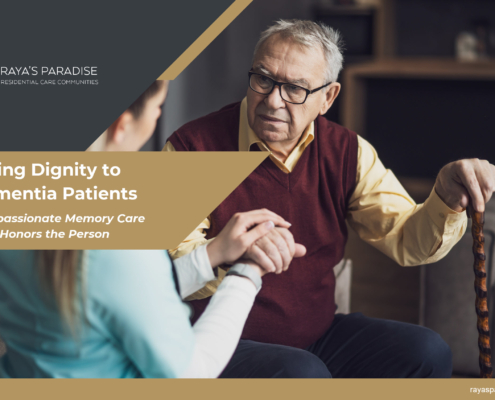
- Giving Dignity to Dementia Patients, Compassionate Memory Care That Honors the Person
- Key Takeaways | Dignity in Dementia Care
- Why Dignity Matters in Dementia Care
- Speak With Adults, Not Children
- Avoid Putting Loved Ones on the Spot
- Understanding Therapeutic Fibbing
- How Assisted Living and Memory Care Support Dignity Every Day
- Schedule a Tour at Raya’s Paradise
- More Memory Care Resources
- Giving Dignity to Dementia Patients
- Simple diagnostic tool predicts individual risk of Alzheimer's
- Why Alzheimer's Patients Become Agitated
- Dementia vs. Ordinary Forgetfulness and Confusion
- What to Expect During Late Stage Alzheimer's
- Helping a Senior with Dementia Remember Medicine
- Respite Care for Alzheimer's Disease
- Healing Foods for Alzheimer's
- What you need to know about Dementia
- Helping Loved Ones with Dementia Cope with the Loss of a Spouse
- Is Dementia Genetic?
- All About Lewy Body Dementia
- Five Myths About Alzheimer's Disease
- How to Tell When a Loved One with Dementia Is Sick
- The Connection Between Dementia and Depression

Giving Dignity to Dementia Patients, Compassionate Memory Care That Honors the Person
Key Takeaways | Dignity in Dementia Care
- Dementia does not erase identity, values, or the need for respect
- Language and tone strongly influence emotional safety
- Avoid memory-based questions that create embarrassment
- Compassionate redirection can ease anxiety and agitation
- Assisted living and memory care environments reinforce dignity every day
Watching a loved one live with dementia can be heartbreaking. Changes in memory, communication, and independence often leave families unsure how to respond, especially when behaviors feel unfamiliar or childlike. Many families ask how to treat dementia patients with dignity while still keeping them safe, supported, and emotionally secure.
In this guide, we explain why dignity matters in dementia care, how communication choices shape emotional well-being, and how families can preserve respect at every stage. We also explore how assisted living and memory care communities support dignity through structure, compassion, and individualized care.
Raya’s Paradise supports families across Los Angeles and Orange County with assisted living services for seniors, memory care programs, Alzheimer’s care, hospice care services, and short-term respite care options, allowing care to evolve as needs change without sacrificing dignity or quality of life.

Why Dignity Matters in Dementia Care
Dementia often brings deeply vulnerable moments, such as needing help with bathing, dressing, eating, or communication. When these moments are rushed or handled without sensitivity, individuals may feel embarrassed, anxious, or diminished.
Preserving dignity helps reduce agitation, builds trust, and supports emotional stability. These principles are central to person-centered dementia care and are reflected in professional environments such as a memory care community in Orange County, where routines, familiarity, and respectful interaction are built into daily life.
Families seeking structured dementia support may also benefit from learning how specialized memory care services are designed to meet cognitive needs while honoring individuality and personal history.

Speak With Adults, Not Children
One of the most common and unintentional mistakes caregivers make is speaking to someone with dementia as if they were a child. Baby talk, exaggerated tones, or overly simplified vocabulary can feel condescending even when intentions are loving.
Instead, caregivers should maintain an adult tone, speak at a natural pace, and use familiar words their loved one has always used. For example, saying “bathroom” instead of “potty” or “underwear” instead of “diapers” reinforces adulthood and self-respect.
When communication challenges increase, families may consider additional support through assisted living in Orange County, where caregivers are trained in dementia-specific communication and dignity-centered care.

Avoid Putting Loved Ones on the Spot
Questions that rely on memory recall can unintentionally cause embarrassment or frustration. Asking someone to remember names, dates, or personal details often highlights loss rather than connection.
A more dignified approach is to guide conversations toward emotions and experiences. If your loved one struggles with a factual question, gently redirect the discussion toward how they feel or what brings comfort.

Understanding Therapeutic Fibbing
Therapeutic fibbing is a widely accepted dementia care technique that prioritizes emotional comfort when strict honesty would cause distress. When reality feels frightening or confusing, gentle redirection can help preserve dignity and calm.
For example, if a loved one insists on driving or returning to a former home, correcting them with harsh truths may lead to agitation. Offering a soothing explanation or alternative plan often reduces anxiety.
How Assisted Living and Memory Care Support Dignity Every Day
Professional care environments are designed to reinforce dignity through training, consistency, and personalization. In assisted living and memory care communities, caregivers anticipate needs, offer discreet assistance, and respect personal preferences.
At Raya’s Paradise, dignity is supported through personalized care plans, respectful daily assistance, familiar routines, and close communication with families. These values guide services such as assisted living services for seniors, short-term respite care for families, and compassionate hospice care services, ensuring continuity and emotional safety as needs change.
Schedule a Tour at Raya’s Paradise
Choosing the right care environment for a loved one with dementia is an important decision. Raya’s Paradise offers compassionate assisted living and memory care communities throughout Los Angeles and Orange County, always centered on dignity, safety, and respect.
We invite you to explore our senior living communities, schedule a San Clemente assisted living tour, or request a Los Angeles assisted living tour to experience our approach firsthand.
If you have questions or would like guidance, you can also contact Raya’s Paradise to discuss care options with our team.
 https://rayasparadise.com/wp-content/uploads/2013/08/Giving-Dignity-to-Dementia-Patients.jpg
1697
2553
Moti Gamburd
https://rayasparadise.com//wp-content/uploads/2019/07/RP-LOGO-Horizontal-Name-Only-websitetrans.png
Moti Gamburd2026-01-14 04:00:032026-01-15 18:26:55Giving Dignity to Dementia Patients
https://rayasparadise.com/wp-content/uploads/2013/08/Giving-Dignity-to-Dementia-Patients.jpg
1697
2553
Moti Gamburd
https://rayasparadise.com//wp-content/uploads/2019/07/RP-LOGO-Horizontal-Name-Only-websitetrans.png
Moti Gamburd2026-01-14 04:00:032026-01-15 18:26:55Giving Dignity to Dementia Patients https://rayasparadise.com/wp-content/uploads/2021/05/PM-Image.jpeg
630
1120
Raya's Paradise
https://rayasparadise.com//wp-content/uploads/2019/07/RP-LOGO-Horizontal-Name-Only-websitetrans.png
Raya's Paradise2021-05-28 17:53:412026-01-14 19:13:04Simple diagnostic tool predicts individual risk of Alzheimer's
https://rayasparadise.com/wp-content/uploads/2021/05/PM-Image.jpeg
630
1120
Raya's Paradise
https://rayasparadise.com//wp-content/uploads/2019/07/RP-LOGO-Horizontal-Name-Only-websitetrans.png
Raya's Paradise2021-05-28 17:53:412026-01-14 19:13:04Simple diagnostic tool predicts individual risk of Alzheimer's https://rayasparadise.com/wp-content/uploads/2020/02/Why-Alzheimers-Patients-Become-Agitated.jpg
1378
2179
Raya's Paradise
https://rayasparadise.com//wp-content/uploads/2019/07/RP-LOGO-Horizontal-Name-Only-websitetrans.png
Raya's Paradise2020-02-14 04:00:142026-01-14 19:37:25Why Alzheimer's Patients Become Agitated
https://rayasparadise.com/wp-content/uploads/2020/02/Why-Alzheimers-Patients-Become-Agitated.jpg
1378
2179
Raya's Paradise
https://rayasparadise.com//wp-content/uploads/2019/07/RP-LOGO-Horizontal-Name-Only-websitetrans.png
Raya's Paradise2020-02-14 04:00:142026-01-14 19:37:25Why Alzheimer's Patients Become Agitated https://rayasparadise.com/wp-content/uploads/2020/02/Senior-with-Signs-of-Dementia-scaled.jpg
1708
2560
Raya's Paradise
https://rayasparadise.com//wp-content/uploads/2019/07/RP-LOGO-Horizontal-Name-Only-websitetrans.png
Raya's Paradise2020-02-05 08:25:102026-01-14 19:37:47Dementia vs. Ordinary Forgetfulness and Confusion
https://rayasparadise.com/wp-content/uploads/2020/02/Senior-with-Signs-of-Dementia-scaled.jpg
1708
2560
Raya's Paradise
https://rayasparadise.com//wp-content/uploads/2019/07/RP-LOGO-Horizontal-Name-Only-websitetrans.png
Raya's Paradise2020-02-05 08:25:102026-01-14 19:37:47Dementia vs. Ordinary Forgetfulness and Confusion https://rayasparadise.com/wp-content/uploads/2013/11/What-to-Expect-During-Late-Stage-Alzheimers.jpg
595
951
Raya's Paradise
https://rayasparadise.com//wp-content/uploads/2019/07/RP-LOGO-Horizontal-Name-Only-websitetrans.png
Raya's Paradise2019-11-14 09:37:262026-01-14 19:17:13What to Expect During Late Stage Alzheimer's
https://rayasparadise.com/wp-content/uploads/2013/11/What-to-Expect-During-Late-Stage-Alzheimers.jpg
595
951
Raya's Paradise
https://rayasparadise.com//wp-content/uploads/2019/07/RP-LOGO-Horizontal-Name-Only-websitetrans.png
Raya's Paradise2019-11-14 09:37:262026-01-14 19:17:13What to Expect During Late Stage Alzheimer's https://rayasparadise.com/wp-content/uploads/2019/11/Helping-a-Senior-with-Dementia-Remember-Medication.jpg
1700
2555
Raya's Paradise
https://rayasparadise.com//wp-content/uploads/2019/07/RP-LOGO-Horizontal-Name-Only-websitetrans.png
Raya's Paradise2019-11-05 07:34:402026-01-14 19:38:39Helping a Senior with Dementia Remember Medicine
https://rayasparadise.com/wp-content/uploads/2019/11/Helping-a-Senior-with-Dementia-Remember-Medication.jpg
1700
2555
Raya's Paradise
https://rayasparadise.com//wp-content/uploads/2019/07/RP-LOGO-Horizontal-Name-Only-websitetrans.png
Raya's Paradise2019-11-05 07:34:402026-01-14 19:38:39Helping a Senior with Dementia Remember Medicine https://rayasparadise.com/wp-content/uploads/2013/11/Respite-Care-for-Alzheimers-Disease2.jpg
450
766
Raya's Paradise
https://rayasparadise.com//wp-content/uploads/2019/07/RP-LOGO-Horizontal-Name-Only-websitetrans.png
Raya's Paradise2019-10-16 04:00:252026-01-14 19:10:42Respite Care for Alzheimer's Disease
https://rayasparadise.com/wp-content/uploads/2013/11/Respite-Care-for-Alzheimers-Disease2.jpg
450
766
Raya's Paradise
https://rayasparadise.com//wp-content/uploads/2019/07/RP-LOGO-Horizontal-Name-Only-websitetrans.png
Raya's Paradise2019-10-16 04:00:252026-01-14 19:10:42Respite Care for Alzheimer's Disease https://rayasparadise.com/wp-content/uploads/2018/04/Healing-Foods-for-Alzheimer’s.jpg
700
900
Raya's Paradise
https://rayasparadise.com//wp-content/uploads/2019/07/RP-LOGO-Horizontal-Name-Only-websitetrans.png
Raya's Paradise2017-09-14 16:39:112026-01-14 18:59:54Healing Foods for Alzheimer's
https://rayasparadise.com/wp-content/uploads/2018/04/Healing-Foods-for-Alzheimer’s.jpg
700
900
Raya's Paradise
https://rayasparadise.com//wp-content/uploads/2019/07/RP-LOGO-Horizontal-Name-Only-websitetrans.png
Raya's Paradise2017-09-14 16:39:112026-01-14 18:59:54Healing Foods for Alzheimer's https://rayasparadise.com/wp-content/uploads/2018/04/What-you-need-to-know-about-Dementia.jpg
700
900
Raya's Paradise
https://rayasparadise.com//wp-content/uploads/2019/07/RP-LOGO-Horizontal-Name-Only-websitetrans.png
Raya's Paradise2014-07-28 11:49:342026-01-14 19:17:24What you need to know about Dementia
https://rayasparadise.com/wp-content/uploads/2018/04/What-you-need-to-know-about-Dementia.jpg
700
900
Raya's Paradise
https://rayasparadise.com//wp-content/uploads/2019/07/RP-LOGO-Horizontal-Name-Only-websitetrans.png
Raya's Paradise2014-07-28 11:49:342026-01-14 19:17:24What you need to know about Dementia https://rayasparadise.com/wp-content/uploads/2014/06/Helping-Loved-Ones-with-Dementia-Cope-with-the-Loss-of-a-Spouse.jpg
1707
2559
Raya's Paradise
https://rayasparadise.com//wp-content/uploads/2019/07/RP-LOGO-Horizontal-Name-Only-websitetrans.png
Raya's Paradise2014-06-24 13:58:102026-01-14 19:39:27Helping Loved Ones with Dementia Cope with the Loss of a Spouse
https://rayasparadise.com/wp-content/uploads/2014/06/Helping-Loved-Ones-with-Dementia-Cope-with-the-Loss-of-a-Spouse.jpg
1707
2559
Raya's Paradise
https://rayasparadise.com//wp-content/uploads/2019/07/RP-LOGO-Horizontal-Name-Only-websitetrans.png
Raya's Paradise2014-06-24 13:58:102026-01-14 19:39:27Helping Loved Ones with Dementia Cope with the Loss of a Spouse https://rayasparadise.com/wp-content/uploads/2013/11/Is-Dementia-Genetic-2.jpg
1701
2551
Raya's Paradise
https://rayasparadise.com//wp-content/uploads/2019/07/RP-LOGO-Horizontal-Name-Only-websitetrans.png
Raya's Paradise2013-11-19 16:50:082026-01-14 19:41:11Is Dementia Genetic?
https://rayasparadise.com/wp-content/uploads/2013/11/Is-Dementia-Genetic-2.jpg
1701
2551
Raya's Paradise
https://rayasparadise.com//wp-content/uploads/2019/07/RP-LOGO-Horizontal-Name-Only-websitetrans.png
Raya's Paradise2013-11-19 16:50:082026-01-14 19:41:11Is Dementia Genetic? Raya's Paradise
https://rayasparadise.com//wp-content/uploads/2019/07/RP-LOGO-Horizontal-Name-Only-websitetrans.png
Raya's Paradise2013-11-07 04:00:062026-01-14 18:40:50All About Lewy Body Dementia
Raya's Paradise
https://rayasparadise.com//wp-content/uploads/2019/07/RP-LOGO-Horizontal-Name-Only-websitetrans.png
Raya's Paradise2013-11-05 16:45:112026-01-14 18:57:54Five Myths About Alzheimer's Disease
Raya's Paradise
https://rayasparadise.com//wp-content/uploads/2019/07/RP-LOGO-Horizontal-Name-Only-websitetrans.png
Raya's Paradise2013-10-22 04:00:002026-01-14 19:03:52How to Tell When a Loved One with Dementia Is Sick
https://rayasparadise.com/wp-content/uploads/2017/02/marker3.png
80
80
Raya's Paradise
https://rayasparadise.com//wp-content/uploads/2019/07/RP-LOGO-Horizontal-Name-Only-websitetrans.png
Raya's Paradise2013-10-17 06:09:272026-01-14 19:14:41The Connection Between Dementia and Depression
Raya's Paradise
https://rayasparadise.com//wp-content/uploads/2019/07/RP-LOGO-Horizontal-Name-Only-websitetrans.png
Raya's Paradise2013-11-07 04:00:062026-01-14 18:40:50All About Lewy Body Dementia
Raya's Paradise
https://rayasparadise.com//wp-content/uploads/2019/07/RP-LOGO-Horizontal-Name-Only-websitetrans.png
Raya's Paradise2013-11-05 16:45:112026-01-14 18:57:54Five Myths About Alzheimer's Disease
Raya's Paradise
https://rayasparadise.com//wp-content/uploads/2019/07/RP-LOGO-Horizontal-Name-Only-websitetrans.png
Raya's Paradise2013-10-22 04:00:002026-01-14 19:03:52How to Tell When a Loved One with Dementia Is Sick
https://rayasparadise.com/wp-content/uploads/2017/02/marker3.png
80
80
Raya's Paradise
https://rayasparadise.com//wp-content/uploads/2019/07/RP-LOGO-Horizontal-Name-Only-websitetrans.png
Raya's Paradise2013-10-17 06:09:272026-01-14 19:14:41The Connection Between Dementia and Depression
