
Contents
- Five Myths About Alzheimer’s Disease
- Myth 1: There is either a cure for Alzheimer’s or nothing doctors can do
- Symptom-managing medications still have an important role
- There is also an FDA-approved medication for Alzheimer’s-related agitation
- Lecanemab and donanemab changed the treatment landscape
- These drugs are not appropriate for everyone with dementia
- Insurance coverage can also affect access
- A diagnosis matters more now because treatment options have changed
- Myth 2: Aspartame causes memory loss or Alzheimer’s disease
- Myth 3: Aluminum cookware and cans cause Alzheimer’s disease
- Myth 4: A head injury means you will develop Alzheimer’s disease
- Myth 5: Alzheimer’s disease itself cannot kill you
- Next Steps
- Sources & Additional Resources
- More Memory Care Resources
- Three Big Questions to Consider After an Alzheimer's Diagnosis
- Five Myths About Alzheimer's Disease
- Should You Seek an Alzheimer's Diagnosis?
- How to Talk with Someone Who Has Alzheimer's
- Coconut Oil for Alzheimer's Disease?
- How to Tell When a Loved One with Dementia Is Sick
- Does Computer Use Help with Dementia Symptoms?
- Coping With Dementia Behavior
- Respect for a Senior with Dementia
- Why Dementia Patients Have Trouble with Eating
- Exercises for the Later Stages of Dementia
- Addressing Agitation in Someone Who Has Dementia
- All About Lewy Body Dementia
- Exercise Benefits for Dementia Patients - Safe Activities, Routines, and Memory Care Support
- Giving Dignity to Dementia Patients
- Myth 1: There is either a cure for Alzheimer’s or nothing doctors can do

Five Myths About Alzheimer’s Disease
- There is currently no cure for Alzheimer’s disease.
- Some medications manage symptoms, while lecanemab and donanemab can slow cognitive decline in selected people with early Alzheimer’s.
- Brexpiprazole is FDA-approved to treat agitation associated with Alzheimer’s disease.
- Current evidence does not establish ordinary exposure to aluminum cookware, foil or beverage cans as a cause of Alzheimer’s disease.
- Aspartame has not been established as a cause of Alzheimer’s disease or memory loss.
- Traumatic brain injury is associated with later dementia risk, but the relationship depends on factors such as injury severity, repetition and age.
- Alzheimer’s is a progressive and ultimately fatal disease, although another medical condition may be recorded as the immediate cause of death.
Alzheimer’s disease is widely discussed, but many beliefs about it are outdated, oversimplified or simply unsupported by evidence.
That can make an already difficult situation harder for families trying to decide whether someone needs an evaluation, which treatments to consider or what changes to expect.
Some Alzheimer’s myths have also become more complicated as science has advanced.
A statement that was largely accurate ten years ago may no longer tell the whole story today. Treatment is a good example.
There is still no cure for Alzheimer’s disease, but newer medications can slow disease progression in certain people with early Alzheimer’s.
That is very different from saying that all Alzheimer’s medications merely treat symptoms.
Other persistent claims, including fears about aluminum cookware or aspartame, have not been shown to cause Alzheimer’s disease.
Head injuries do deserve attention, but even there the relationship is about increased risk rather than a simple cause-and-effect rule.
Understanding what research actually shows can help families focus their attention where it matters: recognizing meaningful changes, obtaining an accurate diagnosis, discussing appropriate treatment and planning for future care.
Families already dealing with progressive memory changes can learn about Orange County memory care options or explore memory support in Los Angeles.
Myth 1: There is either a cure for Alzheimer’s or nothing doctors can do
The reality: There is no known cure for Alzheimer’s disease, but saying that doctors can do nothing is also wrong.
Alzheimer’s treatment now includes medications that manage cognitive or behavioral symptoms as well as disease-modifying immunotherapies that can slow decline in selected people with early disease.
Symptom-managing medications still have an important role
Cholinesterase inhibitors such as donepezil, rivastigmine, galantamine and benzgalantamine may help reduce or control some cognitive and behavioral symptoms in people with mild to moderate Alzheimer’s.
Some can also be used at later stages depending on the medication and individual patient.
These medicines affect acetylcholine, a brain chemical involved in memory and thinking.
They do not remove the underlying Alzheimer’s pathology and they do not work equally well for everyone.
Memantine is generally used for moderate to severe Alzheimer’s disease.
It affects glutamate signaling and may help some people maintain certain cognitive or daily functions longer. It may also be used in combination with donepezil.
That distinction matters.
A medication can provide meaningful symptom relief even if it does not stop the underlying disease.
Brexpiprazole is an atypical antipsychotic approved by the FDA to treat agitation associated with Alzheimer’s disease.
Agitation can include restlessness, verbal aggression or physical aggression and may become especially difficult for families to manage.
Medication is not automatically the first response to every behavioral change.
The National Institute on Aging recommends considering possible triggers and non-drug strategies first when appropriate. Antipsychotic medications also carry important risks and should be prescribed and monitored by a clinician.
Families dealing with these behaviors can also review our guide to managing agitation in someone with dementia.
Lecanemab and donanemab changed the treatment landscape
Lecanemab and donanemab are FDA-approved anti-amyloid immunotherapies for people in the early symptomatic stages of Alzheimer’s disease.
They target beta-amyloid and reduce amyloid plaques in the brain.
In the phase 3 lecanemab trial published in The New England Journal of Medicine, people with early Alzheimer’s who received lecanemab experienced statistically less decline on a measure of cognition and function over 18 months than participants receiving placebo.
Donanemab was also tested in a large phase 3 trial of people with early symptomatic Alzheimer’s.
The 2023 JAMA trial found that donanemab slowed clinical progression compared with placebo, with the size of the effect varying according to the population and outcome measure examined.
These medications do not restore lost memory, stop progression completely or cure Alzheimer’s.
The benefit is a slowing of decline.
These drugs are not appropriate for everyone with dementia
Lecanemab and donanemab were studied for early Alzheimer’s disease, including mild cognitive impairment due to Alzheimer’s and mild Alzheimer’s dementia.
They are not general treatments for every type or stage of dementia.
Doctors also need evidence that Alzheimer’s-related amyloid is present before treatment.
Depending on the clinical situation, confirmation may involve an amyloid PET scan, cerebrospinal fluid testing or an appropriate biomarker evaluation.
Both medications can cause amyloid-related imaging abnormalities, commonly called ARIA.
These can include brain swelling or small areas of bleeding. Many cases do not cause symptoms, but serious and potentially life-threatening complications can occur.
MRI monitoring is therefore part of treatment.
The decision involves weighing eligibility, likely benefit, health conditions, genetic factors, MRI findings, treatment burden and potential risks with a specialist.
Insurance coverage can also affect access
Cost and coverage should be discussed before treatment begins.
The National Institute on Aging notes that Medicare Part B covers part of the cost of lecanemab and donanemab for patients who meet certain medical criteria.
Other insurance coverage may vary.
A diagnosis matters more now because treatment options have changed
One reason treatment myths can be harmful is that they encourage families to believe there is no reason to investigate memory changes.
Earlier evaluation can identify other conditions, establish whether Alzheimer’s is the likely cause and determine whether the person is at a stage when specific treatments could be considered.
Our guide to seeking an Alzheimer’s evaluation explains what modern diagnosis can involve and why the idea that Alzheimer’s can only be confirmed after death is outdated.

Myth 2: Aspartame causes memory loss or Alzheimer’s disease
The reality: Aspartame has not been established as a cause of Alzheimer’s disease or memory loss.
Aspartame is an artificial sweetener used in many foods, drinks and medications.
The FDA first authorized certain uses of aspartame in 1974 and approved it as a general-purpose sweetener in 1996.
Aspartame is sometimes defended with the claim that a definitive trial proved it has no effect on memory.
The evidence is not that simple. A more accurate conclusion is that major regulatory reviews have not established a causal relationship between approved aspartame consumption and Alzheimer’s disease.
What does the FDA currently say?
The FDA describes aspartame as one of the most studied food additives in the human food supply and states that its scientists do not have safety concerns when it is used under approved conditions.
The agency maintains an acceptable daily intake of 50 milligrams per kilogram of body weight per day in the United States.
What about the WHO review of aspartame?
In 2023, the International Agency for Research on Cancer, or IARC, classified aspartame as “possibly carcinogenic to humans” based on limited evidence concerning cancer.
That classification generated significant attention, but it did not establish that ordinary aspartame consumption causes cancer and it did not establish a link with Alzheimer’s disease.
The FDA explicitly disagreed with IARC’s conclusion that the studies supported classifying aspartame as a possible human carcinogen.
FDA scientists said they identified significant shortcomings in the studies IARC relied upon.
The FDA also notes that Health Canada and the European Food Safety Authority have evaluated aspartame and consider it safe at currently permitted use levels.
At the same time, the Joint FAO/WHO Expert Committee on Food Additives reviewed aspartame and found no sufficient reason to change its established acceptable daily intake of 0 to 40 milligrams per kilogram of body weight per day.
The different conclusions illustrate why it is important to distinguish a hazard classification from an assessment of risk at actual exposure levels.
None of these 2023 reviews established aspartame as a cause of Alzheimer’s disease.
Avoid turning one nutrition question into an Alzheimer’s prevention strategy
Families understandably want to identify something they can remove from the kitchen to prevent dementia.
Alzheimer’s is considerably more complex.
Current research points to interactions among aging, genetics, cardiovascular and metabolic health, environment and other biological factors rather than one food additive being responsible for most cases.
Diet can still matter for overall health.
The distinction is that supporting cardiovascular and metabolic health is very different from claiming that eliminating a particular sweetener will prevent Alzheimer’s.
Our evidence review of what diet can and cannot do for Alzheimer’s looks more broadly at MIND-style eating patterns, ketogenic approaches and nutrition after diagnosis.
Another frequently promoted food-based claim involves coconut oil.
Families can read our review of the evidence on coconut oil and Alzheimer’s disease before treating it as a therapy.
Myth 3: Aluminum cookware and cans cause Alzheimer’s disease
The reality: Current evidence does not establish normal exposure to aluminum cookware, foil, cans, antacids or antiperspirants as a cause of Alzheimer’s disease.
Concern about aluminum and Alzheimer’s became widespread during the 1960s and 1970s.
The theory became culturally persistent, leading some families to replace pots, avoid aluminum foil or worry about canned beverages.
The Alzheimer’s Association notes that studies have failed to confirm a role for aluminum in causing Alzheimer’s and that most researchers have shifted their attention to other areas of investigation.
Why did the aluminum theory become popular?
Early scientific observations raised questions about aluminum in the brain and whether environmental exposure might contribute to neurodegeneration.
Those preliminary questions were often transformed in popular discussion into a much stronger claim: aluminum products cause Alzheimer’s.
That causal claim was never established.
Science often begins by identifying an association or possible mechanism.
Researchers then test whether that observation remains convincing across better-designed studies and whether it can explain disease in humans. Many early hypotheses become less plausible as evidence accumulates.
Replacing cookware is not an evidence-based Alzheimer’s prevention strategy
There is no good evidence that throwing away aluminum pans or avoiding beverage cans prevents Alzheimer’s.
Families interested in reducing dementia risk are better served by discussing established health factors with a medical professional, including blood pressure, cardiovascular disease, diabetes, physical activity, smoking and other aspects of overall health.
Genetics also influences risk, although having a family history does not mean Alzheimer’s is inevitable.
Our article on genetics and dementia risk explains the difference between genes that increase susceptibility and the rare genetic variants that can directly cause familial Alzheimer’s.
Myth 4: A head injury means you will develop Alzheimer’s disease
The reality: Traumatic brain injury can be associated with an increased risk of dementia later in life, but a head injury does not mean a person will inevitably develop Alzheimer’s disease.
It is sometimes said that a severe head injury with loss of consciousness has been proven to cause Alzheimer’s.
The relationship is more complicated. Research identifies TBI as a risk factor, not a guaranteed cause, and the strength of the association varies by injury severity, number of injuries, age and the dementia outcome being studied.
Moderate and severe injuries have the clearest long-term association
The Alzheimer’s Association summarizes research in older adults showing that a history of moderate TBI was associated with about 2.3 times the risk of developing Alzheimer’s compared with no history of head injury.
A history of severe TBI was associated with about 4.5 times the risk.
Those figures describe associations observed in key studies.
They do not mean that everyone with a moderate or severe TBI will develop Alzheimer’s.
The evidence on a single mild TBI is less settled than older summaries suggest
The Alzheimer’s Association currently states that there is no evidence that a single mild TBI increases dementia risk.
However, the broader research literature is not completely uniform on that point.
A 2024 umbrella systematic review and meta-analysis reported an association between mild TBI and later dementia, with a pooled odds ratio of 1.96.
The association with Alzheimer’s disease specifically was weaker than the association with dementia overall.
Age may also matter.
A large study published in JAMA Neurology found that mild TBI was associated with increased dementia risk among adults age 65 and older.
Other cohort research has also reported an association after mild TBI.
These observational studies cannot prove that one mild head injury directly causes dementia.
Differences in populations, how injuries are recorded, follow-up periods and other health factors can influence results.
The fairest conclusion is that the relationship between a single mild TBI and later dementia remains an active area of research, with evidence suggesting particular concern in older adults.
Repeated head injuries are another concern
Repeated mild traumatic brain injuries may have long-term consequences, particularly in people exposed repeatedly through contact sports, military service or other activities.
Repeated head trauma has been associated with chronic traumatic encephalopathy and related neurological problems.
Risk does not mean destiny
Even among people who have experienced moderate or severe TBI, not everyone develops dementia.
A head injury is one potential risk factor among many.
It is also important not to assume that cognitive symptoms appearing after an injury are automatically Alzheimer’s.
Brain injury itself can cause persistent difficulties with memory, concentration, mood, speech, balance or executive function.
Take head injuries seriously when they happen
Anyone who develops symptoms after a significant blow to the head should receive appropriate medical assessment.
Emergency symptoms can include worsening confusion, repeated vomiting, seizure, prolonged loss of consciousness or neurological deterioration.
Preventing additional injuries also matters.
Fall prevention, helmets for appropriate sports and activities, seat belts and attention to medication-related dizziness can all reduce the chance of traumatic injury.
Older adults and their families can review practical strategies for preventing falls at home and in daily life.
For older adults, an unexplained change in memory or function should not automatically be attributed to a remote injury.
Families should consider a comprehensive evaluation, particularly when symptoms are progressing.
Our overview of possible signs of Alzheimer’s disease can help families recognize patterns worth discussing with a clinician.

Myth 5: Alzheimer’s disease itself cannot kill you
The reality: Alzheimer’s disease is progressive and ultimately fatal, although determining the immediate cause of death can be more complicated than simply writing “Alzheimer’s disease.”
The National Institute on Aging identifies Alzheimer’s as one of the leading causes of death in the United States.
As the disease progresses, damage extends far beyond short-term memory.
People eventually may lose the ability to communicate, walk safely, eat independently, control bowel and bladder function and recognize their surroundings.
In advanced disease, they often require complete assistance with daily care.
Families preparing for these changes can read more about what to expect during late-stage Alzheimer’s.
Why advanced Alzheimer’s affects the whole body
The brain coordinates functions throughout the body.
As Alzheimer’s becomes severe, neurological damage can interfere with movement, swallowing and the ability to respond appropriately to illness or discomfort.
Difficulty swallowing is particularly important.
Food, liquid or saliva can enter the lungs instead of the stomach, a process called aspiration. This can lead to aspiration pneumonia.
NIA identifies aspiration pneumonia as a common cause of death among people with Alzheimer’s disease.
Families can learn more about why eating and swallowing can become difficult with dementia.
Other complications can include infections, dehydration, malnutrition, immobility and injuries.
Older adults may also have cardiovascular disease, cancer, diabetes or other illnesses at the same time. This is why a death certificate may list pneumonia or another complication as an immediate cause even when advanced Alzheimer’s contributed substantially to the person’s decline.
Fatal does not mean every stage should be treated as the end of life
Someone diagnosed with early Alzheimer’s may live for years and continue participating in relationships, activities and decisions.
The course varies considerably from person to person.
Families should therefore avoid treating a new diagnosis as though the person has suddenly reached the final stage.
Support should match current abilities and needs.
Understanding how dementia stages can change care needs can help families plan without assuming that every symptom will appear immediately or in exactly the same order.
Hospice may become appropriate near the end of life
When Alzheimer’s becomes advanced and a person’s goals shift toward comfort, families may eventually discuss hospice with the medical team.
Hospice eligibility is based on the person’s clinical condition and expected prognosis, not simply the fact that Alzheimer’s has been diagnosed.
Families beginning that conversation can learn more about what hospice care involves.
Knowing the facts helps families plan realistically
Accurate information about Alzheimer’s should create neither false hope nor unnecessary hopelessness.
There is no cure today. There are treatments. Some risk factors can be addressed. A diagnosis does not predict an exact timeline.
A person can still experience pleasure, familiarity and connection as abilities change.
Families can use that information to discuss medical care, living arrangements, finances and future support before a crisis forces decisions.
Our Alzheimer’s 101 guide provides a broader introduction to symptoms, disease progression and caregiving.
Next Steps
If Alzheimer’s-related changes are creating safety concerns or increasing the amount of supervision a loved one needs, the right level of support depends on current function rather than myths about what dementia is supposed to look like.
Families can explore memory care options in San Clemente, review Raya’s Paradise communities throughout Los Angeles, consider short-term respite care in Orange County or learn about Los Angeles respite care.
To discuss care options, visit the Raya’s Paradise contact page, call (949) 420-9898 in Orange County or (310) 289-8834 in Los Angeles.
You can also email Info@RayasParadise.com.
Families can arrange an OC memory care tour or schedule a visit to a Los Angeles community.
Our Orange County Senior Assisted Living Community with Specialized Memory Care
Our Los Angeles Assisted Living Residences with Specialized Memory Care
Sources & Additional Resources
- National Institute on Aging. “How Is Alzheimer’s Disease Treated?” National Institutes of Health.
- National Institute on Aging. “Alzheimer’s Disease Fact Sheet.” National Institutes of Health.
- van Dyck, Christopher H., et al. “Lecanemab in Early Alzheimer’s Disease.” The New England Journal of Medicine, 2023, 388(1):9–21.
- Sims, John R., et al. “Donanemab in Early Symptomatic Alzheimer Disease: The TRAILBLAZER-ALZ 2 Randomized Clinical Trial.” JAMA, 2023, 330(6):512–527.
- U.S. Food and Drug Administration. “Aspartame and Other Sweeteners in Food.” U.S. Food and Drug Administration.
- World Health Organization and Food and Agriculture Organization of the United Nations. “Aspartame Hazard and Risk Assessment Results Released.” July 14, 2023.
- Alzheimer’s Association. “Alzheimer’s and Memory Loss Myths.” Alzheimer’s Association.
- Alzheimer’s Association. “Traumatic Brain Injury.” Alzheimer’s Association.
- Mavroudis, Ioannis, et al. “The Association Between Traumatic Brain Injury and the Risk of Cognitive Decline: An Umbrella Systematic Review and Meta-Analysis.” Brain Sciences, 2024, 14(12):1188.
- Gardner, Raquel C., et al. “Dementia Risk After Traumatic Brain Injury vs Nonbrain Trauma: The Role of Age and Severity.” JAMA Neurology, 2014, 71(12):1490–1497.
Disclaimer:
This article provides general educational information and is not medical advice. Alzheimer’s treatment decisions, including the use of disease-modifying medications or medications for agitation, require individualized assessment by a qualified healthcare professional. Seek prompt medical attention after a significant head injury or for sudden confusion, weakness, speech changes or another abrupt neurological symptom.
 https://rayasparadise.com/wp-content/uploads/2013/05/Three-Big-Questions-to-Consider-After-an-Alzheimers-Diagnosis.jpg
1702
2558
Moti Gamburd
https://rayasparadise.com//wp-content/uploads/2019/07/RP-LOGO-Horizontal-Name-Only-websitetrans.png
Moti Gamburd2026-08-08 11:36:042026-08-09 20:58:17Three Big Questions to Consider After an Alzheimer's Diagnosis
https://rayasparadise.com/wp-content/uploads/2013/05/Three-Big-Questions-to-Consider-After-an-Alzheimers-Diagnosis.jpg
1702
2558
Moti Gamburd
https://rayasparadise.com//wp-content/uploads/2019/07/RP-LOGO-Horizontal-Name-Only-websitetrans.png
Moti Gamburd2026-08-08 11:36:042026-08-09 20:58:17Three Big Questions to Consider After an Alzheimer's Diagnosis https://rayasparadise.com/wp-content/uploads/2013/11/Five-Myths-About-Alzheimers-Disease-Whats-Actually-True.jpg
1697
2546
Moti Gamburd
https://rayasparadise.com//wp-content/uploads/2019/07/RP-LOGO-Horizontal-Name-Only-websitetrans.png
Moti Gamburd2026-08-07 16:45:112026-08-07 18:43:03Five Myths About Alzheimer's Disease
https://rayasparadise.com/wp-content/uploads/2013/11/Five-Myths-About-Alzheimers-Disease-Whats-Actually-True.jpg
1697
2546
Moti Gamburd
https://rayasparadise.com//wp-content/uploads/2019/07/RP-LOGO-Horizontal-Name-Only-websitetrans.png
Moti Gamburd2026-08-07 16:45:112026-08-07 18:43:03Five Myths About Alzheimer's Disease https://rayasparadise.com/wp-content/uploads/2026/08/Should-You-Seek-an-Alzheimers-Diagnosis.jpg
1702
2551
Moti Gamburd
https://rayasparadise.com//wp-content/uploads/2019/07/RP-LOGO-Horizontal-Name-Only-websitetrans.png
Moti Gamburd2026-08-06 06:39:192026-08-06 21:28:27Should You Seek an Alzheimer's Diagnosis?
https://rayasparadise.com/wp-content/uploads/2026/08/Should-You-Seek-an-Alzheimers-Diagnosis.jpg
1702
2551
Moti Gamburd
https://rayasparadise.com//wp-content/uploads/2019/07/RP-LOGO-Horizontal-Name-Only-websitetrans.png
Moti Gamburd2026-08-06 06:39:192026-08-06 21:28:27Should You Seek an Alzheimer's Diagnosis?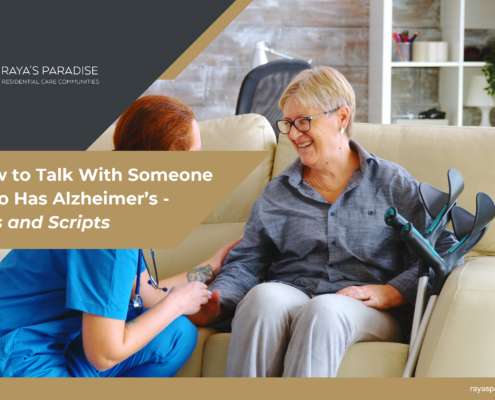 https://rayasparadise.com/wp-content/uploads/2013/02/How-to-Talk-With-Someone-Who-Has-Alzheimers.jpg
1700
2553
Moti Gamburd
https://rayasparadise.com//wp-content/uploads/2019/07/RP-LOGO-Horizontal-Name-Only-websitetrans.png
Moti Gamburd2026-08-06 04:00:212026-08-06 15:23:18How to Talk with Someone Who Has Alzheimer's
https://rayasparadise.com/wp-content/uploads/2013/02/How-to-Talk-With-Someone-Who-Has-Alzheimers.jpg
1700
2553
Moti Gamburd
https://rayasparadise.com//wp-content/uploads/2019/07/RP-LOGO-Horizontal-Name-Only-websitetrans.png
Moti Gamburd2026-08-06 04:00:212026-08-06 15:23:18How to Talk with Someone Who Has Alzheimer's https://rayasparadise.com/wp-content/uploads/2013/09/Coconut-Oil-for-Alzheimers-Disease.jpg
1697
2551
Moti Gamburd
https://rayasparadise.com//wp-content/uploads/2019/07/RP-LOGO-Horizontal-Name-Only-websitetrans.png
Moti Gamburd2026-08-05 04:00:472026-08-05 21:50:26Coconut Oil for Alzheimer's Disease?
https://rayasparadise.com/wp-content/uploads/2013/09/Coconut-Oil-for-Alzheimers-Disease.jpg
1697
2551
Moti Gamburd
https://rayasparadise.com//wp-content/uploads/2019/07/RP-LOGO-Horizontal-Name-Only-websitetrans.png
Moti Gamburd2026-08-05 04:00:472026-08-05 21:50:26Coconut Oil for Alzheimer's Disease? https://rayasparadise.com/wp-content/uploads/2013/10/How-to-Tell-When-a-Loved-One-With-Dementia-Is-Sick.jpg
1697
2555
Moti Gamburd
https://rayasparadise.com//wp-content/uploads/2019/07/RP-LOGO-Horizontal-Name-Only-websitetrans.png
Moti Gamburd2026-03-10 12:43:002026-03-18 01:37:19How to Tell When a Loved One with Dementia Is Sick
https://rayasparadise.com/wp-content/uploads/2013/10/How-to-Tell-When-a-Loved-One-With-Dementia-Is-Sick.jpg
1697
2555
Moti Gamburd
https://rayasparadise.com//wp-content/uploads/2019/07/RP-LOGO-Horizontal-Name-Only-websitetrans.png
Moti Gamburd2026-03-10 12:43:002026-03-18 01:37:19How to Tell When a Loved One with Dementia Is Sick https://rayasparadise.com/wp-content/uploads/2013/08/Does-Computer-Use-Help-With-Dementia-Symptoms.jpg
1700
2557
Moti Gamburd
https://rayasparadise.com//wp-content/uploads/2019/07/RP-LOGO-Horizontal-Name-Only-websitetrans.png
Moti Gamburd2026-03-09 06:49:072026-03-18 00:31:00Does Computer Use Help with Dementia Symptoms?
https://rayasparadise.com/wp-content/uploads/2013/08/Does-Computer-Use-Help-With-Dementia-Symptoms.jpg
1700
2557
Moti Gamburd
https://rayasparadise.com//wp-content/uploads/2019/07/RP-LOGO-Horizontal-Name-Only-websitetrans.png
Moti Gamburd2026-03-09 06:49:072026-03-18 00:31:00Does Computer Use Help with Dementia Symptoms? https://rayasparadise.com/wp-content/uploads/2013/02/Coping-With-Dementia-Behavior.jpeg
1702
2555
Moti Gamburd
https://rayasparadise.com//wp-content/uploads/2019/07/RP-LOGO-Horizontal-Name-Only-websitetrans.png
Moti Gamburd2026-03-08 12:16:332026-03-16 16:35:15Coping With Dementia Behavior
https://rayasparadise.com/wp-content/uploads/2013/02/Coping-With-Dementia-Behavior.jpeg
1702
2555
Moti Gamburd
https://rayasparadise.com//wp-content/uploads/2019/07/RP-LOGO-Horizontal-Name-Only-websitetrans.png
Moti Gamburd2026-03-08 12:16:332026-03-16 16:35:15Coping With Dementia Behavior https://rayasparadise.com/wp-content/uploads/2013/09/Respect-for-a-Senior-With-Dementia.jpg
1700
2557
Moti Gamburd
https://rayasparadise.com//wp-content/uploads/2019/07/RP-LOGO-Horizontal-Name-Only-websitetrans.png
Moti Gamburd2026-03-07 03:14:072026-03-16 15:47:50Respect for a Senior with Dementia
https://rayasparadise.com/wp-content/uploads/2013/09/Respect-for-a-Senior-With-Dementia.jpg
1700
2557
Moti Gamburd
https://rayasparadise.com//wp-content/uploads/2019/07/RP-LOGO-Horizontal-Name-Only-websitetrans.png
Moti Gamburd2026-03-07 03:14:072026-03-16 15:47:50Respect for a Senior with Dementia https://rayasparadise.com/wp-content/uploads/2013/08/Why-Dementia-Patients-Have-Trouble-With-Eating.jpeg
1700
2553
Moti Gamburd
https://rayasparadise.com//wp-content/uploads/2019/07/RP-LOGO-Horizontal-Name-Only-websitetrans.png
Moti Gamburd2026-03-05 11:11:482026-03-16 02:07:05Why Dementia Patients Have Trouble with Eating
https://rayasparadise.com/wp-content/uploads/2013/08/Why-Dementia-Patients-Have-Trouble-With-Eating.jpeg
1700
2553
Moti Gamburd
https://rayasparadise.com//wp-content/uploads/2019/07/RP-LOGO-Horizontal-Name-Only-websitetrans.png
Moti Gamburd2026-03-05 11:11:482026-03-16 02:07:05Why Dementia Patients Have Trouble with Eating https://rayasparadise.com/wp-content/uploads/2013/05/Exercises-for-the-Later-Stages-of-Dementia.jpg
1702
2553
Moti Gamburd
https://rayasparadise.com//wp-content/uploads/2019/07/RP-LOGO-Horizontal-Name-Only-websitetrans.png
Moti Gamburd2026-03-04 11:13:202026-03-15 21:09:55Exercises for the Later Stages of Dementia
https://rayasparadise.com/wp-content/uploads/2013/05/Exercises-for-the-Later-Stages-of-Dementia.jpg
1702
2553
Moti Gamburd
https://rayasparadise.com//wp-content/uploads/2019/07/RP-LOGO-Horizontal-Name-Only-websitetrans.png
Moti Gamburd2026-03-04 11:13:202026-03-15 21:09:55Exercises for the Later Stages of Dementia https://rayasparadise.com/wp-content/uploads/2026/03/Addressing-Agitation-in-Dementia.jpg
1700
2548
Moti Gamburd
https://rayasparadise.com//wp-content/uploads/2019/07/RP-LOGO-Horizontal-Name-Only-websitetrans.png
Moti Gamburd2026-03-03 03:47:592026-03-15 19:55:59Addressing Agitation in Someone Who Has Dementia
https://rayasparadise.com/wp-content/uploads/2026/03/Addressing-Agitation-in-Dementia.jpg
1700
2548
Moti Gamburd
https://rayasparadise.com//wp-content/uploads/2019/07/RP-LOGO-Horizontal-Name-Only-websitetrans.png
Moti Gamburd2026-03-03 03:47:592026-03-15 19:55:59Addressing Agitation in Someone Who Has Dementia https://rayasparadise.com/wp-content/uploads/2026/03/All-About-Lewy-Body-Dementia.jpg
1702
2555
Moti Gamburd
https://rayasparadise.com//wp-content/uploads/2019/07/RP-LOGO-Horizontal-Name-Only-websitetrans.png
Moti Gamburd2026-03-02 04:28:062026-03-15 17:53:10All About Lewy Body Dementia
https://rayasparadise.com/wp-content/uploads/2026/03/All-About-Lewy-Body-Dementia.jpg
1702
2555
Moti Gamburd
https://rayasparadise.com//wp-content/uploads/2019/07/RP-LOGO-Horizontal-Name-Only-websitetrans.png
Moti Gamburd2026-03-02 04:28:062026-03-15 17:53:10All About Lewy Body Dementia https://rayasparadise.com/wp-content/uploads/2013/05/Exercise-Benefits-for-Dementia-Patients.jpg
1703
2555
Moti Gamburd
https://rayasparadise.com//wp-content/uploads/2019/07/RP-LOGO-Horizontal-Name-Only-websitetrans.png
Moti Gamburd2026-03-01 02:39:032026-03-15 16:50:15Exercise Benefits for Dementia Patients - Safe Activities, Routines, and Memory Care Support
https://rayasparadise.com/wp-content/uploads/2013/05/Exercise-Benefits-for-Dementia-Patients.jpg
1703
2555
Moti Gamburd
https://rayasparadise.com//wp-content/uploads/2019/07/RP-LOGO-Horizontal-Name-Only-websitetrans.png
Moti Gamburd2026-03-01 02:39:032026-03-15 16:50:15Exercise Benefits for Dementia Patients - Safe Activities, Routines, and Memory Care Support https://rayasparadise.com/wp-content/uploads/2013/08/Giving-Dignity-to-Dementia-Patients.jpg
1697
2553
Moti Gamburd
https://rayasparadise.com//wp-content/uploads/2019/07/RP-LOGO-Horizontal-Name-Only-websitetrans.png
Moti Gamburd2026-01-14 04:00:032026-01-15 18:26:55Giving Dignity to Dementia Patients
https://rayasparadise.com/wp-content/uploads/2013/08/Giving-Dignity-to-Dementia-Patients.jpg
1697
2553
Moti Gamburd
https://rayasparadise.com//wp-content/uploads/2019/07/RP-LOGO-Horizontal-Name-Only-websitetrans.png
Moti Gamburd2026-01-14 04:00:032026-01-15 18:26:55Giving Dignity to Dementia Patients
