
Contents
- Healing Foods for Alzheimer’s – What Diet Can and Cannot Do
- Can foods cure, reverse or prevent Alzheimer’s disease?
- Which eating patterns have the strongest support for brain health?
- What does research say about low-carb and ketogenic diets?
- How to support nutrition after an Alzheimer’s diagnosis
- Build meals around familiarity
- Create a predictable meal routine
- Protect protein and calorie intake
- Make hydration easier
- Respond to sweet-food preferences thoughtfully
- Watch for chewing and swallowing changes
- Investigate sudden food refusal
- Use supplements to address a documented need
- Make the plan realistic for the caregiver
- Specialized memory care nutrition support in Orange County and Los Angeles
- Sources & Additional Resources
- More Memory Care Resources
- Three Big Questions to Consider After an Alzheimer's Diagnosis
- Five Myths About Alzheimer's Disease
- Should You Seek an Alzheimer's Diagnosis?
- How to Talk with Someone Who Has Alzheimer's
- Coconut Oil for Alzheimer's Disease?
- How to Tell When a Loved One with Dementia Is Sick
- Does Computer Use Help with Dementia Symptoms?
- Coping With Dementia Behavior
- Respect for a Senior with Dementia
- Why Dementia Patients Have Trouble with Eating
- Exercises for the Later Stages of Dementia
- Addressing Agitation in Someone Who Has Dementia
- All About Lewy Body Dementia
- Exercise Benefits for Dementia Patients - Safe Activities, Routines, and Memory Care Support
- Giving Dignity to Dementia Patients

Healing Foods for Alzheimer’s – What Diet Can and Cannot Do
- No food, supplement or diet has been proven to cure or reverse Alzheimer’s disease.
- Mediterranean and MIND-style eating patterns are associated with healthier cognitive aging in many observational studies, although clinical trial results are mixed.
- Vegetables, berries, beans, whole grains, nuts, fish and unsaturated oils can support cardiovascular health and general nutrition.
- A 2024 meta-analysis reported cognitive test improvements from ketogenic interventions, but the included trials were varied and did not establish that the diets preserve independence or slow disease progression.
- Ketogenic diets may raise LDL cholesterol and triglycerides in some people and require clinical supervision.
- As Alzheimer’s progresses, preventing weight loss, dehydration and swallowing complications may become more urgent than following an idealized diet.
- Food should support medical care, physical activity and meaningful engagement, not replace evidence-based treatment.
Families facing Alzheimer’s disease are often told that a particular food, supplement or diet can protect the brain, restore memory or even reverse cognitive decline.
These claims are appealing because food feels familiar and controllable at a time when so much else feels uncertain.
Nutrition does matter. Food affects cardiovascular health, blood sugar, energy, weight, strength and the ability to recover from illness.
These factors can influence how well an older adult functions from day to day. However, no individual food and no dietary pattern has been proven to cure or reverse Alzheimer’s disease.
The most responsible goal is not to search for a miracle ingredient.
It is to create a sustainable eating pattern that supports the person’s overall health, provides enough calories and protein, protects hydration and remains realistic as memory, appetite and physical abilities change.
Families who need greater support with meals, medication routines and dementia-related safety can explore Orange County memory care or Los Angeles memory care.

Can foods cure, reverse or prevent Alzheimer’s disease?
Alzheimer’s disease is a complex neurodegenerative condition.
It is not caused by one nutrient deficiency or by a single failure of the brain to obtain enough glucose. Current research indicates that the disease develops through a combination of brain changes, aging, genetics, cardiovascular health and other environmental and lifestyle factors.
Changes in brain glucose metabolism are one area of active research.
Certain regions of the brain may use glucose less efficiently as Alzheimer’s develops. This has led scientists to study ketones, insulin resistance and dietary interventions. However, impaired glucose metabolism does not prove that a low-carbohydrate, high-fat diet can reverse the disease.
Prevention research is not treatment research
Studies involving adults without dementia often examine whether long-term eating habits are associated with a lower risk of cognitive decline.
These studies cannot tell us that the same diet will reverse symptoms after Alzheimer’s disease has been diagnosed.
Observational studies also identify associations rather than proving cause and effect.
People who follow Mediterranean-style diets may exercise more, smoke less, receive better healthcare or have other habits that contribute to healthier aging.
Temporary improvement does not prove reversal
A person with Alzheimer’s may appear more alert after eating, drinking enough fluid, sleeping well or recovering from an infection.
Correcting dehydration, low blood sugar, constipation or a medication problem can produce a noticeable improvement.
Those changes matter, but they do not mean the underlying Alzheimer’s disease has been reversed.
Families should be cautious when a book, website or supplement company uses a short-term improvement as proof of a cure.
How to recognize an exaggerated nutrition claim
Be skeptical when a source promises that one food or diet can “starve Alzheimer’s,” remove brain plaques, restore lost memories or replace medication.
Look for human clinical trials, adequate sample sizes, comparison groups, meaningful follow-up periods and independent replication.
Also check whether the person promoting the claim sells the featured supplement, diet plan, coaching program or product.
A financial interest does not automatically make a claim false, but it makes transparent evidence especially important.
For a broader overview of the condition, read Alzheimer’s 101.

Which eating patterns have the strongest support for brain health?
The Mediterranean and MIND diets are the eating patterns most often discussed in relation to cognitive health.
Both emphasize minimally processed foods, vegetables, whole grains, beans, nuts, fish and unsaturated fats.
The MIND diet combines elements of the Mediterranean diet and the Dietary Approaches to Stop Hypertension, or DASH, eating plan.
It places additional emphasis on leafy greens and berries while limiting foods high in saturated fat and added sugar.
What the MIND diet research found
A 2024 systematic review published in Advances in Nutrition found observational evidence of protective associations between greater MIND diet adherence, global cognition and dementia risk.
The authors described the diet as a promising approach to healthy brain aging, particularly in North American populations.
The review also found that evidence for some outcomes, including specific cognitive domains, brain volume and brain pathology, was mixed or limited.
Results were less conclusive outside the populations most frequently represented in the research.
These findings support the MIND diet as a reasonable healthy eating pattern.
They do not prove that it prevents every case of dementia or treats established Alzheimer’s disease.
What the large randomized trial found
A three-year randomized clinical trial published in the New England Journal of Medicine studied older adults who did not have cognitive impairment but had a family history of dementia, excess body weight and a suboptimal diet.
Participants assigned to the MIND diet showed small improvements in global cognition.
However, participants assigned to a comparison diet with mild calorie restriction improved by a similar amount. The difference between groups was not statistically significant.
The trial does not show that the MIND diet is unhealthy or ineffective for cardiovascular nutrition.
It shows that the diet did not outperform the comparison intervention on cognitive change during the three-year study.
Vegetables, especially leafy greens
Vegetables provide fiber, vitamins, minerals and plant compounds that support general health.
Leafy greens such as spinach, kale, collard greens and romaine lettuce are prominent in MIND diet research.
Vegetables can be served raw, steamed, roasted, blended into soups or chopped into familiar dishes.
Their texture should be adjusted when chewing or swallowing becomes difficult.
Berries and other fruits
Berries contain pigments and plant compounds studied for antioxidant and anti-inflammatory properties.
Blueberries and strawberries are commonly emphasized in MIND-style eating.
Fruit also supports hydration and may be easier to accept than vegetables.
Fresh, frozen and unsweetened cooked fruit can all fit into a balanced diet.
Beans, lentils and whole grains
Beans and lentils provide fiber, plant protein and micronutrients.
Whole grains such as oats, brown rice, barley and whole-grain bread can support digestive and cardiovascular health.
These foods should be adapted to the person’s tolerance.
Someone with a small appetite may need more calorie-dense choices rather than a large volume of high-fiber food.
Fish and other protein sources
Fish provides protein and, in fatty fish such as salmon, sardines and trout, omega-3 fatty acids.
Poultry, eggs, dairy foods, beans and other proteins can help maintain muscle and strength.
Protein becomes especially important when appetite is declining.
Include a manageable source at meals and snacks rather than expecting the person to eat a large serving at one sitting.
Nuts, seeds and unsaturated oils
Nuts, seeds, avocado and oils such as olive oil provide unsaturated fats and energy.
They can be useful for someone who needs additional calories, although whole nuts may be unsafe when chewing or swallowing is impaired.
Nut butter, ground seeds and smooth avocado may be easier alternatives.
Portion sizes should reflect the person’s calorie needs and medical conditions.
Foods to limit without creating unnecessary restriction
MIND and Mediterranean-style patterns generally limit processed meats, excessive sweets, fried foods and foods high in saturated fat.
The goal is not to declare these foods poisonous. It is to prevent them from crowding out more nutrient-dense choices.
Rigid restriction can backfire in someone with Alzheimer’s who is already losing weight or eating very little.
A favorite dessert may encourage a person to remain at the table and eat the rest of the meal.
Nutrition decisions should balance long-term health goals with current intake and quality of life.
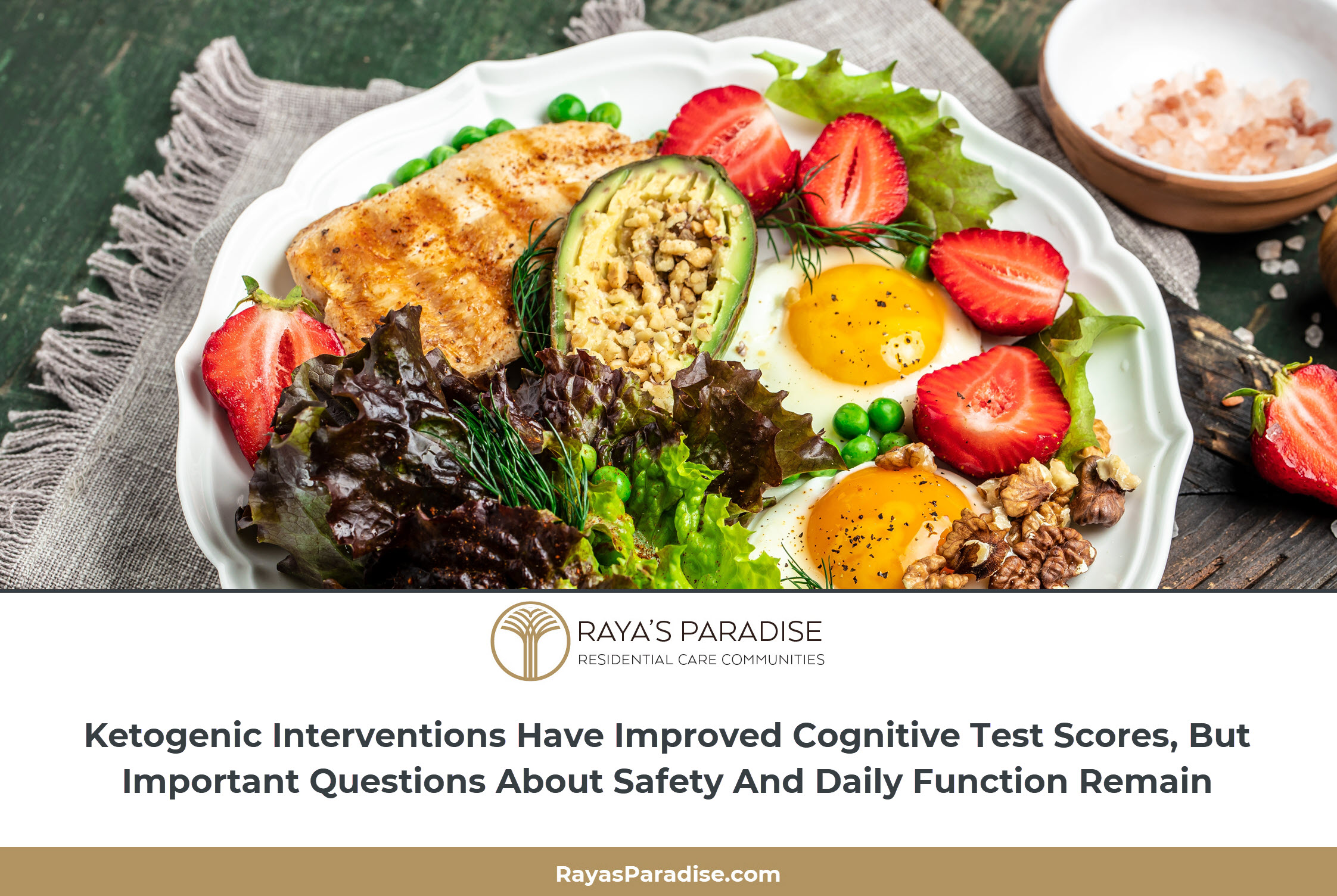
What does research say about low-carb and ketogenic diets?
Ketogenic diets sharply reduce carbohydrate intake and provide a high proportion of calories from fat.
This causes the body to produce ketones, which the brain can use as an alternative energy source.
Researchers are studying whether ketones can help compensate for changes in brain glucose metabolism.
The evidence includes some positive findings, but important questions about clinical significance, long-term safety and practical use remain.
What the 2024 meta-analysis found
A 2024 systematic review and meta-analysis published in The Journal of Nutrition, Health & Aging included 10 randomized controlled trials involving 691 people with Alzheimer’s disease.
Across the pooled trials, ketogenic interventions produced statistically significant improvements on the Mini-Mental State Examination, the Alzheimer’s Disease Assessment Scale-Cognitive Subscale and a measure of global mental state.
The authors concluded that ketogenic interventions may enhance cognitive function and mental status in people with Alzheimer’s disease.
These findings deserve to be presented accurately.
They are more favorable than simply describing ketogenic research as inconsistent.
Why caution is still appropriate
The included trials used different ketogenic interventions, study durations and protocols.
Some dietary studies categorized as ketogenic may not closely resemble the highly restrictive diet families imagine when they hear the term.
The improvements were measured primarily through cognitive and mental-status scores.
The meta-analysis did not establish that ketogenic diets help people remain independent longer, reduce caregiving needs or slow the underlying progression of Alzheimer’s disease.
A separate 2024 review of randomized lifestyle interventions published in the Journal of Alzheimer’s Disease found inconsistent cognitive effects from modified diets such as Atkins and ketogenic approaches.
This broader review reinforces that results depend heavily on the intervention, population and outcome being measured.
Blood lipid changes matter
The ketogenic meta-analysis also found increases in triglycerides and LDL cholesterol.
The authors described hyperlipidemia as a potential concern.
This does not mean every ketogenic diet has the same cardiovascular effect.
Fat sources, calorie intake, genetics, medications and baseline health all matter. However, it does mean cholesterol and triglycerides should be monitored when a clinician approves this type of diet.
A ketogenic diet is not simply “healthy fat”
A therapeutic ketogenic diet requires careful control of carbohydrates, protein and fat.
Adding butter, coconut oil or bacon to an otherwise unchanged diet does not reproduce the interventions studied in clinical research.
The quality of fat also matters.
A modified Mediterranean ketogenic approach may emphasize olive oil, fish, nuts, seeds and avocado rather than relying primarily on saturated fat.
Possible risks for older adults
Restrictive diets can cause constipation, nausea, dehydration, low blood sugar, lipid changes and unintended weight loss.
They may complicate diabetes treatment or interact with medications.
Meal preparation can also become burdensome for caregivers.
Adherence may be difficult for someone who forgets dietary restrictions or has strong preferences for familiar carbohydrate foods.
Who needs close medical supervision?
Medical and dietetic guidance is particularly important when the person has diabetes, kidney or liver disease, cardiovascular disease, poor appetite, recent weight loss or swallowing difficulty.
No one should stop prescribed Alzheimer’s medication or delay medical treatment because a ketogenic diet is being tried.
For a closely related evidence review, read whether coconut oil helps Alzheimer’s disease.
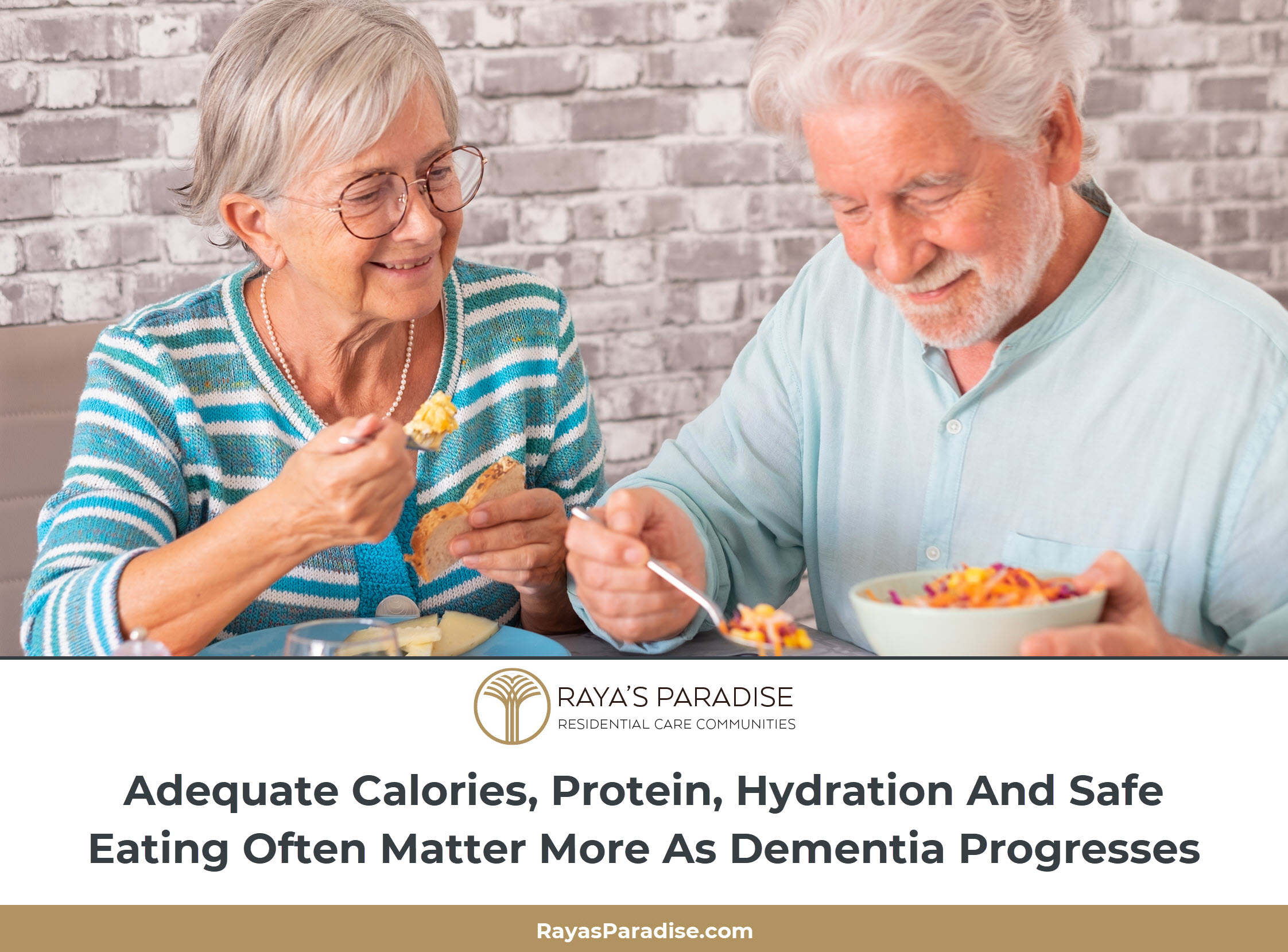
How to support nutrition after an Alzheimer’s diagnosis
A nutrition plan that looks ideal on paper is not useful if the person refuses it, cannot chew it or loses weight while trying to follow it.
After diagnosis, priorities may gradually shift from long-term risk reduction toward adequate intake, strength, hydration, comfort and safety.
Build meals around familiarity
Familiar foods are often easier to recognize and accept.
Include flavors, textures and cultural dishes the person has enjoyed throughout life. Sudden changes to unfamiliar “brain healthy” meals may increase refusal.
Keep the presentation simple.
Too many foods on the plate can make it difficult to decide where to begin. Serve one or two items at a time when necessary.
Older adults may face changing taste, reduced appetite, dental problems, medication effects and physical limitations that make balanced eating more difficult.
Read about why eating well gets harder with age for more context.
Create a predictable meal routine
Serve meals in the same place and at similar times each day.
Reduce television, clutter and competing conversation. Use contrasting plates when the person has difficulty seeing food against the dish.
Sit with the person when possible.
Gentle companionship and modeling the first bite may be more effective than repeated instructions to eat.
Protect protein and calorie intake
Unintended weight loss can reduce strength, immunity and mobility.
Offer smaller meals and snacks more frequently when large portions feel overwhelming.
Calorie and protein boosters may include yogurt, eggs, nut butter, avocado, cheese, olive oil, milk-based drinks or other foods appropriate for the person’s medical needs.
Our guide to nutrition needs for older adults explains how protein, calories and micronutrient needs may change with age.
Make hydration easier
A person with Alzheimer’s may forget to drink, fail to recognize thirst or have difficulty finding a cup.
Offer fluids regularly rather than waiting for a request.
Water, milk, soup, smoothies, fruit and other high-fluid foods can contribute.
Keep a familiar cup visible and within reach. Monitor for darker urine, dry mouth, constipation, weakness and sudden confusion.
Respond to sweet-food preferences thoughtfully
Some people develop a stronger preference for sweets.
Instead of creating a constant battle, use naturally sweet and nutrient-dense options such as fruit, yogurt or oatmeal with berries.
When diabetes is present, ask the healthcare team how to balance blood sugar targets with the risk of inadequate intake.
Targets may need to be individualized for an older adult with advanced illness.
Watch for chewing and swallowing changes
Coughing during meals, a wet-sounding voice, pocketing food in the cheeks, prolonged chewing or recurrent chest infections may indicate swallowing difficulty.
Do not independently thicken liquids or severely restrict textures without evaluation.
A speech-language pathologist can assess swallowing safety, and a registered dietitian can help preserve nutrition within any recommended texture changes.
Investigate sudden food refusal
A sudden change in eating can be caused by mouth pain, poorly fitting dentures, constipation, infection, medication side effects, nausea, depression or delirium.
Treat abrupt refusal as a possible health signal rather than assuming it is Alzheimer’s progression.
Our guide to recognizing illness in someone with dementia explains why behavioral and appetite changes may be the first signs of a medical problem.
For broader guidance on appetite and mealtime difficulties, read why people with dementia have trouble eating.
Use supplements to address a documented need
Vitamin or mineral supplements may be appropriate when laboratory testing, low intake or a medical condition identifies a need.
More is not automatically better, and some supplements interact with medications or cause side effects.
Bring all vitamins, herbal products and nutrition powders to medical appointments so the clinician can review the full list.
Make the plan realistic for the caregiver
A complicated diet that requires separate cooking, constant tracking and repeated conflict may not be sustainable.
A registered dietitian can help simplify the plan around foods the household already uses.
Caregiver capacity is part of nutrition planning.
When every meal has become a struggle, additional support may protect both the person’s intake and the caregiver’s health.
Review the signs of caregiver burnout if meal preparation, monitoring and repeated food refusal are contributing to sleep loss, anxiety, resentment or exhaustion.
Short-term care can give families time to rest, address medical concerns or reassess longer-term needs.
Explore respite care in Orange County or respite care in Los Angeles.
Specialized memory care nutrition support in Orange County and Los Angeles
As Alzheimer’s progresses, meals may involve much more than choosing healthy ingredients.
Caregivers may need to provide reminders, prepare safe textures, monitor hydration, prevent wandering during meals, manage medications and recognize subtle signs of pain or illness.
A specialized memory care environment can provide consistent meal schedules, calm cueing, observation and support tailored to changing cognitive and physical abilities.
It can also help families move away from daily food battles and return to spending relational time with their loved one.
Families seeking local options can explore our San Clemente memory care services or view our communities in Los Angeles.
Next Steps
If weight loss, meal refusal, hydration problems, medication routines or dementia-related safety needs are becoming difficult to manage at home, contact our team through the Raya’s Paradise contact page.
Call (949) 420-9898 for Orange County or (310) 289-8834 for Los Angeles.
You can also email Info@RayasParadise.com.
To evaluate care in person, schedule an Orange County tour or a Los Angeles tour.
Our Specialized Memory Care Facility in Orange County
Our Specialized Memory Care Residences in Los Angeles
Sources & Additional Resources
- National Institute on Aging. “What Do We Know About Diet and Prevention of Alzheimer’s Disease?” National Institutes of Health.
- National Institute on Aging. “MIND and Mediterranean Diets Linked to Fewer Signs of Alzheimer’s Brain Pathology.” National Institutes of Health, 2023.
- Barnes, Lisa L., et al. “Trial of the MIND Diet for Prevention of Cognitive Decline in Older Persons.” New England Journal of Medicine, 2023, 389(7):602–611.
- van Soest, A. P., et al. “The Mediterranean-Dietary Approaches to Stop Hypertension Intervention for Neurodegenerative Delay (MIND) Diet for the Aging Brain: A Systematic Review.” Advances in Nutrition, 2024, 15(3):100184.
- Martínez-López, S., et al. “A Systematic Review of Lifestyle-Based Interventions for Managing Alzheimer’s Disease: Insights From Randomized Controlled Trials.” Journal of Alzheimer’s Disease, 2024, 102(4):943–966.
- Rong, L., et al. “Effects of Ketogenic Diet on Cognitive Function of Patients With Alzheimer’s Disease: A Systematic Review and Meta-Analysis.” The Journal of Nutrition, Health & Aging, 2024, 28(8):100306.
- Alzheimer’s Association. “Food and Eating.” Alzheimer’s Association.
- National Institute on Aging. “Healthy Meal Planning: Tips for Older Adults.” National Institutes of Health.
Disclaimer:
This article provides general educational information and is not medical advice. Speak with a physician or registered dietitian before making major dietary changes, starting supplements or using a ketogenic diet, especially when the person has diabetes, heart disease, kidney disease, unintended weight loss or swallowing difficulty.
 https://rayasparadise.com/wp-content/uploads/2013/05/Three-Big-Questions-to-Consider-After-an-Alzheimers-Diagnosis.jpg
1702
2558
Moti Gamburd
https://rayasparadise.com//wp-content/uploads/2019/07/RP-LOGO-Horizontal-Name-Only-websitetrans.png
Moti Gamburd2026-08-08 11:36:042026-08-09 20:58:17Three Big Questions to Consider After an Alzheimer's Diagnosis
https://rayasparadise.com/wp-content/uploads/2013/05/Three-Big-Questions-to-Consider-After-an-Alzheimers-Diagnosis.jpg
1702
2558
Moti Gamburd
https://rayasparadise.com//wp-content/uploads/2019/07/RP-LOGO-Horizontal-Name-Only-websitetrans.png
Moti Gamburd2026-08-08 11:36:042026-08-09 20:58:17Three Big Questions to Consider After an Alzheimer's Diagnosis https://rayasparadise.com/wp-content/uploads/2013/11/Five-Myths-About-Alzheimers-Disease-Whats-Actually-True.jpg
1697
2546
Moti Gamburd
https://rayasparadise.com//wp-content/uploads/2019/07/RP-LOGO-Horizontal-Name-Only-websitetrans.png
Moti Gamburd2026-08-07 16:45:112026-08-07 18:43:03Five Myths About Alzheimer's Disease
https://rayasparadise.com/wp-content/uploads/2013/11/Five-Myths-About-Alzheimers-Disease-Whats-Actually-True.jpg
1697
2546
Moti Gamburd
https://rayasparadise.com//wp-content/uploads/2019/07/RP-LOGO-Horizontal-Name-Only-websitetrans.png
Moti Gamburd2026-08-07 16:45:112026-08-07 18:43:03Five Myths About Alzheimer's Disease https://rayasparadise.com/wp-content/uploads/2026/08/Should-You-Seek-an-Alzheimers-Diagnosis.jpg
1702
2551
Moti Gamburd
https://rayasparadise.com//wp-content/uploads/2019/07/RP-LOGO-Horizontal-Name-Only-websitetrans.png
Moti Gamburd2026-08-06 06:39:192026-08-06 21:28:27Should You Seek an Alzheimer's Diagnosis?
https://rayasparadise.com/wp-content/uploads/2026/08/Should-You-Seek-an-Alzheimers-Diagnosis.jpg
1702
2551
Moti Gamburd
https://rayasparadise.com//wp-content/uploads/2019/07/RP-LOGO-Horizontal-Name-Only-websitetrans.png
Moti Gamburd2026-08-06 06:39:192026-08-06 21:28:27Should You Seek an Alzheimer's Diagnosis? https://rayasparadise.com/wp-content/uploads/2013/02/How-to-Talk-With-Someone-Who-Has-Alzheimers.jpg
1700
2553
Moti Gamburd
https://rayasparadise.com//wp-content/uploads/2019/07/RP-LOGO-Horizontal-Name-Only-websitetrans.png
Moti Gamburd2026-08-06 04:00:212026-10-12 22:20:59How to Talk with Someone Who Has Alzheimer's
https://rayasparadise.com/wp-content/uploads/2013/02/How-to-Talk-With-Someone-Who-Has-Alzheimers.jpg
1700
2553
Moti Gamburd
https://rayasparadise.com//wp-content/uploads/2019/07/RP-LOGO-Horizontal-Name-Only-websitetrans.png
Moti Gamburd2026-08-06 04:00:212026-10-12 22:20:59How to Talk with Someone Who Has Alzheimer's https://rayasparadise.com/wp-content/uploads/2013/09/Coconut-Oil-for-Alzheimers-Disease.jpg
1697
2551
Moti Gamburd
https://rayasparadise.com//wp-content/uploads/2019/07/RP-LOGO-Horizontal-Name-Only-websitetrans.png
Moti Gamburd2026-08-05 04:00:472026-10-12 22:21:40Coconut Oil for Alzheimer's Disease?
https://rayasparadise.com/wp-content/uploads/2013/09/Coconut-Oil-for-Alzheimers-Disease.jpg
1697
2551
Moti Gamburd
https://rayasparadise.com//wp-content/uploads/2019/07/RP-LOGO-Horizontal-Name-Only-websitetrans.png
Moti Gamburd2026-08-05 04:00:472026-10-12 22:21:40Coconut Oil for Alzheimer's Disease? https://rayasparadise.com/wp-content/uploads/2013/10/How-to-Tell-When-a-Loved-One-With-Dementia-Is-Sick.jpg
1697
2555
Moti Gamburd
https://rayasparadise.com//wp-content/uploads/2019/07/RP-LOGO-Horizontal-Name-Only-websitetrans.png
Moti Gamburd2026-03-10 12:43:002026-10-12 22:00:59How to Tell When a Loved One with Dementia Is Sick
https://rayasparadise.com/wp-content/uploads/2013/10/How-to-Tell-When-a-Loved-One-With-Dementia-Is-Sick.jpg
1697
2555
Moti Gamburd
https://rayasparadise.com//wp-content/uploads/2019/07/RP-LOGO-Horizontal-Name-Only-websitetrans.png
Moti Gamburd2026-03-10 12:43:002026-10-12 22:00:59How to Tell When a Loved One with Dementia Is Sick https://rayasparadise.com/wp-content/uploads/2013/08/Does-Computer-Use-Help-With-Dementia-Symptoms.jpg
1700
2557
Moti Gamburd
https://rayasparadise.com//wp-content/uploads/2019/07/RP-LOGO-Horizontal-Name-Only-websitetrans.png
Moti Gamburd2026-03-09 06:49:072026-10-12 22:01:42Does Computer Use Help with Dementia Symptoms?
https://rayasparadise.com/wp-content/uploads/2013/08/Does-Computer-Use-Help-With-Dementia-Symptoms.jpg
1700
2557
Moti Gamburd
https://rayasparadise.com//wp-content/uploads/2019/07/RP-LOGO-Horizontal-Name-Only-websitetrans.png
Moti Gamburd2026-03-09 06:49:072026-10-12 22:01:42Does Computer Use Help with Dementia Symptoms? https://rayasparadise.com/wp-content/uploads/2013/02/Coping-With-Dementia-Behavior.jpeg
1702
2555
Moti Gamburd
https://rayasparadise.com//wp-content/uploads/2019/07/RP-LOGO-Horizontal-Name-Only-websitetrans.png
Moti Gamburd2026-03-08 12:16:332026-10-12 22:02:24Coping With Dementia Behavior
https://rayasparadise.com/wp-content/uploads/2013/02/Coping-With-Dementia-Behavior.jpeg
1702
2555
Moti Gamburd
https://rayasparadise.com//wp-content/uploads/2019/07/RP-LOGO-Horizontal-Name-Only-websitetrans.png
Moti Gamburd2026-03-08 12:16:332026-10-12 22:02:24Coping With Dementia Behavior https://rayasparadise.com/wp-content/uploads/2013/09/Respect-for-a-Senior-With-Dementia.jpg
1700
2557
Moti Gamburd
https://rayasparadise.com//wp-content/uploads/2019/07/RP-LOGO-Horizontal-Name-Only-websitetrans.png
Moti Gamburd2026-03-07 03:14:072026-10-12 22:22:23Respect for a Senior with Dementia
https://rayasparadise.com/wp-content/uploads/2013/09/Respect-for-a-Senior-With-Dementia.jpg
1700
2557
Moti Gamburd
https://rayasparadise.com//wp-content/uploads/2019/07/RP-LOGO-Horizontal-Name-Only-websitetrans.png
Moti Gamburd2026-03-07 03:14:072026-10-12 22:22:23Respect for a Senior with Dementia https://rayasparadise.com/wp-content/uploads/2013/08/Why-Dementia-Patients-Have-Trouble-With-Eating.jpeg
1700
2553
Moti Gamburd
https://rayasparadise.com//wp-content/uploads/2019/07/RP-LOGO-Horizontal-Name-Only-websitetrans.png
Moti Gamburd2026-03-05 11:11:482026-10-12 22:03:01Why Dementia Patients Have Trouble with Eating
https://rayasparadise.com/wp-content/uploads/2013/08/Why-Dementia-Patients-Have-Trouble-With-Eating.jpeg
1700
2553
Moti Gamburd
https://rayasparadise.com//wp-content/uploads/2019/07/RP-LOGO-Horizontal-Name-Only-websitetrans.png
Moti Gamburd2026-03-05 11:11:482026-10-12 22:03:01Why Dementia Patients Have Trouble with Eating https://rayasparadise.com/wp-content/uploads/2013/05/Exercises-for-the-Later-Stages-of-Dementia.jpg
1702
2553
Moti Gamburd
https://rayasparadise.com//wp-content/uploads/2019/07/RP-LOGO-Horizontal-Name-Only-websitetrans.png
Moti Gamburd2026-03-04 11:13:202026-10-12 22:03:40Exercises for the Later Stages of Dementia
https://rayasparadise.com/wp-content/uploads/2013/05/Exercises-for-the-Later-Stages-of-Dementia.jpg
1702
2553
Moti Gamburd
https://rayasparadise.com//wp-content/uploads/2019/07/RP-LOGO-Horizontal-Name-Only-websitetrans.png
Moti Gamburd2026-03-04 11:13:202026-10-12 22:03:40Exercises for the Later Stages of Dementia https://rayasparadise.com/wp-content/uploads/2026/03/Addressing-Agitation-in-Dementia.jpg
1700
2548
Moti Gamburd
https://rayasparadise.com//wp-content/uploads/2019/07/RP-LOGO-Horizontal-Name-Only-websitetrans.png
Moti Gamburd2026-03-03 03:47:592026-10-12 22:04:15Addressing Agitation in Someone Who Has Dementia
https://rayasparadise.com/wp-content/uploads/2026/03/Addressing-Agitation-in-Dementia.jpg
1700
2548
Moti Gamburd
https://rayasparadise.com//wp-content/uploads/2019/07/RP-LOGO-Horizontal-Name-Only-websitetrans.png
Moti Gamburd2026-03-03 03:47:592026-10-12 22:04:15Addressing Agitation in Someone Who Has Dementia https://rayasparadise.com/wp-content/uploads/2026/03/All-About-Lewy-Body-Dementia.jpg
1702
2555
Moti Gamburd
https://rayasparadise.com//wp-content/uploads/2019/07/RP-LOGO-Horizontal-Name-Only-websitetrans.png
Moti Gamburd2026-03-02 04:28:062026-10-12 22:05:24All About Lewy Body Dementia
https://rayasparadise.com/wp-content/uploads/2026/03/All-About-Lewy-Body-Dementia.jpg
1702
2555
Moti Gamburd
https://rayasparadise.com//wp-content/uploads/2019/07/RP-LOGO-Horizontal-Name-Only-websitetrans.png
Moti Gamburd2026-03-02 04:28:062026-10-12 22:05:24All About Lewy Body Dementia https://rayasparadise.com/wp-content/uploads/2013/05/Exercise-Benefits-for-Dementia-Patients.jpg
1703
2555
Moti Gamburd
https://rayasparadise.com//wp-content/uploads/2019/07/RP-LOGO-Horizontal-Name-Only-websitetrans.png
Moti Gamburd2026-03-01 02:39:032026-10-12 22:06:16Exercise Benefits for Dementia Patients - Safe Activities, Routines, and Memory Care Support
https://rayasparadise.com/wp-content/uploads/2013/05/Exercise-Benefits-for-Dementia-Patients.jpg
1703
2555
Moti Gamburd
https://rayasparadise.com//wp-content/uploads/2019/07/RP-LOGO-Horizontal-Name-Only-websitetrans.png
Moti Gamburd2026-03-01 02:39:032026-10-12 22:06:16Exercise Benefits for Dementia Patients - Safe Activities, Routines, and Memory Care Support https://rayasparadise.com/wp-content/uploads/2013/08/Giving-Dignity-to-Dementia-Patients.jpg
1697
2553
Moti Gamburd
https://rayasparadise.com//wp-content/uploads/2019/07/RP-LOGO-Horizontal-Name-Only-websitetrans.png
Moti Gamburd2026-01-14 04:00:032026-10-12 22:18:05Giving Dignity to Dementia Patients
https://rayasparadise.com/wp-content/uploads/2013/08/Giving-Dignity-to-Dementia-Patients.jpg
1697
2553
Moti Gamburd
https://rayasparadise.com//wp-content/uploads/2019/07/RP-LOGO-Horizontal-Name-Only-websitetrans.png
Moti Gamburd2026-01-14 04:00:032026-10-12 22:18:05Giving Dignity to Dementia Patients