
Contents
- Respect for a Senior With Dementia
- Key Takeaways
- What respect and dignity mean in dementia care
- Common disrespect traps families fall into and how to fix them
- Respectful communication scripts for hard moments
- Autonomy vs safety, a simple decision framework
- Respect during bathing, toileting, dressing, eating, and grooming
- Caregiver stress, boundaries, and keeping respect available
- Specialized memory care in Orange County that protects dignity
- Sources & Additional Resources
- More Memory Care Resources
- How to Tell When a Loved One with Dementia Is Sick
- Does Computer Use Help with Dementia Symptoms?
- Coping With Dementia Behavior
- Respect for a Senior with Dementia
- Why Dementia Patients Have Trouble with Eating
- Exercises for the Later Stages of Dementia
- Addressing Agitation in Someone Who Has Dementia
- All About Lewy Body Dementia
- Exercise Benefits for Dementia Patients - Safe Activities, Routines, and Memory Care Support
- Giving Dignity to Dementia Patients
- Simple diagnostic tool predicts individual risk of Alzheimer's
- Why Alzheimer's Patients Become Agitated
- Dementia vs. Ordinary Forgetfulness and Confusion
- What to Expect During Late Stage Alzheimer's
- Helping a Senior with Dementia Remember Medicine
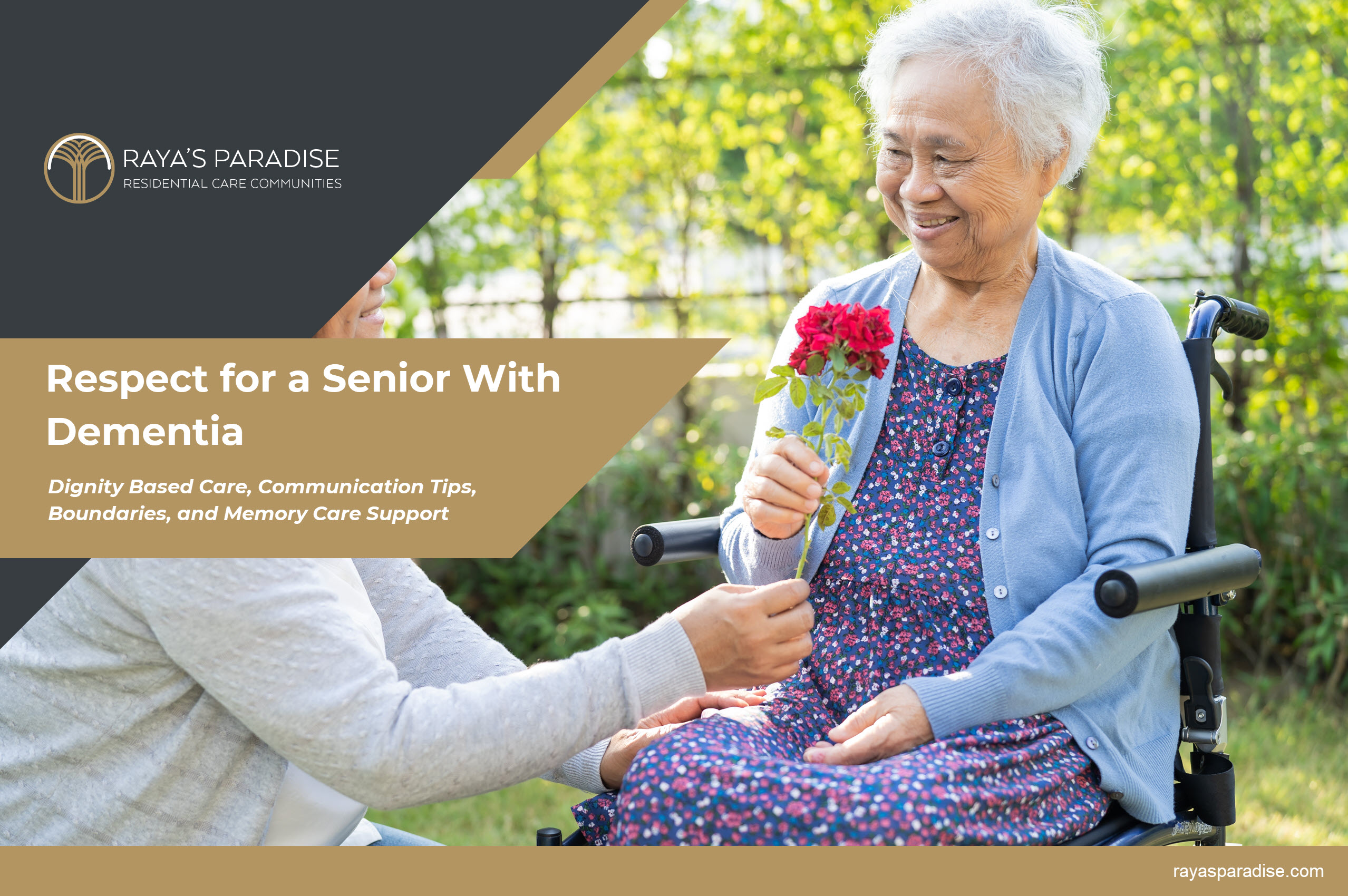
Respect for a Senior With Dementia
Dignity Based Care, Communication Tips, Boundaries, and Memory Care Support
“Respect your elders” sounds simple until dementia enters the room and nothing behaves the way it used to. Your mom forgets your child’s name. Your dad insists he needs to “get to work” even though he retired 20 years ago. Your spouse becomes suspicious, short-tempered, or starts wandering at night. If you have ever felt irritated, guilty, heartbroken, and exhausted in the same hour, you are not alone.
Respect in dementia care is not about pretending hard moments are easy. It is about protecting dignity when memory, judgment, and communication are changing. It is how you speak, how you offer help, how you keep someone safe without shaming them, and how you protect your own patience so you do not become someone you do not recognize.
If you want to talk through support options in Orange County, start with memory care in Orange County. You can also explore our memory care services for a broader overview of dementia support.
Key Takeaways
- Respect in dementia care means preserving identity, autonomy, privacy, and adult-to-adult communication.
- Validation and calm redirection often reduce distress faster than correcting facts.
- Independence is not all-or-nothing. The goal is the least help needed for safe success.
- Personal care tasks are dignity flashpoints: bathing, toileting, dressing, eating, grooming.
- Caregiver stress changes your tone and your threshold. Boundaries and breaks protect your relationship.
- If safety risks or constant crises are rising, more structured support can be the respectful plan.

What respect and dignity mean in dementia care
Respect is not the same as agreeing or letting everything slide. In dementia care, respect looks like:
- Identity: treating the person as an adult with a history, preferences, values, and pride.
- Autonomy: offering choices and control in safe ways, even when bigger decisions are no longer realistic.
- Privacy: protecting modesty during toileting, bathing, changing clothes, and personal conversations.
- Voice: addressing the person directly, not talking about them as if they are not there.
- Emotional safety: lowering fear and shame, not winning the facts.
When families focus on dignity first, conflict often decreases over time because the person feels safer. If you want a companion guide that dives deeper into dignity as a daily habit, this is a strong add-on: giving dignity to dementia patients.

Common disrespect traps families fall into and how to fix them
Most disrespect in dementia care is not cruelty. It is panic, time pressure, and grief coming out sideways. These are the most common traps.
Trap: Quizzing and testing
What it sounds like: “Do you remember who this is?” “What day is it?” “How old are you?”
Why it backfires: It sets up failure and shame. Many people react with anger or withdrawal.
Try instead: Offer the information gently. “This is Ella, your granddaughter. She’s so happy to see you.”
Trap: Correcting every detail
What it sounds like: “No, your mom died years ago.” “That’s not your house.”
Why it backfires: The emotion stays even when the fact is corrected. Often you create distress twice.
Try instead: Validate the feeling, then redirect. “You miss her. Tell me about her.”
Trap: Infantilizing
What it looks like: baby talk, sing-song voice, calling them “cute,” talking about them in front of others.
Why it backfires: Many people sense disrespect even when language skills decline. Research on “elderspeak” suggests it can increase resistiveness to care in people living with dementia.
Try instead: Adult tone, simple words, one step at a time. Warm does not have to mean childish.
Trap: Rushing and “efficiency mode”
Rushing is one of the fastest ways to create resistance. When you slow your body and your voice, you often prevent the blow-up you were trying to avoid. The Alzheimer’s Association’s communication guidance also emphasizes staying calm and avoiding arguments when someone is upset.
If behavior changes are already escalating, this broader context guide can help you understand what you are seeing: coping with dementia behavior.

Respectful communication scripts for hard moments
You do not need perfect words. You need a reliable pattern. The pattern is validate, simplify, redirect. This lines up with caregiver communication recommendations from the Alzheimer’s Association communication guide.
When your loved one repeats the same question
- “You’re wondering what’s next. We’re safe. We’ll do it together.”
- “Good question. Let’s have some tea, then we’ll go.”
If this is a daily loop in your home, this guide helps families respond without snapping: answering the same question again and again.
When they are angry or agitated
- “I can see this feels upsetting. I’m here.”
- “Let’s take a break. We can slow down.”
- “You’re safe with me. Let’s move to a quieter spot.”
When they refuse care
- “That’s okay. We can try again in a few minutes.”
- “Would you rather do it now or after breakfast?”
- “Would you like the blue towel or the white towel?”
When they accuse or become suspicious
- “That sounds frustrating. Let’s look together.”
- “You want your things to be safe. I understand.”
When they want to “go home”
This is often grief, disorientation, or a need for comfort. Respect usually means addressing the feeling underneath. This guide gives practical language that works in real life: dealing with a loved one who wants to go home.
If you want a deeper communication toolkit, this resource supports adult-to-adult connection even when language changes: how to talk with someone who has Alzheimer’s.
Autonomy vs safety, a simple decision framework
Families get stuck between two fears. If I let them do it, they might get hurt. If I stop them, I’m taking away their dignity. The way out is to plan for the least restrictive safe option.
Ask three questions
- What is the real risk: annoying, inconvenient, or truly dangerous.
- Can I make the environment safer: remove trip hazards, lock up chemicals, simplify the kitchen, add night lights.
- Can I change the task: set up the win, reduce steps, or offer a safer version.
Examples of respect-forward safety decisions
- If cooking is unsafe, shift to helping roles: washing produce, stirring salad, setting the table.
- If wandering is a risk, build a routine that includes supervised walks and a calmer evening schedule.
- If finances are at risk, quietly transition to oversight, keep the person involved with simple choices.
Respect does not mean letting danger happen. It means you protect safety without shame.

Respect during bathing, toileting, dressing, eating, and grooming
Personal care is where dignity can be harmed quickly. A strong rule is simple. Explain what you are doing before you do it. Ask permission even if you think it is unnecessary. Preserve modesty.
Bathing and dressing
- Warm the room. Have towels and clothing ready. Reduce steps.
- Offer choices that are real. “Shower or bath.” “Now or after breakfast.”
- Cover with a towel during transitions to protect modesty.
- Stop if fear escalates. Try later with a calmer approach.
Toileting and incontinence care
- Use neutral language. “Let’s get comfortable” beats “You had an accident.”
- Offer privacy and keep supplies nearby so the process is quick and calm.
- Never scold. Shame can create refusal and agitation.
Eating support
- Simplify choices. Reduce noise. Use a calm routine.
- Respect preferences. Familiar foods often work better than nutrition battles.
- Watch for coughing or choking and get clinical guidance if swallowing seems unsafe.
Grooming
- Keep routines familiar. Same brush, same scent, same sequence.
- Praise effort. “You look comfortable” beats “Finally.”
When these tasks become a daily conflict, it is not a moral failure. It is often a sign the care environment needs more structure.
Caregiver stress, boundaries, and keeping respect available
If you are running on fumes, your tone will change. Your patience will shrink. That is not a character flaw. It is physiology. Sustained stress makes most people sharper and more reactive, which is why caregiver support matters. The National Institute on Aging also emphasizes caregiver self-care and support as part of dementia caregiving.
Two resources that help caregivers protect their relationship and their nervous system:
If you need a true reset after a rough stretch, consider short-term respite care as a short-term bridge that protects everyone.
Specialized memory care in Orange County that protects dignity
At a certain point, respect becomes harder at home because the needs are simply too high. If your loved one requires constant supervision, is wandering, is unsafe with medications, is frequently distressed, or if caregiving is damaging your health, a specialized setting can be the respectful plan.
In a strong memory care environment, respect is built into the structure: predictable routines, calm cues, trained redirection, and staff support for personal care tasks that can otherwise become battlegrounds. If you want to see options and locations, visit our communities page.
Next Steps
If you want help building a respect-based plan that also protects safety, we are here. Start with our contact page, call (949) 420-9898 for Orange County or (310) 289-8834 for Los Angeles, or email Info@RayasParadise.com.
If you prefer to evaluate in person, request a San Clemente tour or schedule a Los Angeles tour.
Our Specialized Memory Care Community in Orange County
Our Los Angeles Assisted Living Residences
Sources & Additional Resources
Disclaimer: This article is educational and general, not medical advice, diagnosis, or treatment guidance. Sudden or severe changes in behavior can be linked to illness, pain, medication side effects, or delirium. If changes are abrupt or concerning, consult a qualified clinician. If there is immediate danger, a serious fall, severe breathing trouble, chest pain, fainting, or threats of harm, call emergency services right away.
 https://rayasparadise.com/wp-content/uploads/2013/10/How-to-Tell-When-a-Loved-One-With-Dementia-Is-Sick.jpg
1697
2555
Moti Gamburd
https://rayasparadise.com//wp-content/uploads/2019/07/RP-LOGO-Horizontal-Name-Only-websitetrans.png
Moti Gamburd2026-03-10 12:43:002026-03-18 01:37:19How to Tell When a Loved One with Dementia Is Sick
https://rayasparadise.com/wp-content/uploads/2013/10/How-to-Tell-When-a-Loved-One-With-Dementia-Is-Sick.jpg
1697
2555
Moti Gamburd
https://rayasparadise.com//wp-content/uploads/2019/07/RP-LOGO-Horizontal-Name-Only-websitetrans.png
Moti Gamburd2026-03-10 12:43:002026-03-18 01:37:19How to Tell When a Loved One with Dementia Is Sick https://rayasparadise.com/wp-content/uploads/2013/08/Does-Computer-Use-Help-With-Dementia-Symptoms.jpg
1700
2557
Moti Gamburd
https://rayasparadise.com//wp-content/uploads/2019/07/RP-LOGO-Horizontal-Name-Only-websitetrans.png
Moti Gamburd2026-03-09 06:49:072026-03-18 00:31:00Does Computer Use Help with Dementia Symptoms?
https://rayasparadise.com/wp-content/uploads/2013/08/Does-Computer-Use-Help-With-Dementia-Symptoms.jpg
1700
2557
Moti Gamburd
https://rayasparadise.com//wp-content/uploads/2019/07/RP-LOGO-Horizontal-Name-Only-websitetrans.png
Moti Gamburd2026-03-09 06:49:072026-03-18 00:31:00Does Computer Use Help with Dementia Symptoms? https://rayasparadise.com/wp-content/uploads/2013/02/Coping-With-Dementia-Behavior.jpeg
1702
2555
Moti Gamburd
https://rayasparadise.com//wp-content/uploads/2019/07/RP-LOGO-Horizontal-Name-Only-websitetrans.png
Moti Gamburd2026-03-08 12:16:332026-03-16 16:35:15Coping With Dementia Behavior
https://rayasparadise.com/wp-content/uploads/2013/02/Coping-With-Dementia-Behavior.jpeg
1702
2555
Moti Gamburd
https://rayasparadise.com//wp-content/uploads/2019/07/RP-LOGO-Horizontal-Name-Only-websitetrans.png
Moti Gamburd2026-03-08 12:16:332026-03-16 16:35:15Coping With Dementia Behavior https://rayasparadise.com/wp-content/uploads/2013/09/Respect-for-a-Senior-With-Dementia.jpg
1700
2557
Moti Gamburd
https://rayasparadise.com//wp-content/uploads/2019/07/RP-LOGO-Horizontal-Name-Only-websitetrans.png
Moti Gamburd2026-03-07 03:14:072026-03-16 15:47:50Respect for a Senior with Dementia
https://rayasparadise.com/wp-content/uploads/2013/09/Respect-for-a-Senior-With-Dementia.jpg
1700
2557
Moti Gamburd
https://rayasparadise.com//wp-content/uploads/2019/07/RP-LOGO-Horizontal-Name-Only-websitetrans.png
Moti Gamburd2026-03-07 03:14:072026-03-16 15:47:50Respect for a Senior with Dementia https://rayasparadise.com/wp-content/uploads/2013/08/Why-Dementia-Patients-Have-Trouble-With-Eating.jpeg
1700
2553
Moti Gamburd
https://rayasparadise.com//wp-content/uploads/2019/07/RP-LOGO-Horizontal-Name-Only-websitetrans.png
Moti Gamburd2026-03-05 11:11:482026-03-16 02:07:05Why Dementia Patients Have Trouble with Eating
https://rayasparadise.com/wp-content/uploads/2013/08/Why-Dementia-Patients-Have-Trouble-With-Eating.jpeg
1700
2553
Moti Gamburd
https://rayasparadise.com//wp-content/uploads/2019/07/RP-LOGO-Horizontal-Name-Only-websitetrans.png
Moti Gamburd2026-03-05 11:11:482026-03-16 02:07:05Why Dementia Patients Have Trouble with Eating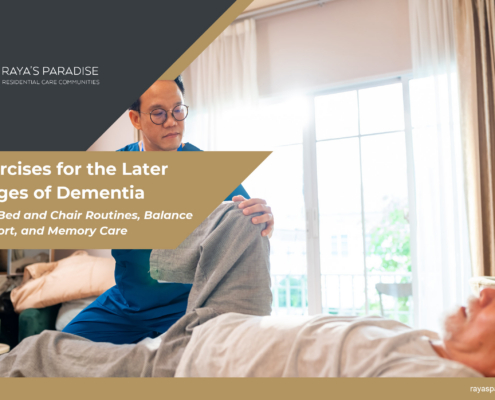 https://rayasparadise.com/wp-content/uploads/2013/05/Exercises-for-the-Later-Stages-of-Dementia.jpg
1702
2553
Moti Gamburd
https://rayasparadise.com//wp-content/uploads/2019/07/RP-LOGO-Horizontal-Name-Only-websitetrans.png
Moti Gamburd2026-03-04 11:13:202026-03-15 21:09:55Exercises for the Later Stages of Dementia
https://rayasparadise.com/wp-content/uploads/2013/05/Exercises-for-the-Later-Stages-of-Dementia.jpg
1702
2553
Moti Gamburd
https://rayasparadise.com//wp-content/uploads/2019/07/RP-LOGO-Horizontal-Name-Only-websitetrans.png
Moti Gamburd2026-03-04 11:13:202026-03-15 21:09:55Exercises for the Later Stages of Dementia https://rayasparadise.com/wp-content/uploads/2026/03/Addressing-Agitation-in-Dementia.jpg
1700
2548
Moti Gamburd
https://rayasparadise.com//wp-content/uploads/2019/07/RP-LOGO-Horizontal-Name-Only-websitetrans.png
Moti Gamburd2026-03-03 03:47:592026-03-15 19:55:59Addressing Agitation in Someone Who Has Dementia
https://rayasparadise.com/wp-content/uploads/2026/03/Addressing-Agitation-in-Dementia.jpg
1700
2548
Moti Gamburd
https://rayasparadise.com//wp-content/uploads/2019/07/RP-LOGO-Horizontal-Name-Only-websitetrans.png
Moti Gamburd2026-03-03 03:47:592026-03-15 19:55:59Addressing Agitation in Someone Who Has Dementia https://rayasparadise.com/wp-content/uploads/2026/03/All-About-Lewy-Body-Dementia.jpg
1702
2555
Moti Gamburd
https://rayasparadise.com//wp-content/uploads/2019/07/RP-LOGO-Horizontal-Name-Only-websitetrans.png
Moti Gamburd2026-03-02 04:28:062026-03-15 17:53:10All About Lewy Body Dementia
https://rayasparadise.com/wp-content/uploads/2026/03/All-About-Lewy-Body-Dementia.jpg
1702
2555
Moti Gamburd
https://rayasparadise.com//wp-content/uploads/2019/07/RP-LOGO-Horizontal-Name-Only-websitetrans.png
Moti Gamburd2026-03-02 04:28:062026-03-15 17:53:10All About Lewy Body Dementia https://rayasparadise.com/wp-content/uploads/2013/05/Exercise-Benefits-for-Dementia-Patients.jpg
1703
2555
Moti Gamburd
https://rayasparadise.com//wp-content/uploads/2019/07/RP-LOGO-Horizontal-Name-Only-websitetrans.png
Moti Gamburd2026-03-01 02:39:032026-03-15 16:50:15Exercise Benefits for Dementia Patients - Safe Activities, Routines, and Memory Care Support
https://rayasparadise.com/wp-content/uploads/2013/05/Exercise-Benefits-for-Dementia-Patients.jpg
1703
2555
Moti Gamburd
https://rayasparadise.com//wp-content/uploads/2019/07/RP-LOGO-Horizontal-Name-Only-websitetrans.png
Moti Gamburd2026-03-01 02:39:032026-03-15 16:50:15Exercise Benefits for Dementia Patients - Safe Activities, Routines, and Memory Care Support https://rayasparadise.com/wp-content/uploads/2013/08/Giving-Dignity-to-Dementia-Patients.jpg
1697
2553
Moti Gamburd
https://rayasparadise.com//wp-content/uploads/2019/07/RP-LOGO-Horizontal-Name-Only-websitetrans.png
Moti Gamburd2026-01-14 04:00:032026-01-15 18:26:55Giving Dignity to Dementia Patients
https://rayasparadise.com/wp-content/uploads/2013/08/Giving-Dignity-to-Dementia-Patients.jpg
1697
2553
Moti Gamburd
https://rayasparadise.com//wp-content/uploads/2019/07/RP-LOGO-Horizontal-Name-Only-websitetrans.png
Moti Gamburd2026-01-14 04:00:032026-01-15 18:26:55Giving Dignity to Dementia Patients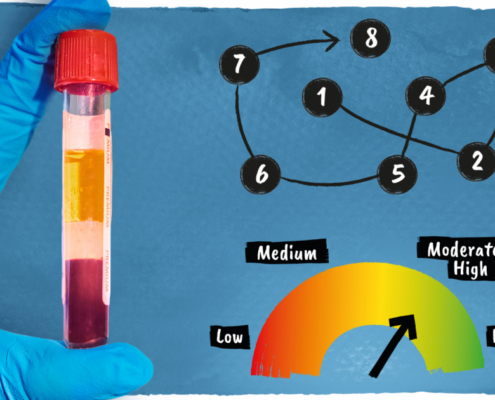 https://rayasparadise.com/wp-content/uploads/2021/05/PM-Image.jpeg
630
1120
Raya's Paradise
https://rayasparadise.com//wp-content/uploads/2019/07/RP-LOGO-Horizontal-Name-Only-websitetrans.png
Raya's Paradise2021-05-28 17:53:412026-01-14 19:13:04Simple diagnostic tool predicts individual risk of Alzheimer's
https://rayasparadise.com/wp-content/uploads/2021/05/PM-Image.jpeg
630
1120
Raya's Paradise
https://rayasparadise.com//wp-content/uploads/2019/07/RP-LOGO-Horizontal-Name-Only-websitetrans.png
Raya's Paradise2021-05-28 17:53:412026-01-14 19:13:04Simple diagnostic tool predicts individual risk of Alzheimer's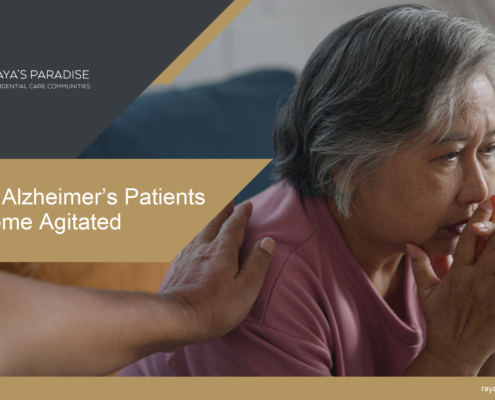 https://rayasparadise.com/wp-content/uploads/2020/02/Why-Alzheimers-Patients-Become-Agitated.jpg
1378
2179
Raya's Paradise
https://rayasparadise.com//wp-content/uploads/2019/07/RP-LOGO-Horizontal-Name-Only-websitetrans.png
Raya's Paradise2020-02-14 04:00:142026-01-14 19:37:25Why Alzheimer's Patients Become Agitated
https://rayasparadise.com/wp-content/uploads/2020/02/Why-Alzheimers-Patients-Become-Agitated.jpg
1378
2179
Raya's Paradise
https://rayasparadise.com//wp-content/uploads/2019/07/RP-LOGO-Horizontal-Name-Only-websitetrans.png
Raya's Paradise2020-02-14 04:00:142026-01-14 19:37:25Why Alzheimer's Patients Become Agitated https://rayasparadise.com/wp-content/uploads/2020/02/Senior-with-Signs-of-Dementia-scaled.jpg
1708
2560
Raya's Paradise
https://rayasparadise.com//wp-content/uploads/2019/07/RP-LOGO-Horizontal-Name-Only-websitetrans.png
Raya's Paradise2020-02-05 08:25:102026-01-14 19:37:47Dementia vs. Ordinary Forgetfulness and Confusion
https://rayasparadise.com/wp-content/uploads/2020/02/Senior-with-Signs-of-Dementia-scaled.jpg
1708
2560
Raya's Paradise
https://rayasparadise.com//wp-content/uploads/2019/07/RP-LOGO-Horizontal-Name-Only-websitetrans.png
Raya's Paradise2020-02-05 08:25:102026-01-14 19:37:47Dementia vs. Ordinary Forgetfulness and Confusion https://rayasparadise.com/wp-content/uploads/2013/11/What-to-Expect-During-Late-Stage-Alzheimers.jpg
595
951
Raya's Paradise
https://rayasparadise.com//wp-content/uploads/2019/07/RP-LOGO-Horizontal-Name-Only-websitetrans.png
Raya's Paradise2019-11-14 09:37:262026-01-14 19:17:13What to Expect During Late Stage Alzheimer's
https://rayasparadise.com/wp-content/uploads/2013/11/What-to-Expect-During-Late-Stage-Alzheimers.jpg
595
951
Raya's Paradise
https://rayasparadise.com//wp-content/uploads/2019/07/RP-LOGO-Horizontal-Name-Only-websitetrans.png
Raya's Paradise2019-11-14 09:37:262026-01-14 19:17:13What to Expect During Late Stage Alzheimer's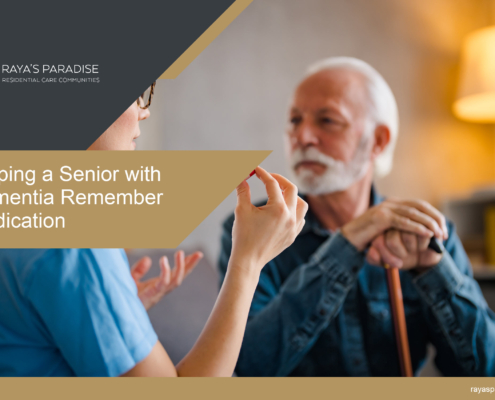 https://rayasparadise.com/wp-content/uploads/2019/11/Helping-a-Senior-with-Dementia-Remember-Medication.jpg
1700
2555
Raya's Paradise
https://rayasparadise.com//wp-content/uploads/2019/07/RP-LOGO-Horizontal-Name-Only-websitetrans.png
Raya's Paradise2019-11-05 07:34:402026-01-14 19:38:39Helping a Senior with Dementia Remember Medicine
https://rayasparadise.com/wp-content/uploads/2019/11/Helping-a-Senior-with-Dementia-Remember-Medication.jpg
1700
2555
Raya's Paradise
https://rayasparadise.com//wp-content/uploads/2019/07/RP-LOGO-Horizontal-Name-Only-websitetrans.png
Raya's Paradise2019-11-05 07:34:402026-01-14 19:38:39Helping a Senior with Dementia Remember Medicine
