
Contents
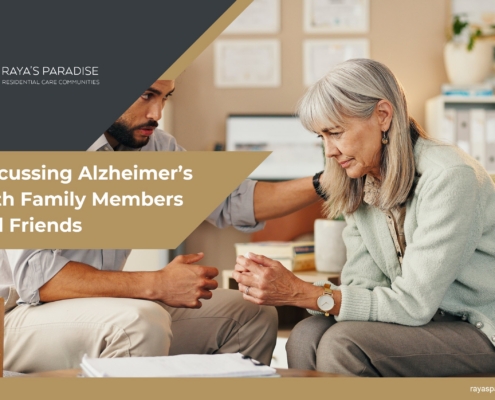
- Discussing Alzheimer’s With Family Members and Friends
- Who should you tell about an Alzheimer’s diagnosis?
- How should you explain Alzheimer’s to family and friends?
- How do you handle difficult reactions, stigma and friends who pull away?
- How can families discuss care decisions without damaging relationships?
- How can friends and relatives provide support that actually helps?
- Keeping family relationships strong as Alzheimer’s progresses
- Sources & Additional Resources
- More Family Resources
- Discussing Alzheimer's with Family Members and Friends
- When Your Spouse Has Dementia
- Where to Start with Power of Attorney
- Estate Planning, Planning a Grand Finale with Care and Clarity
- A Will, A Living Will, A Living Trust…What is the Difference?
- Do You Have Compassion Fatigue?
- Creating a Plan for Aging Parents
- When a Residential Care Community Is an Option for Temporary Hospice or Palliative Care
- Are You Responsible for Your Elderly Parent's Debt?
- How Children Can Help with Caregiving
- Selling the Home of a Parent Who Has Alzheimer's
- How to Talk to Someone Who is Dying
- Caring for Aging In-Laws
- How to Maintain a Positive Attitude
- Advice for New Caregivers

Discussing Alzheimer’s With Family Members and Friends
- Whenever possible, include the person with Alzheimer’s in decisions about who will be told and what information will be shared.
- You do not have to tell every relative, friend, neighbor or coworker at the same time.
- Children and teenagers generally benefit from honest, age-appropriate explanations rather than secrecy or vague reassurance.
- Explain that Alzheimer’s affects more than memory and that the person can still participate in relationships, activities and decisions.
- Give family and friends specific suggestions for visiting, communicating and offering practical help.
- Expect reactions such as sadness, disbelief, denial, fear or awkwardness. The first response may not be the final response.
- Address disagreements about care early. Family conflict can increase caregiver burden and make future decisions harder.
- Do not let the diagnosis become a reason to talk over, exclude or infantilize the person.
An Alzheimer’s diagnosis changes more than medical care.
It can change conversations, relationships, family roles and the way friends respond to someone they have known for years.
Some people become deeply supportive.
Others pull away because they are frightened, uncomfortable or unsure what to say. Family members may disagree about how serious the diagnosis is, whether the person should still drive, who should provide care or when additional support will be needed.
Friends may avoid visiting because they worry the person will not recognize them.
Silence can make an already difficult diagnosis more isolating.
Thoughtful communication can do the opposite. Sharing accurate information, giving people practical ways to help and keeping the person with Alzheimer’s involved in the conversation can preserve relationships and build a stronger support network for the years ahead.
The goal is not to tell everyone everything immediately.
It is to decide, together when possible, who needs to know, what they need to understand and how they can continue treating the person as a valued member of the family rather than allowing the diagnosis to become their entire identity.
When changes in memory or behavior are already making daily life difficult, families can explore memory care options across Orange County or learn about Los Angeles memory care support.

Who should you tell about an Alzheimer’s diagnosis?
There is no rule requiring a family to announce an Alzheimer’s diagnosis to everyone at once.
The National Institute on Aging advises that families may wait until they feel emotionally ready or begin by telling only close relatives and trusted friends.
If the person is able to participate in the decision, begin by asking what they want.
Some people prefer openness because they are tired of hiding memory problems. Others want time to process the diagnosis privately before telling extended family, neighbors or former coworkers.
Let the person have a voice in disclosure
Ask questions such as, “Who would you like us to tell?” and “What would you like them to know?”
A person in the early stage of Alzheimer’s may want to tell relatives themselves or be present while a spouse or adult child explains the diagnosis.
A diagnosis does not automatically eliminate privacy or autonomy.
Avoid discussing the person’s medical information widely simply because it may make things easier for other relatives.
Start with the people most likely to provide support
Close relatives, trusted friends and people who regularly spend time with the person are often the most useful starting point.
These are the people who may notice changes, provide transportation, visit regularly or step in when the primary caregiver needs help.
Sharing the diagnosis can also explain behaviors that others have already noticed.
A friend who thought the person was ignoring calls, forgetting birthdays intentionally or becoming unusually withdrawn may understand those changes differently once they know what is happening.
Consider who needs information for safety
Some people may need limited information even if they are not close relatives.
A trusted neighbor might need to know whom to call if the person appears confused outside the home. A regular caregiver or transportation provider may need to understand communication difficulties or wandering risk.
Share only the information necessary for that person’s role.
Talk honestly with children and grandchildren
Alzheimer’s affects children and grandchildren too.
Young people may notice that Grandma repeats herself, Grandpa forgets their name or a family caregiver suddenly has less time and attention available.
When adults avoid explaining what is happening, children may create their own explanations, and those explanations can be more frightening than the truth.
The National Institute on Aging recommends answering children’s questions simply and honestly.
A young child might be told, “Grandma has an illness that makes it hard for her to remember things.”
Children should also hear clearly that they did not cause the illness and that sadness, anger, confusion or embarrassment are normal reactions.
Children also learn how to treat a relative with Alzheimer’s by watching the adults around them.
If adults use baby talk, speak harshly or talk over the person, children may imitate that behavior.
Modeling a calm tone, respectful language and direct conversation teaches them that the person still deserves dignity even as memory and communication abilities change.
For younger children, our guide to helping children understand dementia and Alzheimer’s offers age-appropriate ways to explain the changes.
Teenagers may understand the medical explanation but struggle more with embarrassment, grief, disrupted family routines or seeing a grandparent behave differently in public.
Families can read more about supporting a teen whose grandparent has Alzheimer’s.
Children can still participate in family life through safe, age-appropriate activities, but they should not be expected to become substitute adult caregivers or “babysit” someone whose dementia creates safety risks.
Our article on healthy ways children can help with caregiving explains how to involve them without placing adult responsibilities on them.
Do not use disclosure as a substitute for telling the person
It is possible for an entire family to discuss someone’s diagnosis while avoiding an honest conversation with the person who has it.
When a clinician has made a diagnosis and the person can understand the information, disclosure should be handled thoughtfully and respectfully rather than becoming a family secret.
A 2022 qualitative study published in BMC Psychiatry examined the experiences of family caregivers after dementia diagnosis disclosure.
Researchers Miao-Chuan Chen and Hung-Ru Lin concluded that clear diagnostic disclosure is important for allowing positive developments to follow, while emphasizing the need to communicate the diagnosis tactfully and help the person understand subsequent care plans.
Families preparing for that conversation may find our guidance on how to tell a loved one they have Alzheimer’s helpful.

How should you explain Alzheimer’s to family and friends?
You do not need to deliver a medical lecture.
Give people enough information to understand what is happening now and how they can respond helpfully.
Start with a clear explanation
You might say:
“Dad has been diagnosed with Alzheimer’s disease. It is affecting his memory and sometimes his ability to follow conversations. He is still very much himself, and he still enjoys seeing people. We are learning how to make things easier for him.”
This communicates the diagnosis without presenting the person as though their life is already over.
Explain that Alzheimer’s affects more than memory
Family members may expect only forgetfulness.
Explain that Alzheimer’s can also affect judgment, language, attention, orientation, behavior and the ability to manage complex tasks.
This context can reduce hurt feelings when the person misses an important event, repeats a story, becomes confused or responds in an unfamiliar way.
Tell people what the person can still enjoy
Do not make the conversation only about loss.
Tell relatives that Mom still loves gardening, Dad still enjoys jazz or Grandma still likes sitting outside with the grandchildren.
NIA guidance emphasizes that visits and shared activities remain important.
Even when a person does not remember who visited later, they may still enjoy the companionship in the moment. Preparing visitors for changes in behavior, personality and communication can make those interactions easier.
Give people a few simple communication tips
Visitors may be afraid they will say the wrong thing.
Give them practical instructions instead of leaving them to guess.
- Introduce yourself naturally if recognition is uncertain.
- Speak directly to the person rather than only to the caregiver.
- Give them time to answer.
- Do not quiz them by asking, “Do you remember me?”
- Avoid correcting every mistaken detail.
- Choose quieter settings when conversation is difficult.
For more detailed strategies, families can review our guide on communicating with someone who has Alzheimer’s.
Give friends something to do besides talk
Conversation is not the only way to stay connected.
Looking through photographs, listening to familiar music, taking a short walk, watering plants, folding towels or sharing a snack can provide companionship without placing pressure on the person to maintain a long conversation.
Activities should match current abilities rather than testing what the person can no longer accomplish.
Families looking for ideas can explore these activities to enjoy with someone living with dementia.
How do you handle difficult reactions, stigma and friends who pull away?
Stigma remains a real problem in dementia.
A 2025 systematic review in Behavioral Sciences synthesized 17 qualitative studies and identified reluctance to disclose the condition as one of five major themes linking dementia stigma and help-seeking.
The review found that stigma can delay diagnosis and treatment and restrict access to appropriate care and support.
After diagnosis, stigma can take another form.
Friends may stop calling. Relatives may talk only to the caregiver. Others may behave as though Alzheimer’s means the person can no longer understand anything or enjoy life.
Give people time to process the news
Your family has probably had more time to notice changes and consider the possibility of dementia than the person hearing the diagnosis for the first time.
A response such as “That can’t be right” or “But she seems fine to me” may reflect shock, denial or lack of understanding rather than a permanent refusal to accept the diagnosis.
Correct misinformation calmly and give the person reliable resources.
One conversation may not be enough.
Challenge myths without turning every conversation into an argument
If someone says, “Everyone gets forgetful when they get old,” explain that Alzheimer’s is a disease and not simply normal aging.
If someone assumes the person cannot participate in conversation, invite them to speak directly with the person.
Education is useful.
Winning an argument is less important than helping the relative understand how to behave differently. Families may also find it useful to review these common Alzheimer’s myths.
Tell friends that you still want them around
Some people disappear because they incorrectly assume the family wants privacy.
Others are afraid a visit will be awkward.
Be specific:
“We would still love for you to visit. Mornings are easiest for her now. She may repeat herself, but she still enjoys seeing you.”
A concrete invitation removes much of the uncertainty.
Accept that some relationships may change
Not every friend or distant relative will respond well.
Some may become less involved despite your efforts. That can be painful for both the person with Alzheimer’s and the caregiver.
Do not spend all of your energy persuading people who repeatedly refuse to participate.
Strengthen the relationships that remain supportive and consider building new connections through community activities, caregiver groups or dementia support programs.
For some caregivers, a dementia care support group provides a place to talk with people who understand the practical and emotional changes occurring at home.
Do not allow stigma to erase the person
One of the most damaging reactions is speaking about the person as though they are not in the room.
Continue addressing them by name, asking for their opinion and including them in ordinary conversation.
Our article about preserving dignity for a senior with dementia explains why respect remains important as cognitive abilities change.

How can families discuss care decisions without damaging relationships?
An Alzheimer’s diagnosis can expose old family tensions.
One sibling may believe a parent is still doing well while another sees major safety concerns. One relative may provide daily care while another gives strong opinions from a distance.
Family members may disagree about driving, finances, medications, home care or memory care.
These disagreements are common enough to deserve direct attention.
A study of 579 adult-child and spouse caregivers published in Aging & Mental Health found that 63 percent reported family conflict over care strategies and 55 percent reported conflict over beliefs about the care recipient’s illness.
Both forms of conflict were positively associated with caregiver burden.
The study also found that adult children reported significantly greater conflict than spouses over both illness beliefs and family care strategies.
That finding is particularly relevant when several adult siblings are trying to make decisions about an aging parent from different households, distances and perspectives.
Families navigating those tensions may benefit from our guide to keeping the peace among siblings caring for an aging parent.
Separate observations from conclusions
Instead of saying, “Mom cannot live alone anymore,” begin with observable facts:
“Mom left the stove on twice this month, missed several doses of medication and became lost walking home from the store.”
The family may still disagree about the solution, but specific facts create a better starting point than accusations or general statements.
Ask the person with Alzheimer’s what matters to them
When the person can participate, include them.
Ask what they fear, which routines they want to preserve and what kind of help feels acceptable.
A family discussion should not become a meeting in which everyone talks about the person while the person sits silently.
Define what actually needs to be decided
Families often try to solve the next five years in one conversation.
Break the discussion into immediate decisions.
Does someone need to start organizing medications? Does driving need to be evaluated? Who will attend the next medical appointment? Does the primary caregiver need one afternoon off each week?
Smaller decisions are easier to make and revisit as circumstances change.
Be specific about caregiving responsibilities
“Let me know if you need anything” sounds supportive but places the burden back on the primary caregiver.
Instead, assign or request concrete tasks:
- One sibling handles medical appointments.
- Another manages insurance paperwork.
- A local relative brings dinner once a week.
- A family friend takes the person for a familiar outing.
The workload does not have to be perfectly equal.
It should be acknowledged and as sustainable as possible.
Use family meetings before there is a crisis
Regular discussions can keep important information from being concentrated with one caregiver.
Share changes in symptoms, appointments, finances, safety and care needs.
Our guide to holding a family meeting about care offers a framework for keeping those conversations productive.
Bring in a neutral professional when conflict becomes entrenched
A geriatric care manager, social worker, family therapist, elder mediator or other qualified professional may help when relatives cannot communicate productively.
Mediation can be particularly useful when family members agree that the person needs care but repeatedly fight about how that care should be delivered.
If accusations or suspicious behavior are complicating family relationships, remember that dementia itself can sometimes contribute to mistrust.
Our article on handling accusations connected to dementia explains how cognitive changes can affect perceptions and relationships.
How can friends and relatives provide support that actually helps?
A strong support network is valuable only when support becomes concrete.
Families often hear offers of help immediately after diagnosis, then find themselves increasingly isolated as care needs grow.
Keep visiting
Do not stop visiting simply because the person repeats stories or forgets your name.
The person may still enjoy your presence even if they cannot remember the visit later.
Short, calm visits may work better than long gatherings as the disease progresses.
Follow the caregiver’s guidance about the best time of day.
Give the caregiver a real break
Offer to sit with the person while the caregiver goes to an appointment, exercises, meets a friend or simply rests.
Bring a meal. Pick up groceries. Handle a household task.
Caregiver strain often accumulates slowly.
Families should become familiar with the warning signs of caregiver burnout rather than waiting until the primary caregiver reaches a breaking point.
Stay connected to the person, not only the caregiver
Ask the person how they are doing. Invite them into the conversation.
Bring up familiar interests. Share photographs or music.
A diagnosis should not turn every interaction into a discussion about symptoms.
Accept changing forms of connection
A friendship that once revolved around long conversations may become a relationship built around music, a walk, gardening or simply sitting together.
The connection is still meaningful even when it looks different.
Know when the family needs more than informal help
There may come a point when relatives and friends cannot safely cover all supervision, medication, personal care and behavioral needs.
Short-term care can give families time to recover or evaluate what comes next.
Options include respite care in Orange County and Los Angeles short-term care support.
Keeping family relationships strong as Alzheimer’s progresses
Alzheimer’s changes relationships, but it does not eliminate them.
Parents remain parents. Spouses remain partners. Grandparents remain part of the family. Friends still bring familiarity, history and companionship.
The strongest support systems usually adapt rather than disappear.
Relatives learn new ways to communicate. Friends become comfortable with repetition. Families stop expecting one overwhelmed caregiver to manage everything.
Conversations gradually shift from “Who is right?” toward “What does this person need now?”
Maintaining relationships also means making room for ordinary life.
Not every visit needs to be about medications, symptoms or future placement. A shared meal, favorite television program, family story or few minutes outdoors may be more meaningful than another conversation about care.
As needs increase, a structured memory care environment may provide consistent routines, supervision and dementia-informed communication while allowing relatives to spend more of their visits being spouses, children, grandchildren and friends rather than managing every care task.
Families considering additional support can explore San Clemente memory care options or view Raya’s Paradise communities across Los Angeles.
Next Steps
If Alzheimer’s is changing family relationships or caregiving responsibilities are becoming difficult to manage, contact our team through the Raya’s Paradise contact page.
Call (949) 420-9898 for Orange County or (310) 289-8834 for Los Angeles.
You can also email Info@RayasParadise.com.
Families can schedule an OC community tour or arrange a visit to a Los Angeles memory care community.
Our Orange County Assisted Living Facility with Specialized Memory Care
Our Los Angeles Senior Assisted Living Residences with Specialized Memory Care
Sources & Additional Resources
- National Institute on Aging. “Helping Family and Friends Understand Alzheimer’s Disease.” National Institutes of Health. Content reviewed July 8, 2024.
- National Institute on Aging. “Alzheimer’s and Relationships.” National Institutes of Health.
- Brigiano, Marco, et al. “Within My Walls, I Escape Being Underestimated: A Systematic Review and Thematic Synthesis of Stigma and Help-Seeking in Dementia.” Behavioral Sciences, 2025, 15(6):774.
- Dieker, JoAnna L., Stacy W. Yun, Kendall L. Weber and Sara Qualls. “Family Conflict Over Illness Beliefs and Care Strategies: Implications for Burden in Family Caregivers.” Aging & Mental Health, 2024, 28(3):457–465.
- Chen, Miao-Chuan, and Hung-Ru Lin. “The Experiences of Family Caregivers in Response to a Dementia Diagnosis Disclosure.” BMC Psychiatry, 2022, 22(1):475.
Disclaimer:
This article provides general educational information and is not medical, legal or mental health advice. Families facing significant conflict, concerns about decision-making capacity or disputes over care may benefit from guidance from the person’s healthcare team, a qualified elder law attorney, family therapist, social worker or professional mediator as appropriate.
 https://rayasparadise.com/wp-content/uploads/2013/07/Discussing-Alzheimers-With-Family-Members-and-Friends.jpg
1702
2551
Moti Gamburd
https://rayasparadise.com//wp-content/uploads/2019/07/RP-LOGO-Horizontal-Name-Only-websitetrans.png
Moti Gamburd2026-08-07 11:09:072026-08-07 16:13:16Discussing Alzheimer's with Family Members and Friends
https://rayasparadise.com/wp-content/uploads/2013/07/Discussing-Alzheimers-With-Family-Members-and-Friends.jpg
1702
2551
Moti Gamburd
https://rayasparadise.com//wp-content/uploads/2019/07/RP-LOGO-Horizontal-Name-Only-websitetrans.png
Moti Gamburd2026-08-07 11:09:072026-08-07 16:13:16Discussing Alzheimer's with Family Members and Friends https://rayasparadise.com/wp-content/uploads/2013/08/When-Your-Spouse-Has-Dementia.jpg
1703
2555
Moti Gamburd
https://rayasparadise.com//wp-content/uploads/2019/07/RP-LOGO-Horizontal-Name-Only-websitetrans.png
Moti Gamburd2026-02-14 08:39:382026-02-15 17:12:50When Your Spouse Has Dementia
https://rayasparadise.com/wp-content/uploads/2013/08/When-Your-Spouse-Has-Dementia.jpg
1703
2555
Moti Gamburd
https://rayasparadise.com//wp-content/uploads/2019/07/RP-LOGO-Horizontal-Name-Only-websitetrans.png
Moti Gamburd2026-02-14 08:39:382026-02-15 17:12:50When Your Spouse Has Dementia https://rayasparadise.com/wp-content/uploads/2013/03/Where-to-Start-With-Power-of-Attorney-in-California.jpg
1700
2551
Moti Gamburd
https://rayasparadise.com//wp-content/uploads/2019/07/RP-LOGO-Horizontal-Name-Only-websitetrans.png
Moti Gamburd2026-01-14 04:00:392026-01-15 18:29:23Where to Start with Power of Attorney
https://rayasparadise.com/wp-content/uploads/2013/03/Where-to-Start-With-Power-of-Attorney-in-California.jpg
1700
2551
Moti Gamburd
https://rayasparadise.com//wp-content/uploads/2019/07/RP-LOGO-Horizontal-Name-Only-websitetrans.png
Moti Gamburd2026-01-14 04:00:392026-01-15 18:29:23Where to Start with Power of Attorney https://rayasparadise.com/wp-content/uploads/2014/05/Estate-Planning-Planning-a-Grand-Finale-with-Care-and-Clarity.jpg
1695
2551
Moti Gamburd
https://rayasparadise.com//wp-content/uploads/2019/07/RP-LOGO-Horizontal-Name-Only-websitetrans.png
Moti Gamburd2026-01-06 14:14:472026-01-06 23:58:10Estate Planning, Planning a Grand Finale with Care and Clarity
https://rayasparadise.com/wp-content/uploads/2014/05/Estate-Planning-Planning-a-Grand-Finale-with-Care-and-Clarity.jpg
1695
2551
Moti Gamburd
https://rayasparadise.com//wp-content/uploads/2019/07/RP-LOGO-Horizontal-Name-Only-websitetrans.png
Moti Gamburd2026-01-06 14:14:472026-01-06 23:58:10Estate Planning, Planning a Grand Finale with Care and Clarity https://rayasparadise.com/wp-content/uploads/2014/01/LivingTrust.jpg
300
573
Raya's Paradise
https://rayasparadise.com//wp-content/uploads/2019/07/RP-LOGO-Horizontal-Name-Only-websitetrans.png
Raya's Paradise2020-01-28 07:20:192026-01-14 18:41:47A Will, A Living Will, A Living Trust…What is the Difference?
https://rayasparadise.com/wp-content/uploads/2014/01/LivingTrust.jpg
300
573
Raya's Paradise
https://rayasparadise.com//wp-content/uploads/2019/07/RP-LOGO-Horizontal-Name-Only-websitetrans.png
Raya's Paradise2020-01-28 07:20:192026-01-14 18:41:47A Will, A Living Will, A Living Trust…What is the Difference? https://rayasparadise.com/wp-content/uploads/2019/12/Do-You-Have-Compassion-Fatigue.jpg
1698
2556
Raya's Paradise
https://rayasparadise.com//wp-content/uploads/2019/07/RP-LOGO-Horizontal-Name-Only-websitetrans.png
Raya's Paradise2019-12-13 07:30:422026-01-14 19:38:02Do You Have Compassion Fatigue?
https://rayasparadise.com/wp-content/uploads/2019/12/Do-You-Have-Compassion-Fatigue.jpg
1698
2556
Raya's Paradise
https://rayasparadise.com//wp-content/uploads/2019/07/RP-LOGO-Horizontal-Name-Only-websitetrans.png
Raya's Paradise2019-12-13 07:30:422026-01-14 19:38:02Do You Have Compassion Fatigue? https://rayasparadise.com/wp-content/uploads/2018/04/Aging-with-friends.jpg
700
900
Raya's Paradise
https://rayasparadise.com//wp-content/uploads/2019/07/RP-LOGO-Horizontal-Name-Only-websitetrans.png
Raya's Paradise2019-10-04 00:40:262026-05-30 02:40:39Creating a Plan for Aging Parents
https://rayasparadise.com/wp-content/uploads/2018/04/Aging-with-friends.jpg
700
900
Raya's Paradise
https://rayasparadise.com//wp-content/uploads/2019/07/RP-LOGO-Horizontal-Name-Only-websitetrans.png
Raya's Paradise2019-10-04 00:40:262026-05-30 02:40:39Creating a Plan for Aging Parents https://rayasparadise.com/wp-content/uploads/2018/10/When-a-Residential-Care-Community-Is-an-Option-for-Temporary-Hospice-or-Palliative-Care.jpg
1692
2551
Raya's Paradise
https://rayasparadise.com//wp-content/uploads/2019/07/RP-LOGO-Horizontal-Name-Only-websitetrans.png
Raya's Paradise2018-10-11 09:13:382026-01-14 19:25:50When a Residential Care Community Is an Option for Temporary Hospice or Palliative Care
https://rayasparadise.com/wp-content/uploads/2018/10/When-a-Residential-Care-Community-Is-an-Option-for-Temporary-Hospice-or-Palliative-Care.jpg
1692
2551
Raya's Paradise
https://rayasparadise.com//wp-content/uploads/2019/07/RP-LOGO-Horizontal-Name-Only-websitetrans.png
Raya's Paradise2018-10-11 09:13:382026-01-14 19:25:50When a Residential Care Community Is an Option for Temporary Hospice or Palliative Care https://rayasparadise.com/wp-content/uploads/2013/12/Senior-Reviewing-Debt-scaled.jpg
1707
2560
Raya's Paradise
https://rayasparadise.com//wp-content/uploads/2019/07/RP-LOGO-Horizontal-Name-Only-websitetrans.png
Raya's Paradise2013-12-24 04:00:552026-01-14 19:40:13Are You Responsible for Your Elderly Parent's Debt?
https://rayasparadise.com/wp-content/uploads/2013/12/Senior-Reviewing-Debt-scaled.jpg
1707
2560
Raya's Paradise
https://rayasparadise.com//wp-content/uploads/2019/07/RP-LOGO-Horizontal-Name-Only-websitetrans.png
Raya's Paradise2013-12-24 04:00:552026-01-14 19:40:13Are You Responsible for Your Elderly Parent's Debt? Raya's Paradise
https://rayasparadise.com//wp-content/uploads/2019/07/RP-LOGO-Horizontal-Name-Only-websitetrans.png
Raya's Paradise2013-12-19 04:00:422026-01-14 19:01:29How Children Can Help with Caregiving
https://rayasparadise.com/wp-content/uploads/2013/12/Selling-the-Home-of-a-Parent-Who-Has-Alzheimers.jpg
1701
2555
Raya's Paradise
https://rayasparadise.com//wp-content/uploads/2019/07/RP-LOGO-Horizontal-Name-Only-websitetrans.png
Raya's Paradise2013-12-10 06:11:492026-01-14 19:40:46Selling the Home of a Parent Who Has Alzheimer's
Raya's Paradise
https://rayasparadise.com//wp-content/uploads/2019/07/RP-LOGO-Horizontal-Name-Only-websitetrans.png
Raya's Paradise2013-12-05 04:00:132026-01-14 19:03:27How to Talk to Someone Who is Dying
Raya's Paradise
https://rayasparadise.com//wp-content/uploads/2019/07/RP-LOGO-Horizontal-Name-Only-websitetrans.png
Raya's Paradise2013-11-12 08:10:052026-01-14 18:42:51Caring for Aging In-Laws
Raya's Paradise
https://rayasparadise.com//wp-content/uploads/2019/07/RP-LOGO-Horizontal-Name-Only-websitetrans.png
Raya's Paradise2013-10-29 08:03:162026-01-14 19:03:03How to Maintain a Positive Attitude
Raya's Paradise
https://rayasparadise.com//wp-content/uploads/2019/07/RP-LOGO-Horizontal-Name-Only-websitetrans.png
Raya's Paradise2013-10-10 04:00:272026-05-31 06:53:13Advice for New Caregivers
Raya's Paradise
https://rayasparadise.com//wp-content/uploads/2019/07/RP-LOGO-Horizontal-Name-Only-websitetrans.png
Raya's Paradise2013-12-19 04:00:422026-01-14 19:01:29How Children Can Help with Caregiving
https://rayasparadise.com/wp-content/uploads/2013/12/Selling-the-Home-of-a-Parent-Who-Has-Alzheimers.jpg
1701
2555
Raya's Paradise
https://rayasparadise.com//wp-content/uploads/2019/07/RP-LOGO-Horizontal-Name-Only-websitetrans.png
Raya's Paradise2013-12-10 06:11:492026-01-14 19:40:46Selling the Home of a Parent Who Has Alzheimer's
Raya's Paradise
https://rayasparadise.com//wp-content/uploads/2019/07/RP-LOGO-Horizontal-Name-Only-websitetrans.png
Raya's Paradise2013-12-05 04:00:132026-01-14 19:03:27How to Talk to Someone Who is Dying
Raya's Paradise
https://rayasparadise.com//wp-content/uploads/2019/07/RP-LOGO-Horizontal-Name-Only-websitetrans.png
Raya's Paradise2013-11-12 08:10:052026-01-14 18:42:51Caring for Aging In-Laws
Raya's Paradise
https://rayasparadise.com//wp-content/uploads/2019/07/RP-LOGO-Horizontal-Name-Only-websitetrans.png
Raya's Paradise2013-10-29 08:03:162026-01-14 19:03:03How to Maintain a Positive Attitude
Raya's Paradise
https://rayasparadise.com//wp-content/uploads/2019/07/RP-LOGO-Horizontal-Name-Only-websitetrans.png
Raya's Paradise2013-10-10 04:00:272026-05-31 06:53:13Advice for New Caregivers
