
Contents
- Should You Seek an Alzheimer’s Diagnosis?
- When should you seek an Alzheimer’s evaluation?
- How should you talk to a loved one about memory concerns?
- What happens during an Alzheimer’s or dementia evaluation?
- How certain can an Alzheimer’s diagnosis be today?
- What are the benefits and emotional costs of knowing?
- Treatable causes may be discovered
- Treatment decisions may depend on an early and accurate diagnosis
- The person can participate in legal and financial planning
- Families can address safety before a crisis
- Research and community support become easier to access
- The diagnosis can replace self-blame with an explanation
- What should families do after the evaluation?
- Consider specialized memory care when needs increase
- Sources & Additional Resources
- More Memory Care Resources
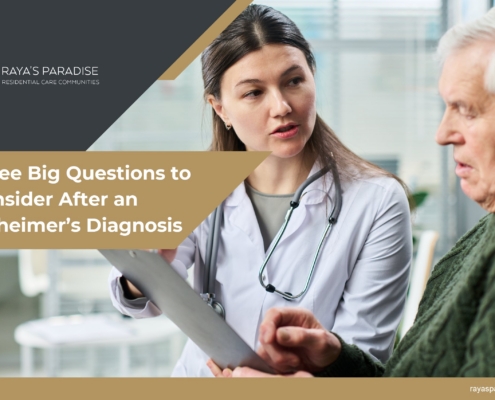
- Three Big Questions to Consider After an Alzheimer's Diagnosis
- Five Myths About Alzheimer's Disease
- Should You Seek an Alzheimer's Diagnosis?
- How to Talk with Someone Who Has Alzheimer's
- Coconut Oil for Alzheimer's Disease?
- How to Tell When a Loved One with Dementia Is Sick
- Does Computer Use Help with Dementia Symptoms?
- Coping With Dementia Behavior
- Respect for a Senior with Dementia
- Why Dementia Patients Have Trouble with Eating
- Exercises for the Later Stages of Dementia
- Addressing Agitation in Someone Who Has Dementia
- All About Lewy Body Dementia
- Exercise Benefits for Dementia Patients - Safe Activities, Routines, and Memory Care Support
- Giving Dignity to Dementia Patients

Should You Seek an Alzheimer’s Diagnosis?
- Memory loss that interferes with work, finances, driving, medication use or familiar routines deserves medical attention.
- Not every cognitive change is Alzheimer’s disease. Medication effects, depression, sleep problems, infections, hearing loss and several medical conditions can cause similar symptoms.
- Alzheimer’s can now be identified during life through validated amyloid and tau biomarkers, not only through examination after death.
- No single blood test, scan or brief memory test should be interpreted without the person’s history, symptoms and other clinical findings.
- Many commercially available Alzheimer’s blood tests do not meet current guideline thresholds for diagnostic accuracy.
- Earlier diagnosis may expand treatment options, allow participation in research and give the person more influence over legal, financial and care decisions.
- Sudden confusion is not typical gradual Alzheimer’s progression and may require urgent medical care.
You have noticed changes in someone you love.
A parent who once managed work, appointments and household responsibilities may now struggle to stay organized. They may withdraw from friends, repeat questions, miss payments, get lost in familiar places or seem less motivated than before.
It is natural to wonder whether these changes are part of aging, a reaction to stress or an early sign of Alzheimer’s disease.
It is also natural to hesitate. You may worry that raising the subject will cause embarrassment, fear or conflict. You may wonder whether knowing the diagnosis will make any practical difference.
In most cases, persistent changes in memory, judgment, language, behavior or daily function should be medically evaluated.
The purpose is not simply to place a label on the person. An evaluation can identify conditions that are treatable, clarify the likely cause of the changes, guide treatment decisions and give the person a greater opportunity to participate in planning their future.
Families already struggling with memory-related safety, medication management or daily routines can explore Orange County memory care or learn about memory care options in Los Angeles.

When should you seek an Alzheimer’s evaluation?
Occasional forgetfulness is common.
Someone may misplace a phone, forget an acquaintance’s name or walk into a room and briefly forget why. These lapses are usually less concerning when the person remembers later and continues to manage daily life independently.
The distinction between ordinary forgetfulness versus dementia often comes down to frequency, progression and the effect on everyday responsibilities.
A medical evaluation becomes more important when changes are persistent, worsening or beginning to interfere with familiar activities.
Memory changes that affect daily life
Warning signs may include repeatedly forgetting recently learned information, asking the same question within a short period or relying heavily on notes and relatives for tasks the person once managed alone.
The concern is not one forgotten appointment.
It is a pattern in which new information no longer seems to remain available. Families can review additional early signs of Alzheimer’s disease when deciding whether to schedule an evaluation.
Difficulty with planning and familiar tasks
A person may struggle to follow a familiar recipe, operate household equipment, organize a work project or keep track of monthly bills.
They may begin making unusual financial mistakes or leave important tasks unfinished.
Problems with planning may appear before obvious memory loss.
In some dementias, changes in judgment, behavior or language are more noticeable than forgetting.
Changes in language, orientation or visual understanding
Someone may have increasing difficulty finding words, following conversation or explaining an idea.
They may lose track of the date, become confused about where they are or get lost while driving a familiar route.
Visual and spatial changes may cause trouble judging distance, reading or recognizing objects.
These problems can create immediate driving and fall risks.
Withdrawal, apathy or personality changes
A previously social person may stop attending activities because conversation has become difficult or because they fear making mistakes.
Another person may become suspicious, impulsive, fearful or unusually irritable.
Withdrawal can also be caused by depression, hearing loss, grief or exhaustion.
That is another reason a professional evaluation matters.
Sudden change requires a different response
Alzheimer’s disease usually causes gradual decline.
Confusion that appears over hours or days may be delirium caused by an infection, dehydration, medication effect, metabolic problem, pain or another acute illness.
Abrupt speech difficulty, facial drooping or weakness may indicate a stroke and requires emergency care.
Our guide to recognizing illness in someone with dementia explains why a sudden behavioral or cognitive change may be the first sign of a medical problem.
For a broader introduction to symptoms, diagnosis and disease progression, read Alzheimer’s 101.

How should you talk to a loved one about memory concerns?
Do not begin the conversation during an argument, immediately after a mistake or in front of several relatives.
Choose a private time when the person is rested and the environment is calm.
Describe what you have observed
Use specific examples rather than broad accusations.
Instead of saying, “You are becoming forgetful,” try:
“I noticed that two bills were paid twice and you missed your appointment last week. That is not like you, and I would feel better if we asked the doctor what might be causing it.”
Specific examples are easier to discuss than labels such as “dementia” or “Alzheimer’s,” especially before an evaluation has occurred.
Frame the appointment as a health check
Explain that memory changes can have many causes.
The goal is to check hearing, medications, sleep, mood and physical health, not to assume the worst.
You might say:
“There are several medical problems that can affect memory. Let’s make sure there is not something treatable going on.”
Do not gather the whole family to confront the person
A large family intervention can feel threatening.
Choose one trusted relative or friend to begin the conversation. Another person can help later if the first discussion does not lead to an appointment.
Expect fear, denial or anger
Resistance does not necessarily mean the person is being difficult.
They may fear losing independence, driving privileges or control over their finances. Some people also have reduced awareness of their own cognitive changes.
Listen to the concern beneath the refusal.
Reassure the person that the purpose is to understand what is happening and keep them involved in decisions.
When a loved one repeatedly declines evaluation, these strategies for when a parent refuses to see the doctor may help families approach the issue without turning every conversation into a confrontation.
Offer practical support
Offer to schedule the appointment, provide transportation and attend with permission.
Bring written examples and a current medication list.
Our article on speaking with a parent’s doctor about Alzheimer’s can help families prepare for the visit.

What happens during an Alzheimer’s or dementia evaluation?
The evaluation often begins with a primary care clinician.
Depending on the findings, the person may be referred to a neurologist, geriatrician, geriatric psychiatrist, neuropsychologist or specialized memory clinic.
Families who are unsure whether additional expertise is needed can learn more about seeing a geriatric specialist.
The evaluation may take more than one visit because the clinician needs to understand both the symptoms and the person’s previous level of function.
Medical and functional history
The clinician will ask when the changes began, whether they developed gradually or suddenly and how they affect work, finances, medication use, cooking, driving and personal care.
Input from someone who knows the person well can be valuable.
The person experiencing symptoms may not remember every event or may be unaware of some changes.
Medication and substance review
Prescription drugs, over-the-counter sleep aids, antihistamines, pain medications, alcohol and other substances can affect memory and alertness.
The clinician should review the complete list, including supplements.
Do not stop a medication without medical guidance.
Abruptly discontinuing certain drugs can be dangerous.
Physical, neurological, hearing and vision assessment
A physical and neurological exam may assess strength, coordination, reflexes, speech, eye movements and walking.
Hearing and vision should also be considered because sensory loss can worsen confusion and lower cognitive test performance.
Cognitive and mood testing
Brief cognitive tests may assess memory, attention, language, visual-spatial skills and executive function.
More detailed neuropsychological testing can identify patterns of strengths and weaknesses when the diagnosis remains unclear.
Depression and anxiety should also be assessed.
Depression can cause slowed thinking, withdrawal and memory complaints, while dementia and depression can occur together.
Laboratory tests
Blood tests may be used to look for thyroid problems, vitamin deficiencies, anemia, infection, kidney or liver dysfunction and metabolic abnormalities.
The exact tests depend on the person’s symptoms and medical history.
Brain imaging
MRI or CT imaging may help identify strokes, tumors, bleeding, hydrocephalus or other structural causes of cognitive change.
Imaging can also show patterns of brain shrinkage, though routine structural imaging alone does not settle every diagnosis.
Alzheimer’s biomarkers
Specialists may use amyloid PET imaging, cerebrospinal fluid tests or certain blood-based biomarker tests to look for biological evidence associated with Alzheimer’s disease.
The Alzheimer’s Association’s 2025 blood-biomarker guideline addresses the use of these tests in people with cognitive impairment who are being evaluated in specialized memory-care settings.
It recommends judging a blood test by its demonstrated sensitivity and specificity rather than assuming that every available Alzheimer’s blood test is interchangeable.
Under the guideline, a qualifying blood test with at least 90 percent sensitivity and 75 percent specificity may be used as a triage test.
A test reaching at least 90 percent sensitivity and 90 percent specificity may, in appropriate specialized-care settings, serve as a substitute for amyloid PET imaging or cerebrospinal fluid biomarker testing.
Many commercially available blood-based biomarker tests do not meet these performance thresholds, particularly when they rely on a single cutoff.
Families should ask which test is being offered, whether it has been independently validated in a population similar to the patient and whether it meets the guideline standard for its intended use.
These recommendations apply to the diagnostic workup of symptomatic patients.
They do not support population screening, direct-to-consumer diagnosis or interpreting a biomarker without a comprehensive clinical evaluation.
The first FDA-cleared Alzheimer’s blood test
On May 16, 2025, the U.S. Food and Drug Administration cleared the Lumipulse G pTau217/β-Amyloid 1-42 Plasma Ratio.
The test is intended to aid evaluation of adults age 55 and older who have signs and symptoms of Alzheimer’s disease and are being assessed in a specialized care setting.
In the FDA-reviewed study of 499 blood samples, 91.7 percent of people with a positive test result had amyloid plaques confirmed by PET imaging or cerebrospinal fluid testing.
Among those with a negative result, 97.3 percent were confirmed negative by PET or cerebrospinal fluid testing. Fewer than 20 percent received an indeterminate result.
Those results show why the test is an important diagnostic advance.
They also show why it must be interpreted carefully. False-positive and false-negative results remain possible, and an indeterminate result may require additional testing.
The test is not intended for screening people without symptoms and is not a stand-alone diagnosis.
Medical history, cognitive findings and other clinical information still matter.
Genetic testing is not routine for most families
APOE testing can provide information about risk but does not determine with certainty whether someone has or will develop Alzheimer’s disease.
Direct-to-consumer results should not be treated as a diagnosis.
Families concerned about inherited risk can review whether dementia is genetic.
Genetic counseling may be appropriate when symptoms begin unusually early or when several close relatives developed early-onset dementia.

How certain can an Alzheimer’s diagnosis be today?
Many families have heard that Alzheimer’s can only be confirmed after death.
That was once true and is now outdated.
Historically, examining brain tissue after death was the only way to directly confirm plaques and tangles.
Today, clinicians can detect Alzheimer’s-related biological changes during life through validated amyloid and tau biomarkers.
The 2024 Alzheimer’s Association Workgroup criteria define and stage Alzheimer’s biologically using biomarkers while connecting those biological findings with the person’s clinical condition.
The framework is intended to help bridge advances in Alzheimer’s research with clinical care.
A clinical evaluation asks whether the person has cognitive impairment, how severe it is and how it affects daily life.
Biomarker testing asks whether Alzheimer’s-related pathology is present.
Both questions matter.
A person can have Alzheimer’s-related biomarkers before symptoms become obvious, and someone with cognitive impairment may have vascular disease, Lewy body dementia, frontotemporal degeneration or more than one condition.
No single result should be interpreted in isolation
Even a high-performing test can produce false-positive, false-negative or indeterminate results.
A positive amyloid test does not explain every symptom automatically, particularly in an older adult who may have several brain conditions at once.
Testing is most useful when the result will clarify the cause of symptoms or influence treatment, research eligibility or planning.
Ask how the clinician reached the conclusion
Useful questions include:
- What condition best explains the symptoms?
- What other causes were considered?
- Is this mild cognitive impairment or dementia?
- How confident are you in the diagnosis?
- Would biomarker testing change treatment or planning?
- Should we seek an evaluation from a memory specialist?
- When should cognitive testing be repeated?
A second opinion may be reasonable when symptoms are unusual, began at a younger age, progressed rapidly or do not fit the proposed diagnosis.
What are the benefits and emotional costs of knowing?
A diagnosis can be difficult to hear. It may bring grief, fear about future dependence and concerns about stigma. Some people worry that relatives will stop including them in decisions or that friends will withdraw.
Those harms should not be dismissed. The person should be treated as a capable adult and active participant for as long as possible. A diagnosis should never become permission to speak around them, take over unnecessarily or assume they can no longer experience meaning and connection.
Treatable causes may be discovered
One of the strongest reasons to seek evaluation is that the symptoms may not be caused by Alzheimer’s disease. Medication side effects, depression, sleep disorders, thyroid disease, vitamin deficiencies, hearing loss, infection and several neurological conditions may resemble dementia or make existing dementia worse.
Some causes can be treated or partially reversed. Others require a different care plan from Alzheimer’s disease.
Treatment decisions may depend on an early and accurate diagnosis
Symptom-managing medications may be appropriate for some people. Disease-modifying anti-amyloid treatments may be considered for selected patients with early symptomatic Alzheimer’s disease who meet clinical and biomarker requirements.
These treatments are not suitable for everyone and can carry serious risks. Diagnosis, disease stage, biomarker confirmation, brain imaging and overall health all influence eligibility.
The person can participate in legal and financial planning
Earlier answers create more opportunity to discuss healthcare preferences, living arrangements, driving, finances and who should make decisions if capacity declines.
Planning may include an advance healthcare directive, financial power of attorney, estate documents and authorized access to important accounts. Families who are unsure how to begin can review where to start with power of attorney.
These documents have different purposes and legal requirements. An elder law attorney can explain the options, assess capacity concerns and ensure the documents comply with California law or the law in the person’s state.
Understanding how dementia may progress can help families plan for future needs without assuming that every person will follow the same timeline.
Families can address safety before a crisis
A diagnosis can prompt an honest review of driving, medication management, cooking, fall risks, scams and wandering. The goal is not to remove every independence immediately. It is to match support to the person’s current abilities and risks.
Research and community support become easier to access
An earlier diagnosis may allow the person to consider clinical trials or observational studies. It can also connect the family with caregiver education, support groups and local services.
The diagnosis can replace self-blame with an explanation
Without an explanation, the person may believe they are lazy, failing or “going crazy.” Relatives may misinterpret missed tasks as carelessness or stubbornness.
A diagnosis does not make the situation easy, but it can reframe the changes as symptoms of a medical condition rather than character flaws.
What should families do after the evaluation?
Ask for the diagnosis and care recommendations in writing. Make sure the family understands whether the clinician diagnosed mild cognitive impairment, Alzheimer’s dementia, another dementia or an unresolved cognitive disorder.
Arrange follow-up care
Ask when the person should return, which symptoms should trigger an earlier call and who will manage treatment. Cognitive changes should be followed over time, particularly when the initial diagnosis remains uncertain.
Address immediate safety without taking over everything
Begin with the areas creating the greatest risk. A person may need help with medication management or finances while remaining independent with meals, social activities and personal care.
Review support regularly rather than assuming one decision will fit every future stage.
Include the person in care planning
Ask where they prefer to live, which routines matter most and whom they trust to help. Preserve choices wherever possible, including decisions about meals, clothing, visitors and daily schedules.
Watch the caregiver’s capacity
Appointments, safety monitoring and future planning can quickly become overwhelming. Caregivers may begin losing sleep, neglecting their own health or feeling unable to leave the person alone.
Review the signs of caregiver burnout before exhaustion develops into a family or health crisis.
Short-term care may help while the family attends appointments, evaluates options or recovers from a difficult period. Families can consider Orange County respite care or short-term support in Los Angeles.
Consider specialized memory care when needs increase
Memory care may become appropriate when the person needs frequent supervision, cannot manage medications safely, wanders, becomes isolated or requires more personal care than the household can consistently provide.
A diagnosis alone does not determine when placement is necessary.
The decision should reflect safety, daily function, caregiver capacity and the person’s preferences.
Families comparing local settings can explore memory care services in San Clemente or review Raya’s Paradise communities across Los Angeles.
Next Steps
If memory changes, medication problems or dementia-related safety concerns are becoming difficult to manage, contact our team through the Raya’s Paradise contact page.
Call (949) 420-9898 for Orange County or (310) 289-8834 for Los Angeles.
You can also email Info@RayasParadise.com.
Families can arrange an OC memory care tour or schedule a tour of a Los Angeles community.
Our Senior Care Community with Specialized Memory Care in Orange County
Our Los Angeles Specialized Memory Care Residences
Sources & Additional Resources
- National Institute on Aging. “How Is Alzheimer’s Disease Diagnosed?” National Institutes of Health.
- National Institute on Aging. “Assessing Cognitive Impairment in Older Patients.” National Institutes of Health, 2023.
- National Institute on Aging. “How Biomarkers Help Diagnose Dementia.” National Institutes of Health.
- Jack, Clifford R. Jr., et al. “Revised Criteria for Diagnosis and Staging of Alzheimer’s Disease: Alzheimer’s Association Workgroup.” Alzheimer’s & Dementia, 2024, 20(8):5143–5169.
- Atri, Alireza, et al. “Alzheimer’s Association Clinical Practice Guideline for the Diagnostic Evaluation, Testing, Counseling, and Disclosure of Suspected Alzheimer’s Disease and Related Disorders (DETeCD-ADRD): Executive Summary of Recommendations for Primary Care.” Alzheimer’s & Dementia, 2025, 21(1):e14335.
- Palmqvist, Sebastian, et al. “Alzheimer’s Association Clinical Practice Guideline on the Use of Blood-Based Biomarkers in the Diagnostic Workup of Suspected Alzheimer’s Disease Within Specialized Care Settings.” Alzheimer’s & Dementia, 2025, 21(7):e70535.
- U.S. Food and Drug Administration. “FDA Clears First Blood Test Used in Diagnosing Alzheimer’s Disease.” May 16, 2025.
- National Institute on Aging. “Next Steps After an Alzheimer’s Diagnosis.” National Institutes of Health, 2025.
- National Institute on Aging. “Planning After a Dementia Diagnosis.” National Institutes of Health.
- Alzheimer’s Association. “Visiting Your Doctor for Memory Loss.” Alzheimer’s Association.
Medical and legal disclaimer: This article provides general educational information and is not medical or legal advice. Seek emergency care for sudden confusion, new facial drooping, weakness on one side, slurred speech, loss of consciousness or another abrupt neurological change. Laws governing powers of attorney, advance healthcare directives, capacity and estate planning vary by state. Families should consult a qualified elder law attorney for advice based on their circumstances.
 https://rayasparadise.com/wp-content/uploads/2013/05/Three-Big-Questions-to-Consider-After-an-Alzheimers-Diagnosis.jpg
1702
2558
Moti Gamburd
https://rayasparadise.com//wp-content/uploads/2019/07/RP-LOGO-Horizontal-Name-Only-websitetrans.png
Moti Gamburd2026-08-08 11:36:042026-08-09 20:58:17Three Big Questions to Consider After an Alzheimer's Diagnosis
https://rayasparadise.com/wp-content/uploads/2013/05/Three-Big-Questions-to-Consider-After-an-Alzheimers-Diagnosis.jpg
1702
2558
Moti Gamburd
https://rayasparadise.com//wp-content/uploads/2019/07/RP-LOGO-Horizontal-Name-Only-websitetrans.png
Moti Gamburd2026-08-08 11:36:042026-08-09 20:58:17Three Big Questions to Consider After an Alzheimer's Diagnosis https://rayasparadise.com/wp-content/uploads/2013/11/Five-Myths-About-Alzheimers-Disease-Whats-Actually-True.jpg
1697
2546
Moti Gamburd
https://rayasparadise.com//wp-content/uploads/2019/07/RP-LOGO-Horizontal-Name-Only-websitetrans.png
Moti Gamburd2026-08-07 16:45:112026-08-07 18:43:03Five Myths About Alzheimer's Disease
https://rayasparadise.com/wp-content/uploads/2013/11/Five-Myths-About-Alzheimers-Disease-Whats-Actually-True.jpg
1697
2546
Moti Gamburd
https://rayasparadise.com//wp-content/uploads/2019/07/RP-LOGO-Horizontal-Name-Only-websitetrans.png
Moti Gamburd2026-08-07 16:45:112026-08-07 18:43:03Five Myths About Alzheimer's Disease https://rayasparadise.com/wp-content/uploads/2026/08/Should-You-Seek-an-Alzheimers-Diagnosis.jpg
1702
2551
Moti Gamburd
https://rayasparadise.com//wp-content/uploads/2019/07/RP-LOGO-Horizontal-Name-Only-websitetrans.png
Moti Gamburd2026-08-06 06:39:192026-08-06 21:28:27Should You Seek an Alzheimer's Diagnosis?
https://rayasparadise.com/wp-content/uploads/2026/08/Should-You-Seek-an-Alzheimers-Diagnosis.jpg
1702
2551
Moti Gamburd
https://rayasparadise.com//wp-content/uploads/2019/07/RP-LOGO-Horizontal-Name-Only-websitetrans.png
Moti Gamburd2026-08-06 06:39:192026-08-06 21:28:27Should You Seek an Alzheimer's Diagnosis?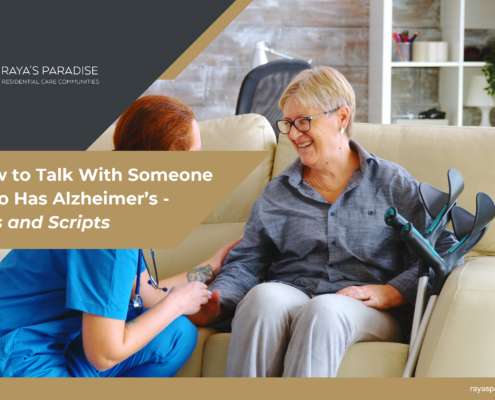 https://rayasparadise.com/wp-content/uploads/2013/02/How-to-Talk-With-Someone-Who-Has-Alzheimers.jpg
1700
2553
Moti Gamburd
https://rayasparadise.com//wp-content/uploads/2019/07/RP-LOGO-Horizontal-Name-Only-websitetrans.png
Moti Gamburd2026-08-06 04:00:212026-08-06 15:23:18How to Talk with Someone Who Has Alzheimer's
https://rayasparadise.com/wp-content/uploads/2013/02/How-to-Talk-With-Someone-Who-Has-Alzheimers.jpg
1700
2553
Moti Gamburd
https://rayasparadise.com//wp-content/uploads/2019/07/RP-LOGO-Horizontal-Name-Only-websitetrans.png
Moti Gamburd2026-08-06 04:00:212026-08-06 15:23:18How to Talk with Someone Who Has Alzheimer's https://rayasparadise.com/wp-content/uploads/2013/09/Coconut-Oil-for-Alzheimers-Disease.jpg
1697
2551
Moti Gamburd
https://rayasparadise.com//wp-content/uploads/2019/07/RP-LOGO-Horizontal-Name-Only-websitetrans.png
Moti Gamburd2026-08-05 04:00:472026-08-05 21:50:26Coconut Oil for Alzheimer's Disease?
https://rayasparadise.com/wp-content/uploads/2013/09/Coconut-Oil-for-Alzheimers-Disease.jpg
1697
2551
Moti Gamburd
https://rayasparadise.com//wp-content/uploads/2019/07/RP-LOGO-Horizontal-Name-Only-websitetrans.png
Moti Gamburd2026-08-05 04:00:472026-08-05 21:50:26Coconut Oil for Alzheimer's Disease? https://rayasparadise.com/wp-content/uploads/2013/10/How-to-Tell-When-a-Loved-One-With-Dementia-Is-Sick.jpg
1697
2555
Moti Gamburd
https://rayasparadise.com//wp-content/uploads/2019/07/RP-LOGO-Horizontal-Name-Only-websitetrans.png
Moti Gamburd2026-03-10 12:43:002026-03-18 01:37:19How to Tell When a Loved One with Dementia Is Sick
https://rayasparadise.com/wp-content/uploads/2013/10/How-to-Tell-When-a-Loved-One-With-Dementia-Is-Sick.jpg
1697
2555
Moti Gamburd
https://rayasparadise.com//wp-content/uploads/2019/07/RP-LOGO-Horizontal-Name-Only-websitetrans.png
Moti Gamburd2026-03-10 12:43:002026-03-18 01:37:19How to Tell When a Loved One with Dementia Is Sick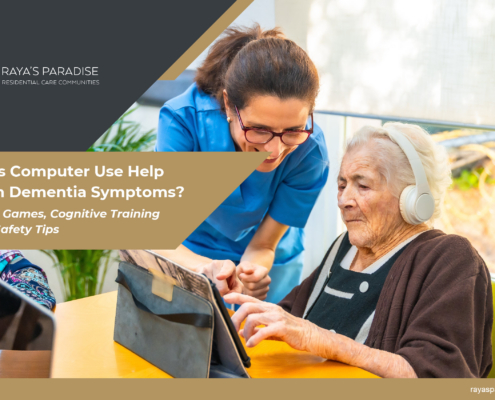 https://rayasparadise.com/wp-content/uploads/2013/08/Does-Computer-Use-Help-With-Dementia-Symptoms.jpg
1700
2557
Moti Gamburd
https://rayasparadise.com//wp-content/uploads/2019/07/RP-LOGO-Horizontal-Name-Only-websitetrans.png
Moti Gamburd2026-03-09 06:49:072026-03-18 00:31:00Does Computer Use Help with Dementia Symptoms?
https://rayasparadise.com/wp-content/uploads/2013/08/Does-Computer-Use-Help-With-Dementia-Symptoms.jpg
1700
2557
Moti Gamburd
https://rayasparadise.com//wp-content/uploads/2019/07/RP-LOGO-Horizontal-Name-Only-websitetrans.png
Moti Gamburd2026-03-09 06:49:072026-03-18 00:31:00Does Computer Use Help with Dementia Symptoms?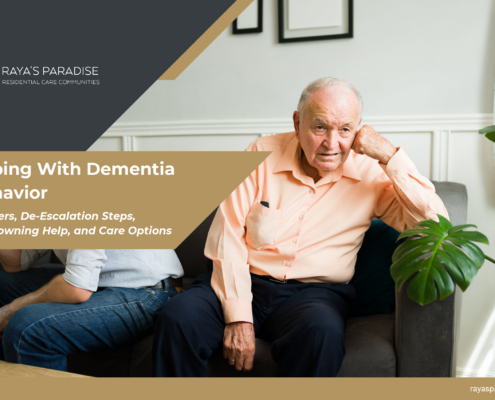 https://rayasparadise.com/wp-content/uploads/2013/02/Coping-With-Dementia-Behavior.jpeg
1702
2555
Moti Gamburd
https://rayasparadise.com//wp-content/uploads/2019/07/RP-LOGO-Horizontal-Name-Only-websitetrans.png
Moti Gamburd2026-03-08 12:16:332026-03-16 16:35:15Coping With Dementia Behavior
https://rayasparadise.com/wp-content/uploads/2013/02/Coping-With-Dementia-Behavior.jpeg
1702
2555
Moti Gamburd
https://rayasparadise.com//wp-content/uploads/2019/07/RP-LOGO-Horizontal-Name-Only-websitetrans.png
Moti Gamburd2026-03-08 12:16:332026-03-16 16:35:15Coping With Dementia Behavior https://rayasparadise.com/wp-content/uploads/2013/09/Respect-for-a-Senior-With-Dementia.jpg
1700
2557
Moti Gamburd
https://rayasparadise.com//wp-content/uploads/2019/07/RP-LOGO-Horizontal-Name-Only-websitetrans.png
Moti Gamburd2026-03-07 03:14:072026-03-16 15:47:50Respect for a Senior with Dementia
https://rayasparadise.com/wp-content/uploads/2013/09/Respect-for-a-Senior-With-Dementia.jpg
1700
2557
Moti Gamburd
https://rayasparadise.com//wp-content/uploads/2019/07/RP-LOGO-Horizontal-Name-Only-websitetrans.png
Moti Gamburd2026-03-07 03:14:072026-03-16 15:47:50Respect for a Senior with Dementia https://rayasparadise.com/wp-content/uploads/2013/08/Why-Dementia-Patients-Have-Trouble-With-Eating.jpeg
1700
2553
Moti Gamburd
https://rayasparadise.com//wp-content/uploads/2019/07/RP-LOGO-Horizontal-Name-Only-websitetrans.png
Moti Gamburd2026-03-05 11:11:482026-03-16 02:07:05Why Dementia Patients Have Trouble with Eating
https://rayasparadise.com/wp-content/uploads/2013/08/Why-Dementia-Patients-Have-Trouble-With-Eating.jpeg
1700
2553
Moti Gamburd
https://rayasparadise.com//wp-content/uploads/2019/07/RP-LOGO-Horizontal-Name-Only-websitetrans.png
Moti Gamburd2026-03-05 11:11:482026-03-16 02:07:05Why Dementia Patients Have Trouble with Eating https://rayasparadise.com/wp-content/uploads/2013/05/Exercises-for-the-Later-Stages-of-Dementia.jpg
1702
2553
Moti Gamburd
https://rayasparadise.com//wp-content/uploads/2019/07/RP-LOGO-Horizontal-Name-Only-websitetrans.png
Moti Gamburd2026-03-04 11:13:202026-03-15 21:09:55Exercises for the Later Stages of Dementia
https://rayasparadise.com/wp-content/uploads/2013/05/Exercises-for-the-Later-Stages-of-Dementia.jpg
1702
2553
Moti Gamburd
https://rayasparadise.com//wp-content/uploads/2019/07/RP-LOGO-Horizontal-Name-Only-websitetrans.png
Moti Gamburd2026-03-04 11:13:202026-03-15 21:09:55Exercises for the Later Stages of Dementia https://rayasparadise.com/wp-content/uploads/2026/03/Addressing-Agitation-in-Dementia.jpg
1700
2548
Moti Gamburd
https://rayasparadise.com//wp-content/uploads/2019/07/RP-LOGO-Horizontal-Name-Only-websitetrans.png
Moti Gamburd2026-03-03 03:47:592026-03-15 19:55:59Addressing Agitation in Someone Who Has Dementia
https://rayasparadise.com/wp-content/uploads/2026/03/Addressing-Agitation-in-Dementia.jpg
1700
2548
Moti Gamburd
https://rayasparadise.com//wp-content/uploads/2019/07/RP-LOGO-Horizontal-Name-Only-websitetrans.png
Moti Gamburd2026-03-03 03:47:592026-03-15 19:55:59Addressing Agitation in Someone Who Has Dementia https://rayasparadise.com/wp-content/uploads/2026/03/All-About-Lewy-Body-Dementia.jpg
1702
2555
Moti Gamburd
https://rayasparadise.com//wp-content/uploads/2019/07/RP-LOGO-Horizontal-Name-Only-websitetrans.png
Moti Gamburd2026-03-02 04:28:062026-03-15 17:53:10All About Lewy Body Dementia
https://rayasparadise.com/wp-content/uploads/2026/03/All-About-Lewy-Body-Dementia.jpg
1702
2555
Moti Gamburd
https://rayasparadise.com//wp-content/uploads/2019/07/RP-LOGO-Horizontal-Name-Only-websitetrans.png
Moti Gamburd2026-03-02 04:28:062026-03-15 17:53:10All About Lewy Body Dementia https://rayasparadise.com/wp-content/uploads/2013/05/Exercise-Benefits-for-Dementia-Patients.jpg
1703
2555
Moti Gamburd
https://rayasparadise.com//wp-content/uploads/2019/07/RP-LOGO-Horizontal-Name-Only-websitetrans.png
Moti Gamburd2026-03-01 02:39:032026-03-15 16:50:15Exercise Benefits for Dementia Patients - Safe Activities, Routines, and Memory Care Support
https://rayasparadise.com/wp-content/uploads/2013/05/Exercise-Benefits-for-Dementia-Patients.jpg
1703
2555
Moti Gamburd
https://rayasparadise.com//wp-content/uploads/2019/07/RP-LOGO-Horizontal-Name-Only-websitetrans.png
Moti Gamburd2026-03-01 02:39:032026-03-15 16:50:15Exercise Benefits for Dementia Patients - Safe Activities, Routines, and Memory Care Support https://rayasparadise.com/wp-content/uploads/2013/08/Giving-Dignity-to-Dementia-Patients.jpg
1697
2553
Moti Gamburd
https://rayasparadise.com//wp-content/uploads/2019/07/RP-LOGO-Horizontal-Name-Only-websitetrans.png
Moti Gamburd2026-01-14 04:00:032026-01-15 18:26:55Giving Dignity to Dementia Patients
https://rayasparadise.com/wp-content/uploads/2013/08/Giving-Dignity-to-Dementia-Patients.jpg
1697
2553
Moti Gamburd
https://rayasparadise.com//wp-content/uploads/2019/07/RP-LOGO-Horizontal-Name-Only-websitetrans.png
Moti Gamburd2026-01-14 04:00:032026-01-15 18:26:55Giving Dignity to Dementia Patients
