
Contents
- Rehab Discharge Too Soon? Your Rehab Discharge Appeal Starts With the 2-Day Notice
- Your Rehab Discharge Appeal and the Notice You Should Get 2 Days Before Coverage Ends
- Beating the Noon Deadline for a Rehab Discharge Appeal
- Who Decides Your Appeal? The BFCC-QIO
- Who to Call in California When the Discharge Plan Feels Unsafe
- Find the Right Care After Rehab Without Rushing the Decision
- Sources & Additional Resources
- More Senior Care Resources
- Rehab Discharge Too Soon? Your Rehab Discharge Appeal Starts With the 2-Day Notice
- A Dementia Diagnosis Alone Does Not Unlock Hospice Respite | The 3 Medicare Conditions for Hospice Respite Eligibility
- The Medicare Outpatient Observation Notice | Hospitals Must Tell You About Observation Within 36 Hours
- The IHSS Hours Cap Can Reach 283 a Month | How the 195-Hour Limit and Paid Family Caregiver Hours Work
- Is the Assisted Living Community Fee Refundable in California? Know the 80, 60 and 40 Percent Rule
- California Assisted Living Rate Increase Notice Rules and Why Older Documents Still Say 60 Days
- Medi-Cal Assisted Living Options Include the Assisted Living Waiver and Health Plan Community Supports
- Who to Report Assisted Living Neglect to in California, and When to Call the Ombudsman, APS or Licensing
- When a Parent Is Running Out of Money in Assisted Living in California
- Alternatives to Nursing Home Care in California Through PACE, ALW, IHSS and MSSP
- Hospital Discharge to Assisted Living in California and the Admission Checks That Matter
- Different Types of Senior Care
- Video Games and Virtual Reality Finds New Takers
- Advice for Traveling with Seniors
- Old Friends, New Friends

The rehab facility says your dad is going home Friday. He still can’t get to the bathroom without help, and your mom can’t lift him. Then someone hands you a form to sign. Online, the advice is loud and confident. Refuse to sign. Call 911. Don’t leave.
But those suggestions don’t start a Medicare appeal. If you believe Medicare-covered skilled nursing or rehab services are ending too soon, a rehab discharge appeal through Medicare’s fast appeal process is the formal way to challenge that coverage decision.
Under Medicare’s fast appeal process, an independent reviewer examines whether covered services should continue. You generally must request the review by noon the day before coverage ends. Whether the facility can discharge your parent may involve separate resident rights.
The process begins with a written notice the facility should give your parent. Knowing what that notice means, whom to call and when to act can keep you from being rushed into a discharge you don’t agree with.
This guide addresses Original Medicare. If your parent has Medicare Advantage, ask the plan about its notice requirements and appeal procedures because some steps may differ.
Here are the key takeaways.
- A skilled nursing facility, home health agency or hospice should give a Notice of Medicare Non-Coverage at least 2 days before covered services end.
- Request the fast appeal by noon the day before the termination date listed on the notice.
- An independent reviewer called a BFCC-QIO decides the appeal, not the facility.
- Refusing to sign the notice doesn’t start an appeal, and under CMS guidance your parent keeps the right to an expedited review either way.
- California’s Long-Term Care Ombudsman helps with improper transfers or discharges, and its services are free.

Your Rehab Discharge Appeal and the Notice You Should Get 2 Days Before Coverage Ends
When a skilled nursing facility, home health agency or hospice plans to stop Medicare-covered services, your parent should receive a Notice of Medicare Non-Coverage. Medicare says the notice should arrive “at least 2 days before covered services end.” If your parent hasn’t received it, ask the provider for a copy right away.
Under the standard process, CMS’s notice instructions say providers must deliver it at least two calendar days before covered services end, or by the second-to-last day of service if care isn’t provided daily.
That notice matters more than a conversation in the hallway. It identifies the date Medicare coverage is scheduled to end and tells you how to contact the independent reviewer responsible for appeals in your state.
Without the notice, families may lose the time they need for an appeal arguing with the facility about its decision. The written notice gives you the information needed to use Medicare’s formal review process.
Should You Refuse to Sign?
Refusing to sign is common advice in caregiver forums, but it doesn’t start an appeal. Under CMS guidance, signing the Notice of Medicare Non-Coverage documents that your parent received it and understands the decision can be disputed.
If your parent refuses to sign, the provider records the refusal and its date. Your parent still has the right to request an expedited review. To appeal, follow the instructions on the notice rather than relying on whether it was signed.
If your parent has a medical emergency, call 911. But a 911 call doesn’t start a Medicare appeal; the fast appeal goes through the independent reviewer named on the notice.
Once the notice arrives, keep a simple written record. Note the date and time it was received, the coverage termination date and the names of the people you speak with.
Questions to Ask Before Discharge
The notice also gives you a reason to ask for specific details about the discharge plan. If your parent still needs assistance, don’t settle for a general assurance that they’ll manage at home.
Ask the care team these questions before the planned discharge.
- What daily skilled care is my parent still receiving, and who will provide it after discharge?
- Can my parent get to the bathroom, bed and kitchen safely without assistance?
- What equipment or home services have been arranged, and when will they begin?
- Who should we call if something goes wrong during the first 48 hours at home?
The answers can help your family assess the discharge plan. They may also identify specific care needs to discuss with the independent reviewer, particularly when those needs still require skilled nursing or therapy.
Beating the Noon Deadline for a Rehab Discharge Appeal
The noon deadline is easy to miss, especially when your family has only just learned that Medicare coverage is ending.
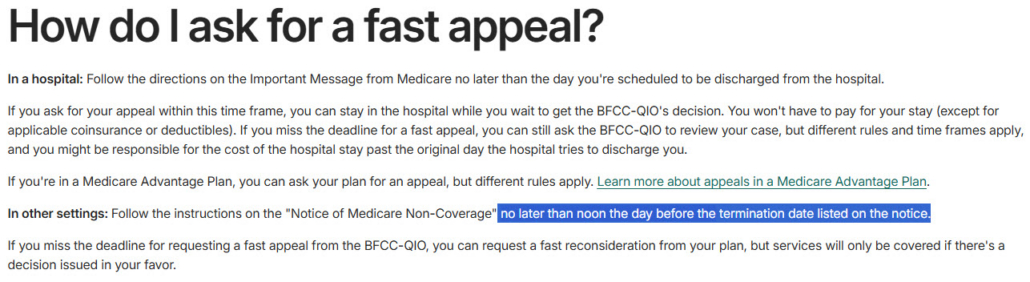
Medicare instructs beneficiaries to follow the directions on the Notice of Medicare Non-Coverage “no later than noon the day before the termination date listed on the notice.”
Suppose the notice lists Friday as the coverage termination date. Your appeal request must reach the reviewer by noon Thursday. With only two days’ warning, that could mean making the call on the same day the notice arrives.
Don’t wait until the final morning if you can act sooner. Use the contact information on the notice and record when you submitted the request.
If noon has already passed, contact the BFCC-QIO or Medicare promptly to ask which review options remain available. The procedures and financial protections may differ from those for an appeal requested on time.
What Happens to the Bill
There’s a distinction families sometimes miss. Ending Medicare coverage doesn’t necessarily mean your parent must leave the facility that day. It means Medicare payment for the covered services is scheduled to stop.
Whether your parent can remain at the facility depends on the circumstances, available payment arrangements and applicable discharge protections. Ending Medicare payment and requiring a resident to leave are not always the same decision.
If the reviewer agrees that coverage should end, your parent generally won’t be responsible for the cost of services provided before the termination date on the notice, apart from any applicable Medicare cost-sharing. If your parent continues receiving services afterward, they may have to pay for those services.
Before arranging extra days at the facility, ask for its daily private-pay rate in writing. You can also review ways to pay for nursing home or rehabilitation care if Medicare no longer covers the stay.
Who Decides Your Appeal? The BFCC-QIO
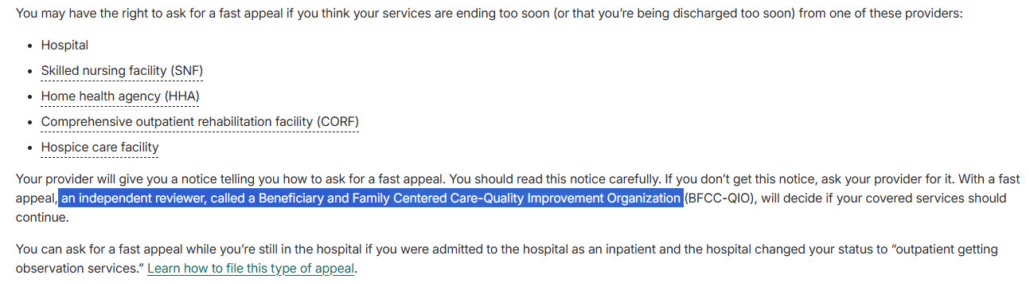
The facility doesn’t make the final decision on a fast Medicare appeal. Medicare explains that “an independent reviewer, called a Beneficiary and Family Centered Care-Quality Improvement Organization,” or BFCC-QIO, determines whether covered services should continue.
The notice includes contact information for your state’s BFCC-QIO. You don’t need to identify the contractor yourself before calling.
After receiving the appeal, the reviewer notifies the facility and asks why your parent believes coverage should continue. It also examines the medical records. The facility must provide a Detailed Explanation of Non-Coverage, and your parent can request copies of the materials sent to the reviewer.
Making Your Case
Focus on the skilled services your parent still needs. CMS explains that Medicare coverage depends on the need for skilled care rather than the potential for improvement. Under Medicare’s rules, a lack of improvement alone isn’t a valid reason to deny otherwise qualifying skilled care coverage.
Ask the doctor or therapist which skilled services remain necessary and whether those needs can be documented in writing. Specific examples are more useful than general statements that your parent isn’t ready to leave.
Explain specific limitations, such as needing two people to help your parent stand, and ask the care team to document whether those limitations still require skilled nursing or therapy services.
Have the notice and your parent’s Medicare card available when you contact the reviewer. If you’re acting on your parent’s behalf, ask what authorization or other information the BFCC-QIO needs from you.
According to Medicare, the reviewer generally makes a decision by the close of business the day after receiving the information needed for review. If your parent’s appeal succeeds, Medicare coverage for qualifying services may continue, subject to any applicable deductibles or coinsurance.
Who to Call in California When the Discharge Plan Feels Unsafe
A Medicare fast appeal addresses whether coverage should continue. If the discharge plan itself seems unsafe or improper, California’s Long-Term Care Ombudsman Program can help.
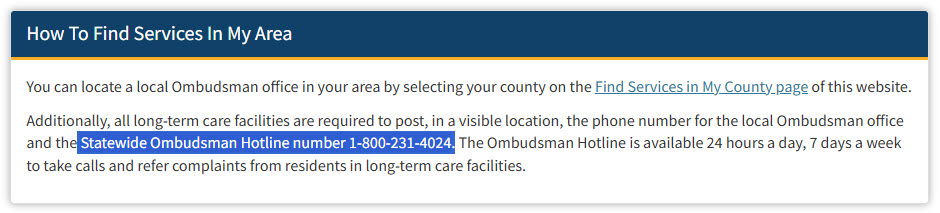
California has a separate resource for residents of long-term care facilities. The state’s Long-Term Care Ombudsman Program provides a “Statewide Ombudsman Hotline number 1-800-231-4024.” Facilities must post the number, and the hotline accepts calls 24 hours a day, seven days a week.
Ombudsman representatives assist residents of facilities such as nursing homes with concerns about their care and rights. According to the California Department of Aging, those concerns include “Improper transfer or discharge of a resident.”
The state also explains that “All Ombudsman services are provided for free and all complaints are confidential.”
For help understanding Medicare coverage and appeals, California’s Health Insurance Counseling and Advocacy Program (HICAP) offers “free, confidential one-on-one counseling.” Families in Los Angeles and Orange County can reach HICAP at 1-800-434-0222.
Remember the distinction. Contact the BFCC-QIO to appeal Medicare’s coverage decision, HICAP for Medicare counseling and the ombudsman when a long-term care facility’s transfer or discharge appears improper.
Find the Right Care After Rehab Without Rushing the Decision
When a rehab facility says your parent is ready to leave, but you’re still worried about their safety, it’s important to separate two decisions. First, determine whether they still need skilled nursing or rehabilitation services. Then consider what kind of daily support they’ll need once those services are no longer necessary. A discharge date shouldn’t be the only thing guiding your family’s next move.
If your parent no longer requires skilled rehabilitation but isn’t ready to manage independently, Raya’s Paradise offers short-term residential care following rehabilitation in Orange County. Families can also use our senior living safety assessment checklist to evaluate mobility assistance, supervision and other everyday care needs before choosing a community. For those returning to the Los Angeles area, our temporary residential stays at our Los Angeles care homes provide another option for personalized assistance during a transition.
Before arranging a move, our guide to transitioning from hospital care to assisted living can help you understand the assessments and admission requirements involved. You can also connect with the Raya’s Paradise care team to discuss whether our residential services match your parent’s current needs. If you believe skilled rehabilitation is ending prematurely, pursue the appropriate appeal with the BFCC-QIO rather than treating a move to assisted living as a substitute for necessary medical care.
Our Orange County Senior Assisted Living Community
Our Los Angeles Senior Assisted Living Residences
Sources & Additional Resources
- Medicare. “Fast appeals.” Medicare.gov.
- Centers for Medicare & Medicaid Services. “Notice of Medicare Non-Coverage (NOMNC) Form Instructions.” CMS.gov.
- Centers for Medicare & Medicaid Services. “Expedited Determinations for Provider Service Terminations (Transmittal 2711).” CMS Manual System, Medicare Claims Processing Manual, Chapter 30.
- Centers for Medicare & Medicaid Services. “FFS & MA NOMNC/DENC.” CMS Beneficiary Notices Initiative.
- Centers for Medicare & Medicaid Services. “Jimmo Settlement.” CMS.gov.
- California Department of Aging. “Long-Term Care Ombudsman (Consumer).” California Department of Aging.
- California Department of Aging. “Medicare Counseling (HICAP).” California Department of Aging.
Disclaimer: This article provides general educational information about Medicare fast appeals, skilled nursing facility discharge procedures and resident rights when rehabilitation services are scheduled to end. It is not medical or legal advice and does not determine whether a particular discharge is safe or appropriate. Notice requirements, appeal deadlines and review procedures may vary depending on the circumstances and applicable Medicare program. For Original Medicare, expedited appeals generally must be requested by noon the day before the service termination date listed on the Notice of Medicare Non-Coverage. Families should follow the instructions on their notice and contact the designated Beneficiary and Family Centered Care Quality Improvement Organization (BFCC-QIO) promptly. Concerns about an improper facility discharge may also be addressed through California’s Long-Term Care Ombudsman Program. Raya’s Paradise provides residential assisted living and supportive care services, not skilled nursing rehabilitation or hospital-level medical treatment.
 https://rayasparadise.com/wp-content/uploads/2026/10/Senior-Patient-Reviewing-Rehabilitation-Discharge-Paperwork-With-Healthcare-Professional.jpg
1707
2560
Moti Gamburd
https://rayasparadise.com//wp-content/uploads/2019/07/RP-LOGO-Horizontal-Name-Only-websitetrans.png
Moti Gamburd2026-11-06 15:20:512026-10-30 17:07:15Rehab Discharge Too Soon? Your Rehab Discharge Appeal Starts With the 2-Day Notice
 https://rayasparadise.com/wp-content/uploads/2026/10/Compassionate-Senior-Caregiver-Providing-Comfort-and-Respite-Support-to-an-Older-Adult.jpg
1707
2560
Moti Gamburd
https://rayasparadise.com//wp-content/uploads/2019/07/RP-LOGO-Horizontal-Name-Only-websitetrans.png
Moti Gamburd2026-11-04 18:20:432026-10-30 17:06:42A Dementia Diagnosis Alone Does Not Unlock Hospice Respite | The 3 Medicare Conditions for Hospice Respite Eligibility
 https://rayasparadise.com/wp-content/uploads/2026/10/Healthcare-Professional-Documenting-Hospital-Observation-Status-and-Discharge-Notes.jpg
1707
2560
Moti Gamburd
https://rayasparadise.com//wp-content/uploads/2019/07/RP-LOGO-Horizontal-Name-Only-websitetrans.png
Moti Gamburd2026-11-02 16:07:082026-10-30 17:06:11The Medicare Outpatient Observation Notice | Hospitals Must Tell You About Observation Within 36 Hours
 https://rayasparadise.com/wp-content/uploads/2026/10/Family-Caregiver-Helping-an-Elderly-Woman-With-a-Walker-in-a-Garden.jpg
1707
2560
Moti Gamburd
https://rayasparadise.com//wp-content/uploads/2019/07/RP-LOGO-Horizontal-Name-Only-websitetrans.png
Moti Gamburd2026-10-30 15:08:252026-10-30 17:05:46The IHSS Hours Cap Can Reach 283 a Month | How the 195-Hour Limit and Paid Family Caregiver Hours Work
 https://rayasparadise.com/wp-content/uploads/2026/10/Senior-Couple-Reviewing-Assisted-Living-Admission-Agreements-and-Community-Fee-Refund-Policies.jpg
1707
2560
Moti Gamburd
https://rayasparadise.com//wp-content/uploads/2019/07/RP-LOGO-Horizontal-Name-Only-websitetrans.png
Moti Gamburd2026-10-28 15:20:152026-10-30 17:05:23Is the Assisted Living Community Fee Refundable in California? Know the 80, 60 and 40 Percent Rule
 https://rayasparadise.com/wp-content/uploads/2026/10/Senior-Couple-Reviewing-Assisted-Living-Rate-Increase-Notice-in-California.jpg
1804
2560
Moti Gamburd
https://rayasparadise.com//wp-content/uploads/2019/07/RP-LOGO-Horizontal-Name-Only-websitetrans.png
Moti Gamburd2026-10-26 14:36:182026-10-30 17:04:55California Assisted Living Rate Increase Notice Rules and Why Older Documents Still Say 60 Days
 https://rayasparadise.com/wp-content/uploads/2026/10/Senior-Couple-Reviewing-Assisted-Living-Care-Options-in-California.jpg
1707
2560
Moti Gamburd
https://rayasparadise.com//wp-content/uploads/2019/07/RP-LOGO-Horizontal-Name-Only-websitetrans.png
Moti Gamburd2026-10-24 00:27:412026-10-30 17:04:24Medi-Cal Assisted Living Options Include the Assisted Living Waiver and Health Plan Community Supports
 https://rayasparadise.com/wp-content/uploads/2026/10/Reviewing-Assisted-Living-Care-Concerns-and-Resident-Rights-in-California.jpg
1769
2560
Moti Gamburd
https://rayasparadise.com//wp-content/uploads/2019/07/RP-LOGO-Horizontal-Name-Only-websitetrans.png
Moti Gamburd2026-10-22 04:54:162026-10-30 17:03:53Who to Report Assisted Living Neglect to in California, and When to Call the Ombudsman, APS or Licensing
 https://rayasparadise.com/wp-content/uploads/2026/10/Senior-Woman-Concerned-About-Running-Out-of-Money-in-Assisted-Living.jpg
1706
2560
Moti Gamburd
https://rayasparadise.com//wp-content/uploads/2019/07/RP-LOGO-Horizontal-Name-Only-websitetrans.png
Moti Gamburd2026-10-20 10:26:362026-10-30 17:03:20When a Parent Is Running Out of Money in Assisted Living in California
 https://rayasparadise.com/wp-content/uploads/2026/10/In-Home-Senior-Care-and-Alternatives-to-Nursing-Home-Placement-in-California.jpg
1707
2560
Moti Gamburd
https://rayasparadise.com//wp-content/uploads/2019/07/RP-LOGO-Horizontal-Name-Only-websitetrans.png
Moti Gamburd2026-10-18 15:03:492026-10-30 17:02:44Alternatives to Nursing Home Care in California Through PACE, ALW, IHSS and MSSP
 https://rayasparadise.com/wp-content/uploads/2026/10/Hospital-Discharge-Planning-and-Assisted-Living-Care-Assessment.jpg
1708
2560
Moti Gamburd
https://rayasparadise.com//wp-content/uploads/2019/07/RP-LOGO-Horizontal-Name-Only-websitetrans.png
Moti Gamburd2026-10-16 14:54:522026-10-30 17:02:13Hospital Discharge to Assisted Living in California and the Admission Checks That Matter
 https://rayasparadise.com/wp-content/uploads/2012/09/Different-Types-of-Senior-Care-Explained.jpeg
1695
2553
Moti Gamburd
https://rayasparadise.com//wp-content/uploads/2019/07/RP-LOGO-Horizontal-Name-Only-websitetrans.png
Moti Gamburd2026-01-15 03:36:302026-10-12 22:59:46Different Types of Senior Care
 https://rayasparadise.com/wp-content/uploads/2020/03/Video-Games-for-Elderly.png
841
1454
Raya's Paradise
https://rayasparadise.com//wp-content/uploads/2019/07/RP-LOGO-Horizontal-Name-Only-websitetrans.png
Raya's Paradise2020-03-04 16:11:552026-01-14 19:16:21Video Games and Virtual Reality Finds New Takers
 https://rayasparadise.com/wp-content/uploads/2013/11/TravelingFeatured.jpg
800
1212
Raya's Paradise
https://rayasparadise.com//wp-content/uploads/2019/07/RP-LOGO-Horizontal-Name-Only-websitetrans.png
Raya's Paradise2019-12-02 04:00:282026-01-14 18:39:14Advice for Traveling with Seniors
 https://rayasparadise.com/wp-content/uploads/2019/11/Old-Friends-New-Friends.jpg
403
768
Raya's Paradise
https://rayasparadise.com//wp-content/uploads/2019/07/RP-LOGO-Horizontal-Name-Only-websitetrans.png
Raya's Paradise2019-11-18 06:00:112026-01-14 19:06:14Old Friends, New Friends