
Contents
- The IHSS Hours Cap Can Reach 283 a Month
- Eligibility Comes Before the IHSS Hours Cap
- The 195- and 283-Hour Caps
- IHSS Is for People Living at Home
- When IHSS Hours Aren’t Enough to Keep Your Parent Safe at Home
- Sources & Additional Resources
- More Senior Care Resources
- Home Health vs Home Care and Medicare's Usual 28-Hour Weekly Limit
- A California Health Care Power of Attorney Usually Starts Only After a Finding of Incapacity
- Why Observation Status Doesn't Count Toward Medicare's 3-Day Rule and How to Appeal a Status Change
- Who Pays for Respite Care in California? Medicare, Medi-Cal, VA and Private Pay Compared
- PACE Program Eligibility Starts at Age 55 | Who Qualifies, What It Costs Without Medi-Cal and What It Replaces
- Rehab Discharge Too Soon? Your Rehab Discharge Appeal Starts With the 2-Day Notice
- A Dementia Diagnosis Alone Does Not Unlock Hospice Respite | The 3 Medicare Conditions for Hospice Respite Eligibility
- The Medicare Outpatient Observation Notice | Hospitals Must Tell You About Observation Within 36 Hours
- The IHSS Hours Cap Can Reach 283 a Month | How the 195-Hour Limit and Paid Family Caregiver Hours Work
- Is the Assisted Living Community Fee Refundable in California? Know the 80, 60 and 40 Percent Rule
- California Assisted Living Rate Increase Notice Rules and Why Older Documents Still Say 60 Days
- Medi-Cal Assisted Living Options Include the Assisted Living Waiver and Health Plan Community Supports
- Who to Report Assisted Living Neglect to in California, and When to Call the Ombudsman, APS or Licensing
- When a Parent Is Running Out of Money in Assisted Living in California
- Alternatives to Nursing Home Care in California Through PACE, ALW, IHSS and MSSP

You have started leaving work early because Mom needs help getting dressed, preparing meals and staying safe at home. Someone tells you California might pay you for some of that caregiving through IHSS. Then you read that the program only pays for about 30 hours a week, and you wonder whether applying is worthwhile.
That online estimate is misleading. California IHSS authorizations can reach up to 283 hours a month, but the limit that applies depends on assessed needs and the IHSS funding program. Under state law, the usual limits are 195 hours for some recipients and 283 for those with the heaviest personal care needs.
Those are maximums, not a promise of paid hours. A county social worker determines Mom’s actual authorization after assessing what help she needs.
Here are the key takeaways.
- To get IHSS, your parent must have a Medi-Cal eligibility determination and live at home.
- IHSS can authorize up to 283 hours a month. A 195-hour limit applies to some recipients, depending on assessed need and funding program.
- Monthly hours are divided by 4.33 to set weekly hours, so the caps work out to about 45 and 65 hours a week.
- Family members can be paid IHSS providers, but wage rates may vary from county to county.
- Licensed community care facilities, including assisted living, are not considered own home for IHSS.
Eligibility Comes Before the IHSS Hours Cap
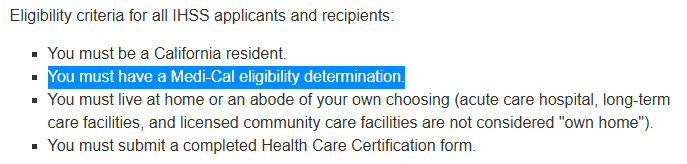
Before planning your work schedule around IHSS, make sure Mom qualifies. California’s In-Home Supportive Services program “provides in-home assistance to eligible aged, blind, and disabled individuals” who need support to remain safely in their own homes.
The state lists several requirements. Mom must live in California, receive services in her own home and submit a completed health care certification. CDSS also states, “You must have a Medi-Cal eligibility determination.” Having Medicare alone does not satisfy that requirement.
IHSS Eligibility and Medi-Cal
If Mom has not yet been evaluated for Medi-Cal, begin with her county eligibility office. Approval for Medi-Cal does not automatically mean approval for a particular number of IHSS hours. Our comparison of PACE, ALW, IHSS and MSSP explains how these programs differ and why they cannot be used interchangeably.
The law describes who IHSS is for. It serves people who cannot safely remain in their homes or abodes of their own choosing unless these services are provided.
Ask the county what paperwork to submit, where to send the health care certification and when an in-home visit can be scheduled. Keep copies of every form. If Mom has trouble describing her needs, prepare a short written summary of the tasks you help her with each morning, evening and overnight.
How the County Decides Your Parent’s Hours
A county social worker assesses how Mom manages everyday activities in her own home. CDSS says the worker evaluates the number of hours the county will authorize for specific services, considering information from Mom and, when appropriate, her family and health care professionals.
If Mom wants you involved, be present for the assessment. Explain how much help she needs on a difficult day, not only how well she does when you are nearby. Counties reassess at least annually, and CDSS says “Recipients may request for a reassessment of need at any time” when circumstances change.
For example, Mom may be able to get dressed when you lay out each item, remind her of the steps and steady her while standing. Tell the social worker what assistance you provide rather than saying simply that she dresses herself. Small details can change how the actual care needs are understood.

The 195- and 283-Hour Caps
The numbers can sound generous until you realize they are upper limits. Under Welfare and Institutions Code 12303.4, services for recipients under the standard category “do not exceed the maximum of 195 hours per month.” Mom might qualify for substantially less after her assessment.
The higher limit applies to a particular level of assessed need. When a person requires at least 20 hours weekly of the services identified in WIC 12304, the total “shall not exceed a maximum of 283 hours per month.” It is not an automatic award of 283 hours.
The statute isn’t the whole picture. Disability Rights California explains that “IHSS is funded through four subprograms,” each with different maximums. Under some Medi-Cal-funded subprograms, certain recipients who don’t meet the 20-hour test can still receive up to 283 total hours. Ask the county IHSS worker which funding program applies and how the hours were calculated.
Who Qualifies for the Higher Cap
The 20-hour threshold is not based on every household chore combined. WIC 12304 identifies the qualifying personal-care services, including bathing, dressing, eating, walking, transfers and assistance with bowel and bladder functions. It also counts meal preparation and cleanup for people who need help preparing and eating food.
Mom may need considerable help with shopping and housecleaning, but those hours alone do not establish eligibility for the higher cap. Ask her social worker which personal-care tasks count toward the 20-hour threshold. The law says that determination “shall be supported by a medical report when requested.”
If you disagree with the authorized hours, read the county notice carefully and ask how to request a review or hearing. The decision should reflect assessed needs, not simply the number you hoped to receive. Keep notes from the evaluation and any updated medical information that explains what Mom cannot manage safely.
What the IHSS Maximum Hours Mean Each Week
A month does not equal four weeks for IHSS scheduling. Under WIC 12301.1, monthly authorized hours are divided by 4.33 to calculate weekly hours. That makes the maximum 195 hours about 45 a week, and 283 hours about 65 a week.
That math explains the maximum, not what Mom will receive. Her written authorization may be much lower. Ask for the breakdown by task and make sure you understand the weekly limit as well as the monthly total. Do not submit time for care beyond the authorized schedule without following county rules.
For perspective, there are more than 700 hours in an average month. Even at the higher IHSS cap, relatives or other caregivers may need to cover substantial time themselves. Think about evenings, overnight supervision and days when your regular provider is sick before relying on IHSS as your complete care plan.

IHSS Is for People Living at Home
IHSS is designed to help Mom remain in her own home, rather than pay for care in a facility. CDSS calls it an “alternative to out-of-home care.” Hospitals, nursing homes and licensed community care facilities are not considered a recipient’s own home.
In California, assisted living residences are generally licensed as residential care facilities for the elderly. The Community Care Licensing Division licenses these homes. Once Mom moves to licensed assisted living, IHSS does not pay for the care she receives in that setting.
CDSS’s training sheet for family providers adds that “IHSS can only pay for such services when the consumer is at home.”
Paid Family Caregiver California Basics
Being Mom’s daughter does not disqualify you from becoming a paid IHSS provider. CDSS calls the family-caregiver role “Wearing Two Hats” because you remain a relative while working as a provider. Once hours are authorized, CDSS tells recipients that “you must hire someone (your individual provider)” to perform the approved services.
Ask about the separate provider enrollment process, identity verification, required orientation and timesheet instructions before expecting a paycheck. Your family relationship does not replace those steps. If several relatives help Mom, agree in advance who will cover which authorized tasks so nobody claims the same work twice.
The distinction between family help and paid IHSS work matters. The CDSS training sheet states, “You can only be paid for the authorized tasks.” You cannot claim paid home-care hours while Mom is hospitalized or receiving out-of-home facility care. Keep accurate timesheets and report changes promptly.
Before you count on a certain paycheck, ask whether Mom has a Medi-Cal share of cost. CDSS explains, “Some IHSS consumers are responsible to pay a portion of your wages directly to you.” The county can explain whether this applies and how payments are handled.
You may be Mom’s primary caregiver without being her only one. CDSS recommends considering another relative, friend or a provider through the IHSS Public Authority Registry. Splitting authorized hours can give someone else a regular shift and help you protect time for your own work and family.
A backup plan matters if you get sick or need to travel. Ask the Public Authority about finding a replacement provider and whether another trained relative can step in. Start that conversation before you need emergency coverage; even paid care does not eliminate the work of coordinating Mom’s daily support.
IHSS Provider Pay
IHSS provider pay is not one fixed statewide amount. CDSS explains that “the wage rates may vary from county to county.” If Mom lives in Los Angeles County, ask that county for its current provider rate. A rate quoted for Orange County may be different.
Calculate possible earnings from the actual approved hours and your county’s rate, not from the 195- or 283-hour maximum. Ask how payroll timing works and whether your situation involves taxes or overtime rules. That budget is more useful than an online estimate based on another family’s award.
The State issues provider paychecks. Our research on caregiver pay notes that “Most family caregivers are unpaid, but several programs do pay relatives,” and IHSS is one of the main ones in California.
When Care at Home Isn’t Enough
Even 283 authorized hours do not cover every hour of a 30-day month. If Mom cannot safely be alone, you still need a plan for the remaining hours. Our respite care in Orange County may be worth exploring when the family needs a temporary break.
Our home care in Los Angeles page notes that “A family may begin with home care, then later compare it with assisted living” as needs grow. We offer it through our sister home care company.
If your parent moves into assisted living in Los Angeles, remember that IHSS stops paying for their care there. Plan for how the move will be paid for before giving up IHSS hours at home.
When IHSS Hours Aren’t Enough to Keep Your Parent Safe at Home
Even with help from IHSS, there may be hours when Mom is alone and you’re worrying about whether she’s eaten, taken her medication or can get to the bathroom safely. Before assuming your family can manage those gaps indefinitely, look at what happens during evenings, overnight and when a caregiver is unavailable. The right care arrangement needs to work beyond the hours someone is scheduled to visit.
If your family needs occasional relief, Raya’s Paradise offers short-term residential respite care in Orange County for older adults who would benefit from temporary support. Families who want to keep a parent at home can also explore personalized in-home caregiver assistance in Los Angeles through our sister company, CARE Homecare. If daily supervision has become a longer-term concern, our assisted living safety evaluation checklist can help you identify the questions worth asking before considering a residential move.
Not sure whether your parent needs additional help at home, a temporary stay or a different living environment? Explore our residential senior care options in Los Angeles or speak with the Raya’s Paradise Orange County team about your family’s caregiving needs and the level of support available.
Our Orange County Senior Assisted Living Community with Specialized Memory Care
Our Los Angeles Assisted Living Residences
Sources & Additional Resources
- Disability Rights California. “Understanding the Maximum Amount of Hours Available & Calculating Hours.” Disability Rights California.
- California Legislature. “Welfare and Institutions Code section 12303.4.” California Legislative Information.
- California Department of Social Services. “In-Home Supportive Services (IHSS) Program.” CDSS.
- California Legislature. “Welfare and Institutions Code section 12301.1.” California Legislative Information.
- California Legislature. “Welfare and Institutions Code section 12300.” California Legislative Information.
- California Legislature. “Welfare and Institutions Code section 12304.” California Legislative Information.
- California Department of Social Services. “Wearing Two Hats, When You are an IHSS Provider for a Family Member or a Close Friend.” IHSS Training Academy.
- California Department of Aging. “Assisted Living Facilities.” California Department of Aging.
Disclaimer: This article provides general educational information about California’s In-Home Supportive Services (IHSS) program, monthly authorized care hours and family caregiver responsibilities. It is not medical or legal advice and does not determine an individual’s eligibility or authorized services. The 195-hour and 283-hour limits are maximums that depend on the applicable IHSS program, assessed care needs and individual circumstances. Actual authorizations may be lower. County assessments, provider enrollment requirements and service rules can change. Families should confirm current requirements with their county IHSS office or the California Department of Social Services. IHSS is intended for eligible individuals living at home and does not provide caregiving services within licensed assisted living residences. Raya’s Paradise provides residential assisted living and related supportive care, not skilled nursing facility services.
 https://rayasparadise.com/wp-content/uploads/2026/11/In-Home-Senior-Care-and-Caregiver-Companionship-for-Older-Adults.jpg
1707
2560
Moti Gamburd
https://rayasparadise.com//wp-content/uploads/2019/07/RP-LOGO-Horizontal-Name-Only-websitetrans.png
Moti Gamburd2026-11-21 01:24:412026-11-05 15:26:15Home Health vs Home Care and Medicare's Usual 28-Hour Weekly Limit
 https://rayasparadise.com/wp-content/uploads/2026/11/California-Health-Care-Power-of-Attorney-and-Advance-Directive-Planning-for-Seniors.jpg
1707
2560
Moti Gamburd
https://rayasparadise.com//wp-content/uploads/2019/07/RP-LOGO-Horizontal-Name-Only-websitetrans.png
Moti Gamburd2026-11-19 19:08:522026-11-03 17:23:45A California Health Care Power of Attorney Usually Starts Only After a Finding of Incapacity
 https://rayasparadise.com/wp-content/uploads/2026/11/Elderly-Hospital-Patient-and-Medicare-Observation-Status-Three-Day-Rule.jpg
1707
2560
Moti Gamburd
https://rayasparadise.com//wp-content/uploads/2019/07/RP-LOGO-Horizontal-Name-Only-websitetrans.png
Moti Gamburd2026-11-16 01:18:112026-11-03 15:49:52Why Observation Status Doesn't Count Toward Medicare's 3-Day Rule and How to Appeal a Status Change
 https://rayasparadise.com/wp-content/uploads/2026/11/Compassionate-Respite-Care-and-Senior-Companionship-in-a-Residential-Care-Setting.jpg
1707
2560
Moti Gamburd
https://rayasparadise.com//wp-content/uploads/2019/07/RP-LOGO-Horizontal-Name-Only-websitetrans.png
Moti Gamburd2026-11-11 19:40:022026-11-02 15:50:19Who Pays for Respite Care in California? Medicare, Medi-Cal, VA and Private Pay Compared
 https://rayasparadise.com/wp-content/uploads/2026/10/Senior-Woman-Receiving-In-Home-Care-and-Mobility-Assistance-While-Aging-in-Place.jpg
1707
2560
Moti Gamburd
https://rayasparadise.com//wp-content/uploads/2019/07/RP-LOGO-Horizontal-Name-Only-websitetrans.png
Moti Gamburd2026-11-09 16:17:332026-10-30 16:59:19PACE Program Eligibility Starts at Age 55 | Who Qualifies, What It Costs Without Medi-Cal and What It Replaces
 https://rayasparadise.com/wp-content/uploads/2026/10/Senior-Patient-Reviewing-Rehabilitation-Discharge-Paperwork-With-Healthcare-Professional.jpg
1707
2560
Moti Gamburd
https://rayasparadise.com//wp-content/uploads/2019/07/RP-LOGO-Horizontal-Name-Only-websitetrans.png
Moti Gamburd2026-11-06 15:20:512026-10-30 17:07:15Rehab Discharge Too Soon? Your Rehab Discharge Appeal Starts With the 2-Day Notice
 https://rayasparadise.com/wp-content/uploads/2026/10/Compassionate-Senior-Caregiver-Providing-Comfort-and-Respite-Support-to-an-Older-Adult.jpg
1707
2560
Moti Gamburd
https://rayasparadise.com//wp-content/uploads/2019/07/RP-LOGO-Horizontal-Name-Only-websitetrans.png
Moti Gamburd2026-11-04 18:20:432026-10-30 17:06:42A Dementia Diagnosis Alone Does Not Unlock Hospice Respite | The 3 Medicare Conditions for Hospice Respite Eligibility
 https://rayasparadise.com/wp-content/uploads/2026/10/Healthcare-Professional-Documenting-Hospital-Observation-Status-and-Discharge-Notes.jpg
1707
2560
Moti Gamburd
https://rayasparadise.com//wp-content/uploads/2019/07/RP-LOGO-Horizontal-Name-Only-websitetrans.png
Moti Gamburd2026-11-02 16:07:082026-10-30 17:06:11The Medicare Outpatient Observation Notice | Hospitals Must Tell You About Observation Within 36 Hours
 https://rayasparadise.com/wp-content/uploads/2026/10/Family-Caregiver-Helping-an-Elderly-Woman-With-a-Walker-in-a-Garden.jpg
1707
2560
Moti Gamburd
https://rayasparadise.com//wp-content/uploads/2019/07/RP-LOGO-Horizontal-Name-Only-websitetrans.png
Moti Gamburd2026-10-30 15:08:252026-10-30 17:05:46The IHSS Hours Cap Can Reach 283 a Month | How the 195-Hour Limit and Paid Family Caregiver Hours Work
 https://rayasparadise.com/wp-content/uploads/2026/10/Senior-Couple-Reviewing-Assisted-Living-Admission-Agreements-and-Community-Fee-Refund-Policies.jpg
1707
2560
Moti Gamburd
https://rayasparadise.com//wp-content/uploads/2019/07/RP-LOGO-Horizontal-Name-Only-websitetrans.png
Moti Gamburd2026-10-28 15:20:152026-10-30 17:05:23Is the Assisted Living Community Fee Refundable in California? Know the 80, 60 and 40 Percent Rule
 https://rayasparadise.com/wp-content/uploads/2026/10/Senior-Couple-Reviewing-Assisted-Living-Rate-Increase-Notice-in-California.jpg
1804
2560
Moti Gamburd
https://rayasparadise.com//wp-content/uploads/2019/07/RP-LOGO-Horizontal-Name-Only-websitetrans.png
Moti Gamburd2026-10-26 14:36:182026-10-30 17:04:55California Assisted Living Rate Increase Notice Rules and Why Older Documents Still Say 60 Days
 https://rayasparadise.com/wp-content/uploads/2026/10/Senior-Couple-Reviewing-Assisted-Living-Care-Options-in-California.jpg
1707
2560
Moti Gamburd
https://rayasparadise.com//wp-content/uploads/2019/07/RP-LOGO-Horizontal-Name-Only-websitetrans.png
Moti Gamburd2026-10-24 00:27:412026-10-30 17:04:24Medi-Cal Assisted Living Options Include the Assisted Living Waiver and Health Plan Community Supports
 https://rayasparadise.com/wp-content/uploads/2026/10/Reviewing-Assisted-Living-Care-Concerns-and-Resident-Rights-in-California.jpg
1769
2560
Moti Gamburd
https://rayasparadise.com//wp-content/uploads/2019/07/RP-LOGO-Horizontal-Name-Only-websitetrans.png
Moti Gamburd2026-10-22 04:54:162026-10-30 17:03:53Who to Report Assisted Living Neglect to in California, and When to Call the Ombudsman, APS or Licensing
 https://rayasparadise.com/wp-content/uploads/2026/10/Senior-Woman-Concerned-About-Running-Out-of-Money-in-Assisted-Living.jpg
1706
2560
Moti Gamburd
https://rayasparadise.com//wp-content/uploads/2019/07/RP-LOGO-Horizontal-Name-Only-websitetrans.png
Moti Gamburd2026-10-20 10:26:362026-10-30 17:03:20When a Parent Is Running Out of Money in Assisted Living in California
 https://rayasparadise.com/wp-content/uploads/2026/10/In-Home-Senior-Care-and-Alternatives-to-Nursing-Home-Placement-in-California.jpg
1707
2560
Moti Gamburd
https://rayasparadise.com//wp-content/uploads/2019/07/RP-LOGO-Horizontal-Name-Only-websitetrans.png
Moti Gamburd2026-10-18 15:03:492026-10-30 17:02:44Alternatives to Nursing Home Care in California Through PACE, ALW, IHSS and MSSP